Making and Maturing

Disciples of Jesus

  • Pray First

    “Then Daniel went to his house and told his friends Hananiah, Mishael, and Azariah about the matter, urging them to ask the God of the heavens for mercy concerning this mystery, so Daniel and his friends would not be destroyed with the rest of Babylon’s wise men.”

    Daniel 2:17-18

    Americans are doers.  Conquerors.  Explorers.  Inventors.  Innovators.  Entrepreneurs.  We tamed the Wild West, sent humans to the moon, and lead technological advancements in medicine.  Figuring stuff out and solving problems is a part of our cultural identity and heritage—for better, or for worse.

    Many times this positive can-do-ism is helpful.  Sometimes, it is not.  From a spiritual perspective, often our American confidence in our ability to solve a problem results in sinful self-reliance.  How should we respond when we face a problem, challenge, or trial?  Pray first.

    We see this modeled for us in the book of Daniel chapter 2.  Daniel and his friends were newly installed advisors to the Babylonian king Nebudchadnezzar.  They were living in exile, far from home, and yet found themselves in high positions, rubbing shoulders with the many other advisors to the king.

    Long story short, Nebudchadnezzar was demanding something impossible from his advisors—he commanded that they tell him what dream he had dreamed and provide the interpretation.  Babylonian wise men were trained in the latter; no one could do the former.  The result was the king commanded the execution of all the advisors, including Daniel & co.

    Their lives were in danger.  It was an urgent crisis, demanding an immediate solution.  But what is remarkable in Daniel 2 is what Daniel does first.  

    “Then Daniel went to his house and told his friends Hananiah, Mishael, and Azariah about the matter, urging them to ask the God of the heavens for mercy concerning this mystery…” -Daniel 2:17-18

    We face all kinds of problems: financial, emotional, educational, vocational, familial, political, and many more.  When we face them, we often respond as Americans—I can solve it.  But this attitude misses a fundamental truth: we are dependent on the sovereign God of the universe for everything.  

    The solution for Daniel could only be provided by God, but even in circumstances where we can solve the problem by natural means, pray first is the best strategy.  Consider James 4:13-16, and beware of a godless approach to planning and problem solving.  Pray first.

    What happens when we pray first?

    We are reminded that God is sovereign (even in Babylon).  Praying first helps prevent panic.  The irony of Nebudchadnezzar’s request is no one on earth could grant it, yet Daniel had access to the God of heaven and earth.  His reign has no limit.

    We are reminded that God is merciful.  I love that in Daniel 2 Daniel asks his compatriots to ask God for mercy.   Prayer is, in effect, throwing ourselves at the feet of God and asking for mercy in a particular situation.

    We are reminded that the the future is under God’s providential care.  When we pray first, ideally we submit our concerns to God with a recognition that God may not grant us what we want.  Even so, he is trustworthy and the universe is still his.  

    We prevent rash, sinful responses to crises.  Praying first helps us say no to ungodly reactions to our problems.  We might be tempted to rush here or there, but after seeking God by faith, such sinful gut reactions are less likely.

    We are reminded that because of the gospel, we are safe no matter what.  Praying first reminds us that if we are believers, we are always safe in God’s care.  By faith in Jesus we are entirely dependent on God for forgiveness, salvation, and eternal life.  Our future is secure.

    We are reminded that God’s glory is the center piece of the universe.  Praying first helps reorient us to what matters most: the displaying of the glory of God.  This means our comfort, survival, healing, or success must take a back seat.  

    We pray first because we belong to the Lord.  Dependence on God is at the heart of the gospel, and therefore prayer is a hallmark of the life of faith.  Yes, we need to respond with acts of obedient faithfulness when we face trials.  But don’t forget to pray first.  

    These reflections on prayer in response to crises apply to anyone who has repented of their sin and put their faith in the death and resurrection of Jesus for salvation.  If you are reading this and you have not yet become a Christian, I invite you to consider that self reliance is not a viable option for entering God’s kingdom.  Consider this possible first prayer of genuine dependence: “God of heaven and earth, I am a sinner and in need of salvation.  I repent of my sin and put my faith in Jesus who died for me and rose from the dead.  Please forgive me because of Jesus’ work on my behalf, and help me now to live a transformed life in dependence on you.”

  • Fear Not Scary Headlines

    The Lord handed King Jehoiakim of Judah over to Nebudchadnezzar, along with some of the vessels from the house of God.” -Daniel 1:2

    Looking at it from a merely human perspective, current geopolitical events can cause fear and anxiety.  Rockets being fired, the earth shaking, planes going down—all of these seem like ominous signs of dark days.  Then again, Christians have access to inside information (no, not detailed prophecies of the future).  We have access to the remarkable truth of the sovereignty of God.

    Whenever we read scary headlines—and some are very scary—we can find real solace in the sovereignty of God.  The sovereignty of God is a majestic theme of the Bible and it’s also a foundational assumption hiding in plain sight.  Consider the introduction to the book of Daniel.  Daniel was an Israelite exile taken to Babylon in 605 BC.  He and his compatriots lived through the collapse of their society, the eventual destruction of their temple, and the displacement of their people.  All of this was loaded with faith-shattering implications: God had promised to put them in their land–had God failed?  Given what they were going through, did God even exist?

    In Daniel 1:2 we read this remarkably casual clause introducing the historical circumstances of Israel’s exile: “The Lord handed King Jehoiakim of Judah over to Nebudchadnezzar.”  The Lord handed him over.  This phrasing assumes so much theological truth: God is sovereign over geopolitical events, nations and governments belong to him, and even tragedies are under his guiding hand.  

    The book of Daniel goes on to describe Daniel and his friends flourishing in faith while in exile.  He leads people to repentance for their sin, and models living in the world while not being of the world.  Faith in our sovereign God means regardless of the headlines, we can walk trusting him.

    Jesus himself echoes this sentiment of finding solace in God’s sovereignty in Mark 13:7, “When you hear of wars and rumors of wars, don’t be alarmed.”  Sometimes we think it would be easier to not fear if we knew all the details of God’s plan and exactly how it would work out, but that’s not accurate. The key to bulletproof faith in trying times isn’t knowledge of the future, it’s knowledge of God’s character as the sovereign Lord of the universe. 

    The key to bulletproof faith in trying times isn’t knowledge of the future, it’s knowledge of God’s character as the sovereign Lord of the universe.  

    In our broken world, we will face some very scary stuff.  Sometimes God chooses to hand one nation to another.  Sometimes he shakes the earth.  Sometimes we get a bleak diagnosis from the doctor.  Sometimes we have bills we can’t pay.  In all of these circumstances, we need not fear; we can walk by faith in our great God because he is sovereign.  

  • Beyond Christmas at GPBC

    Merry Christmas! As we celebrate Christmas with our family in Georgia, I’ve been thinking about this last year. 2019 was a significant year for Green Pond Bible Chapel in many ways:

    Highlands Bible Church

    Our first church plant, Highlands Bible Church, matured into full independence. God’s gracious provision has been clear throughout the entire process of planting HBC. God paved the way for the successful multiplication of believers and the impact of HBC on the community of Vernon in such a way that only he gets the glory. We are looking forward to decades and more of gospel ministry at HBC, and should never take success in church planting for granted!

    50 Years of God’s Faithfulness

    We celebrated our 50th anniversary as a church. Saints from the past and present at GPBC gathered to remember God’s faithfulness and rejoice. The weekend was especially sweet as we could see the visible impact of the gospel on people, some of whom have been a part of GPBC since it was born!

    One Church, One Service

    In the fall and winter of 2019 we embarked on a sanctuary and entryway remodel to enable us to worship together in one service. With these renovations complete, we have enjoyed being together as a church family. The singing in our service has already been a highlight for me; I am greatly encouraged by the collective voices of the saints singing praise to Jesus.

    Where Do We Go from Here?

    As the year winds down I also find my heart and mind meditating on what’s to come for GPBC. By God’s grace we are equipped with Biblically qualified leadership who have a passion for shepherding, skilled deacons who love Jesus and his church, and facilities ideal for ministry. I believe it’s time for us to turn a corner and leverage our gifts for the sake of the gospel.

    What does this look like? We are poised to continue our impact on our community and the greater area of north Jersey, especially in church planting and potential church revitalizations. Making and maturing disciples isn’t about our church getting bigger, it’s about the growth of God’s kingdom. This means multiplying churches through planting and helping churches in a time of need.

    But it’s not just about north Jersey. We also will have great opportunities to use our resources to help advance Jesus’ kingdom across the world. Our brothers and sisters in Milan especially need our prayer and support this year. We’ll continue to support Bible translation, church planting, and pastoral training abroad. All of these efforts aim at contributing to the strengthening of churches for the making and maturing of disciples of Jesus.

    In short, I believe we’re just getting started. Please pray with me that God would lead us to planting and/or revitalizing opportunities. Pray that God would use us to facilitate the growth of healthy churches across the world. Pray for spiritual growth in our own church body. I am so thankful to be a part of this ministry, and I can’t wait to see where God takes us from here. Jesus was born for this—the advance of his kingdom through the redemption of sinners. Merry Christmas Green Pond Bible Chapel!

  • Standing on Mars Hill

    Israel/Greece 2019 Day 16

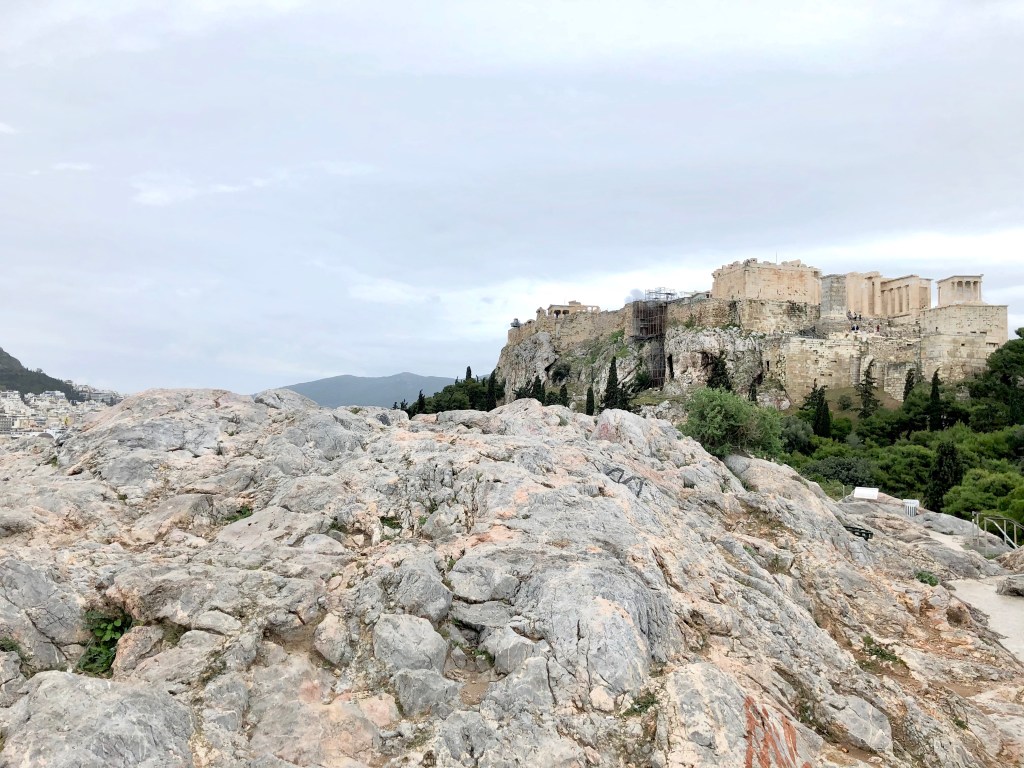
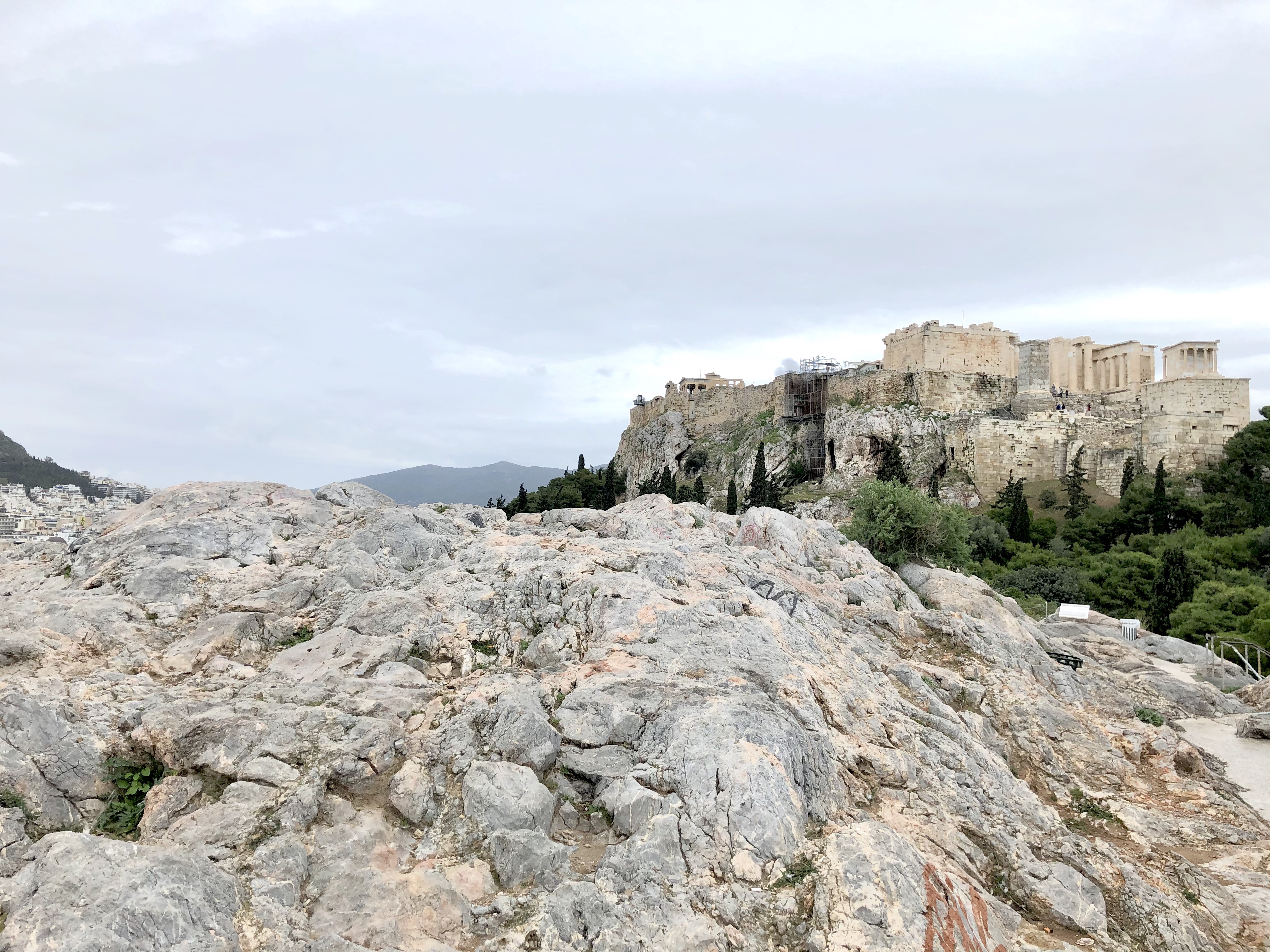
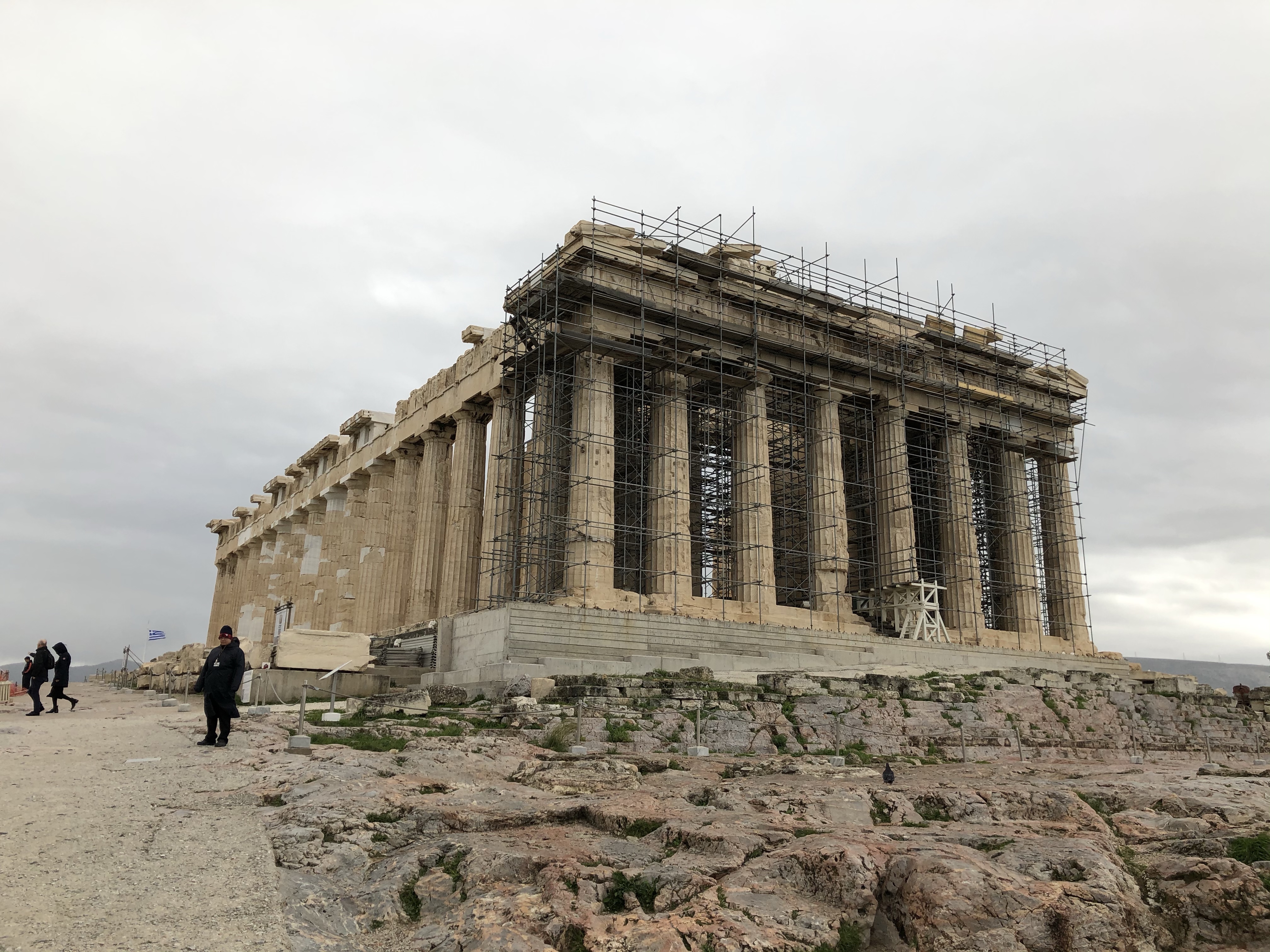
    Today we took time to tour the ancient history of Athens. Although it was a cold and windy day with a little rain, we were able to see the most important sites in the city: the Areopagus (Mars Hill), the Parthenon, and the Agora (marketplace).

    The view of the Parthenon from Mars Hill

    The Parthenon is a temple to the goddess Athena (wisdom) built on the acropolis of Athens. It’s not only the temple on the acropolis, it’s simply the most prominent. Among others there’s also temple to the goddess Nike (victory).

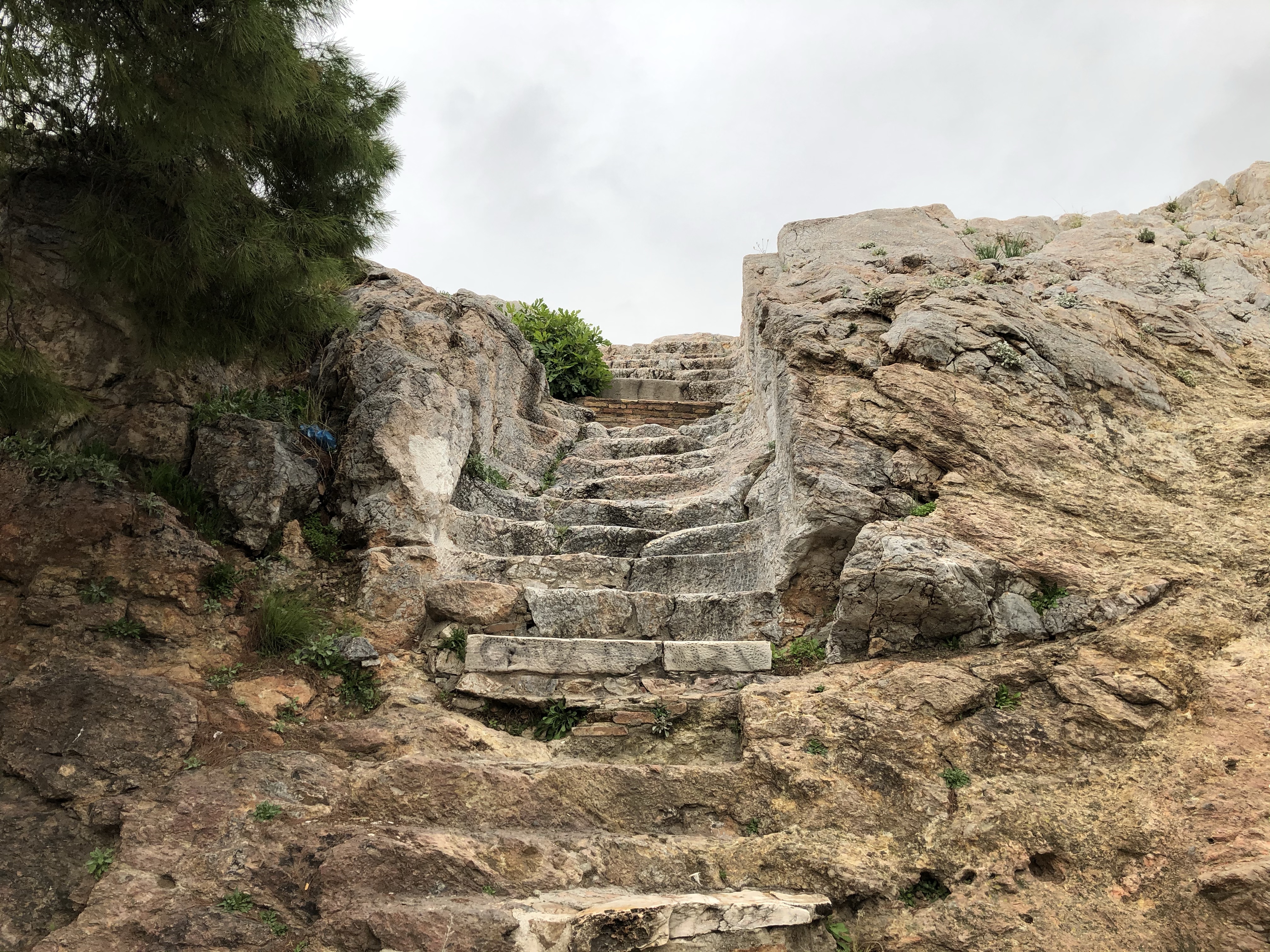
    Next to the Parthenon, just a little lower and to the west sits the Areopagus. It was the place during the first century that the leadership of Athens would discuss ideas and even hear trials, especially regarding religious matters.

    Steps up to the Areopagus

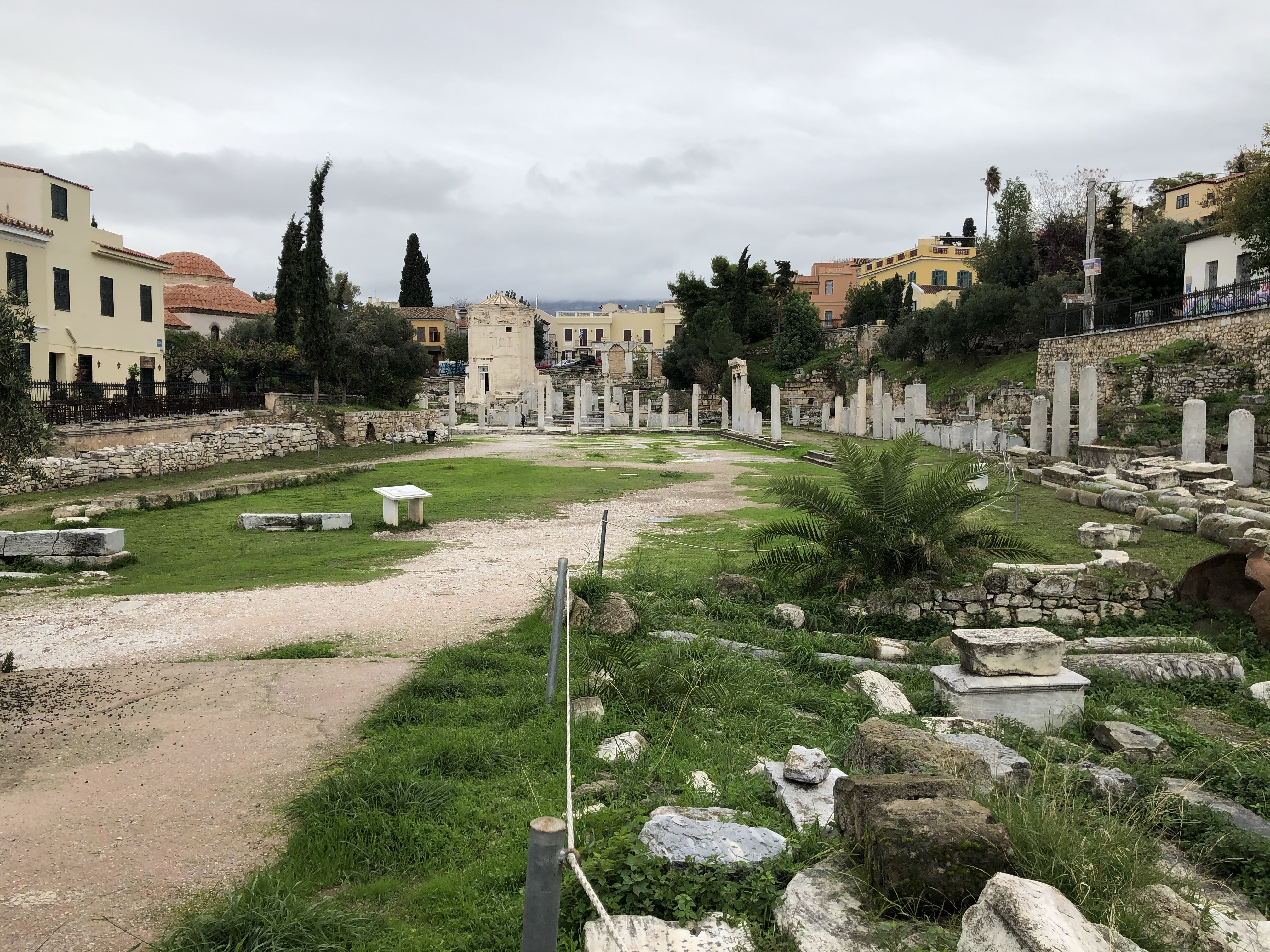
    At the foot of the Acropolis lies the marketplace and administrative center: the agora. When the Apostle Paul arrived at Athens on his second missionary journey he spent time in the marketplace. Everywhere he looked he would have seen a temple to another god or goddess… Apollo, Nike, and of course Athena.

    It was in this context that Paul was summoned to the Areopagus to give his presentation of Christianity. His address on Mars Hill is one of the most powerful moments in the book of Acts, made even more powerful when the context of Athens is taken into account.

    I was truly impacted by reading Acts 17 on Mars Hill. Paul’s faithful presentation of the same gospel he preached in other towns while being aware of his specific cultural situation is noteworthy. By God’s grace a few souls responded to the gospel. On the whole, Athens was too smart for its own good—Paul moved on to Corinth and Athens continued debating.

  • Corinth Day

    Israel/Greece Day 15

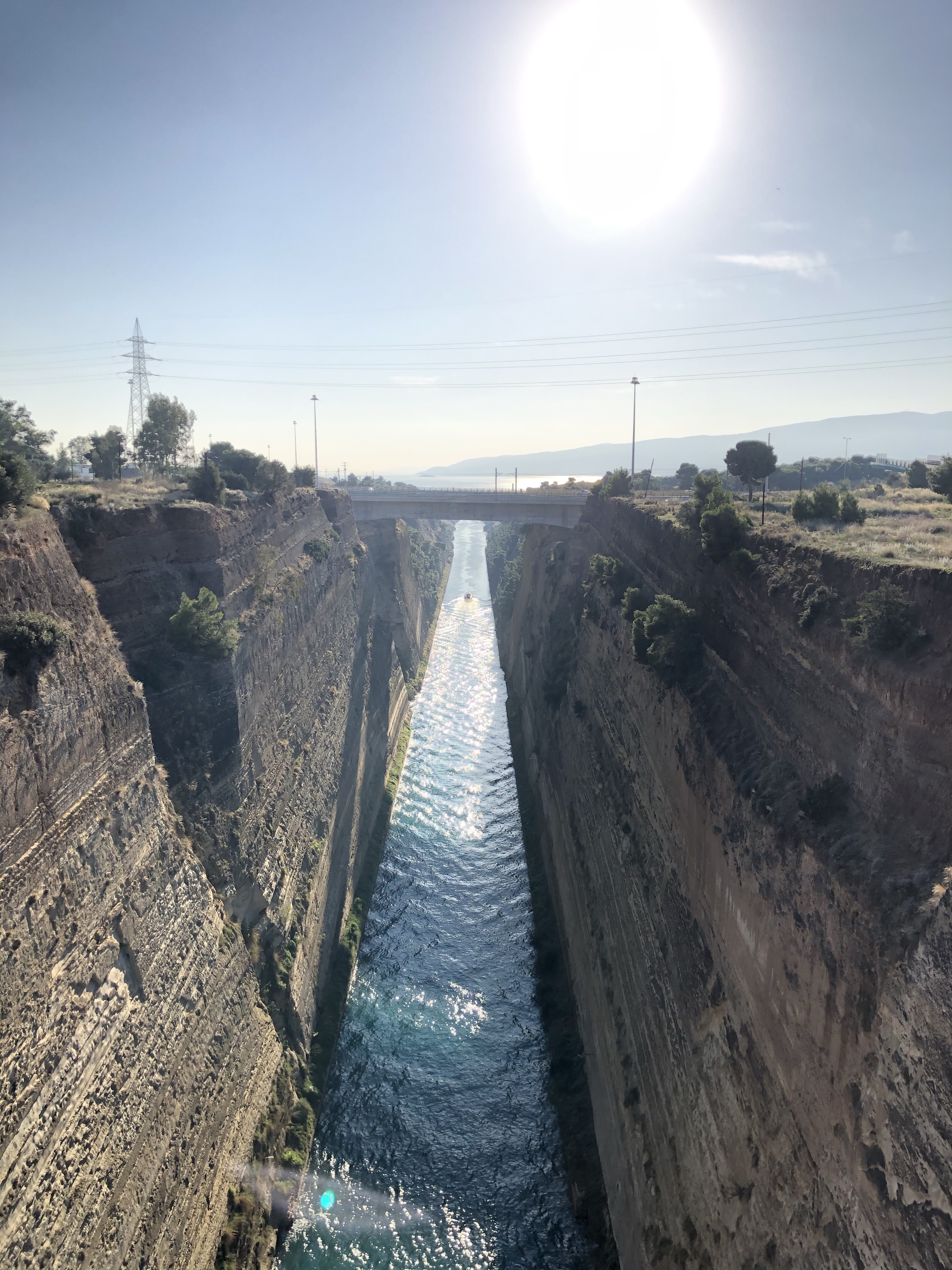
    Just as Paul did in Acts 18, we traveled from Athens to Corinth. Corinth lies on an isthmus that facilitates travel and trade between lands east and west of Greece. It was a highly strategic location in ancient times. Today a canal slices through the isthmus, but in ancient Corinth slaves would pull ships on land for 4 miles to save time and danger on the journey by sea. The Corinthians enjoyed taxing all the goods that passed through.

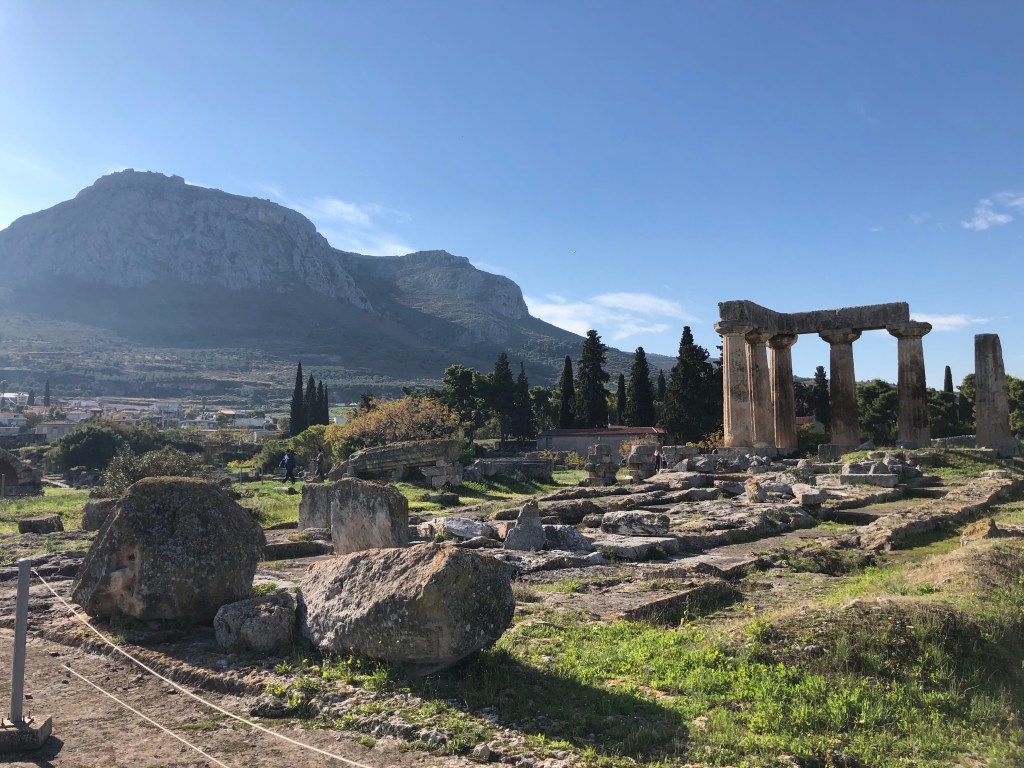
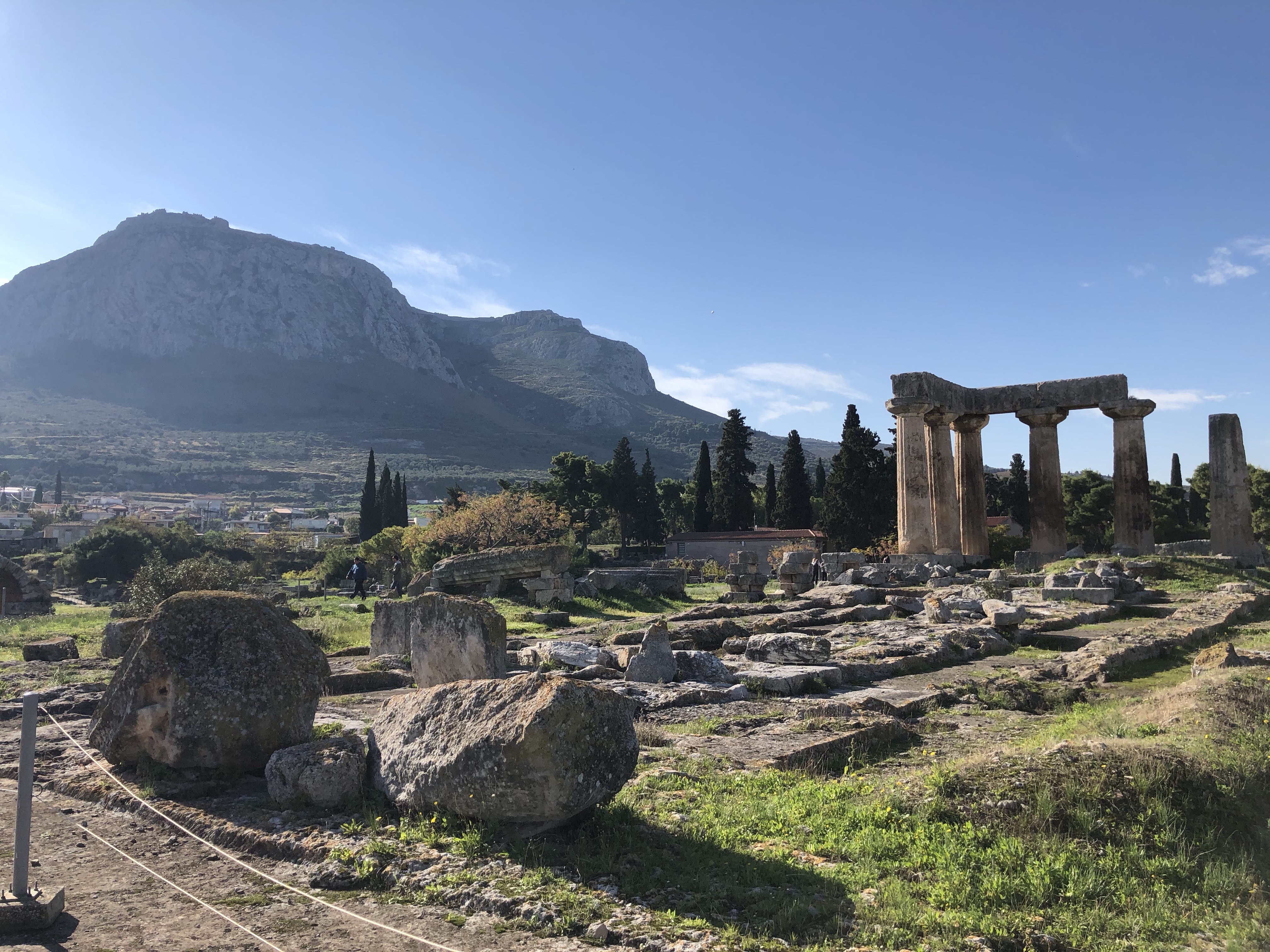
    The Corinth of the New Testament was still known for its licentiousness and was home to many temples for many gods and goddesses. The temple of Aphrodite sat atop the fortress guarding Corinth, and sadly facilitated false worship and sexual immorality simultaneously.

    The temple of Aphrodite sat on the acropolis to the left. The pillars on on the right are the temple of Apollo.

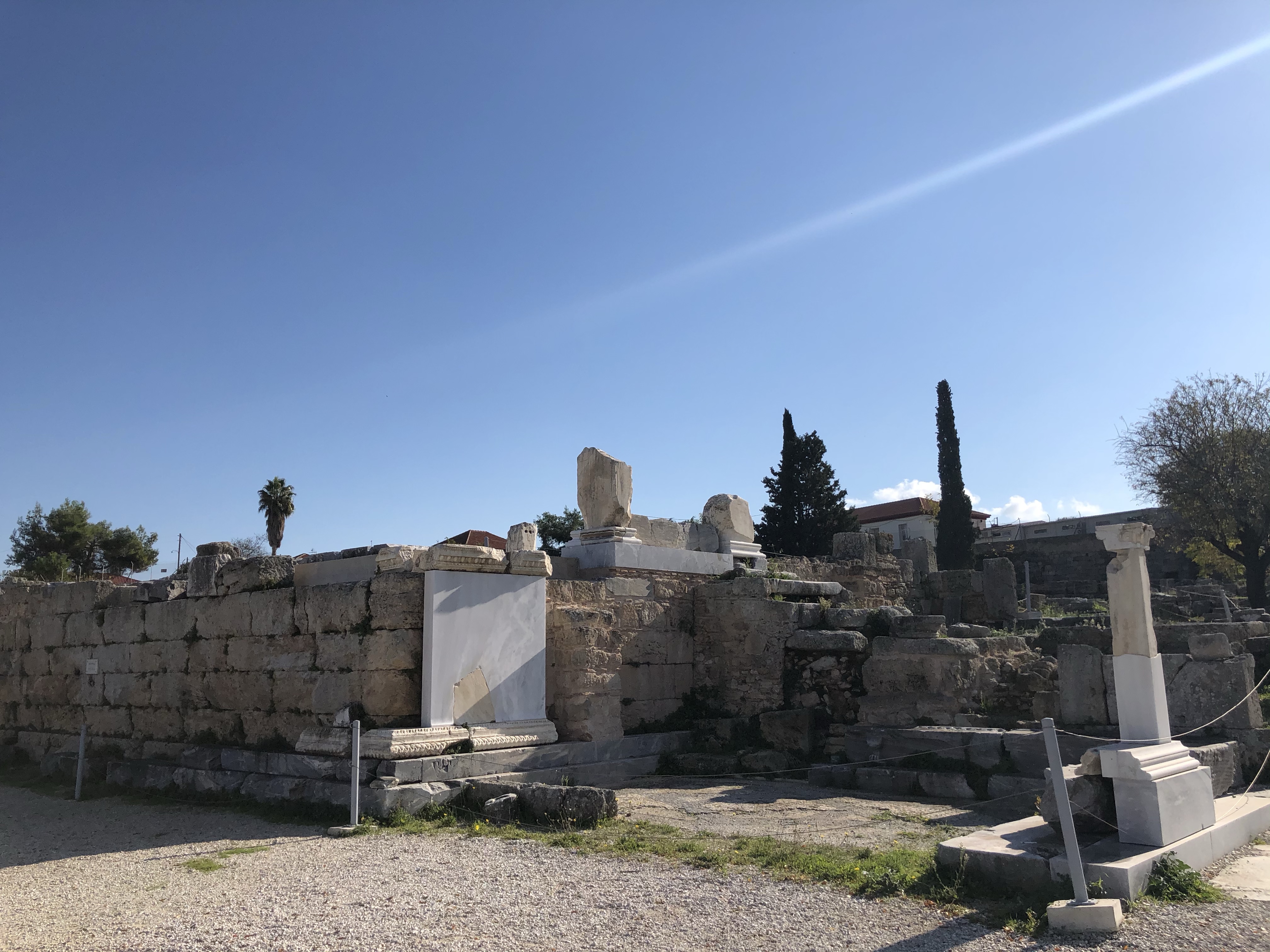
    On his second missionary journey Paul stayed at least 18 months in Corinth, helping with the newborn church there. At one point he was accused by part of the Jewish population of crimes against the city. He was brought before Gallio at the exact place pictured below in the Corinthian agora. It was here God provided protection for the fledgling church in the form of Gallio’s common sense.

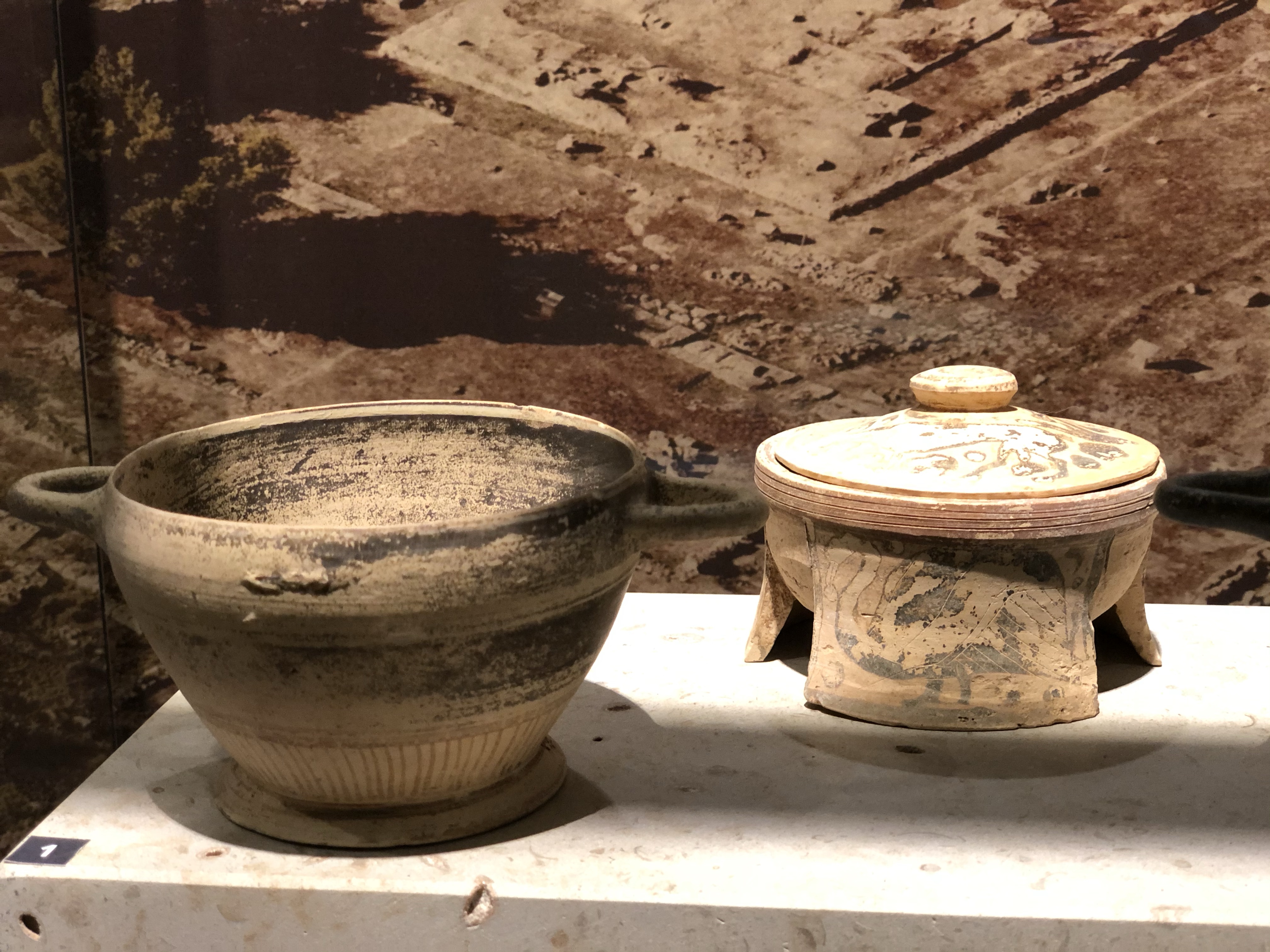
    So much in Corinth lends clarity to images in 1 and 2 Corinthians, including treasures held in jars of clay (note the Corinthian jewelry box pictured below on the right), our bodies being made of many members, and our bodies being a temple of the Holy Spirit. This site reminds us of the need for believes to follow Christ despite a pagan culture.

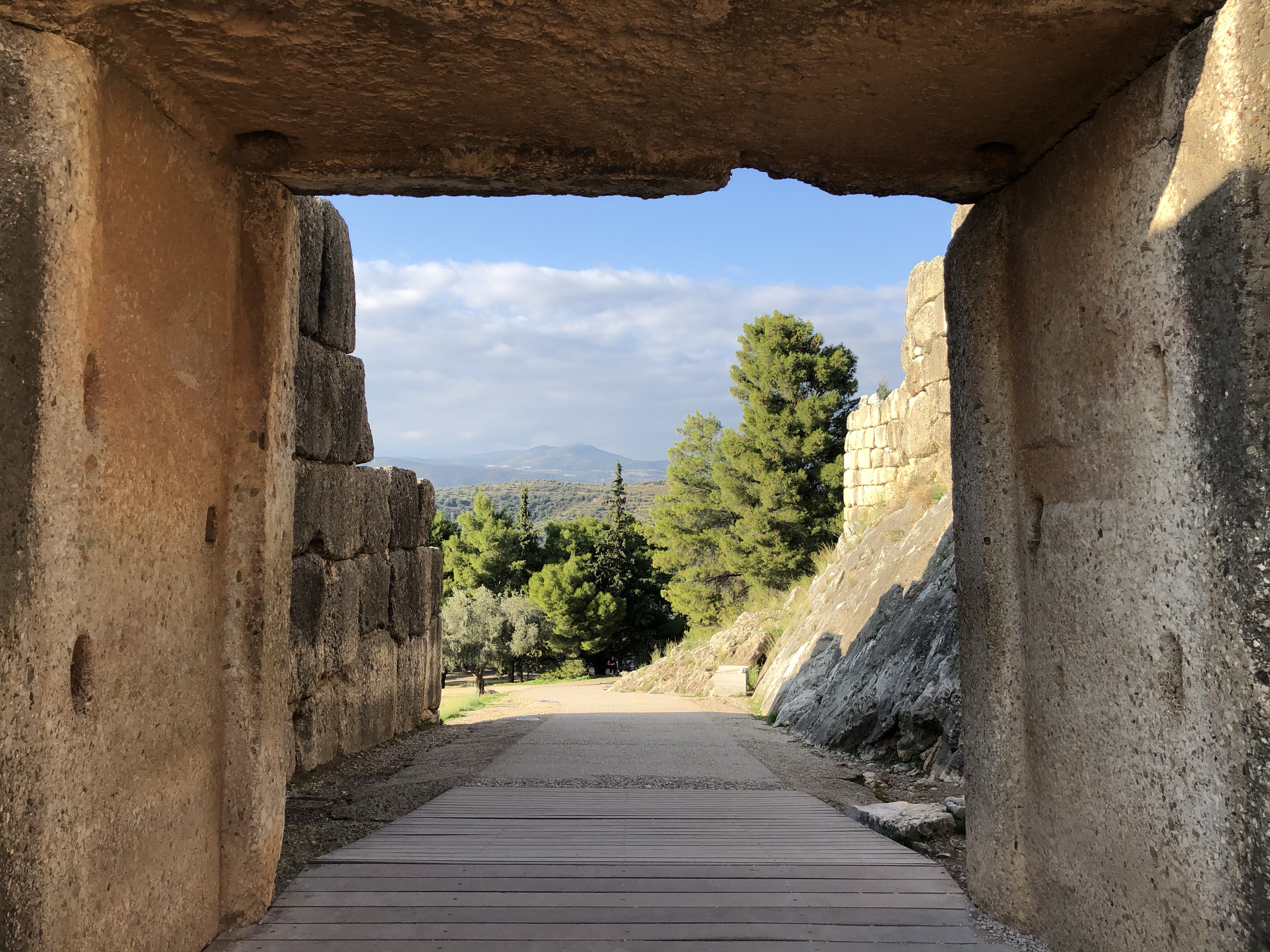
    We ended our day with a visit to Mycenae, the seat of the Mycenaen kingdom from 1650-1200 BC. These early Greeks may have been ancestors of the Philistines, but this is far from certain. Their artistic skill was highly advanced for their time, and they enjoyed a tremendous view from their city.