Today was largely a travel day. Last night we drove south from Macedonia to the region known as Thessaly. Our journey probably paralleled Paul’s third missionary journey, but we can’t know his route for sure.
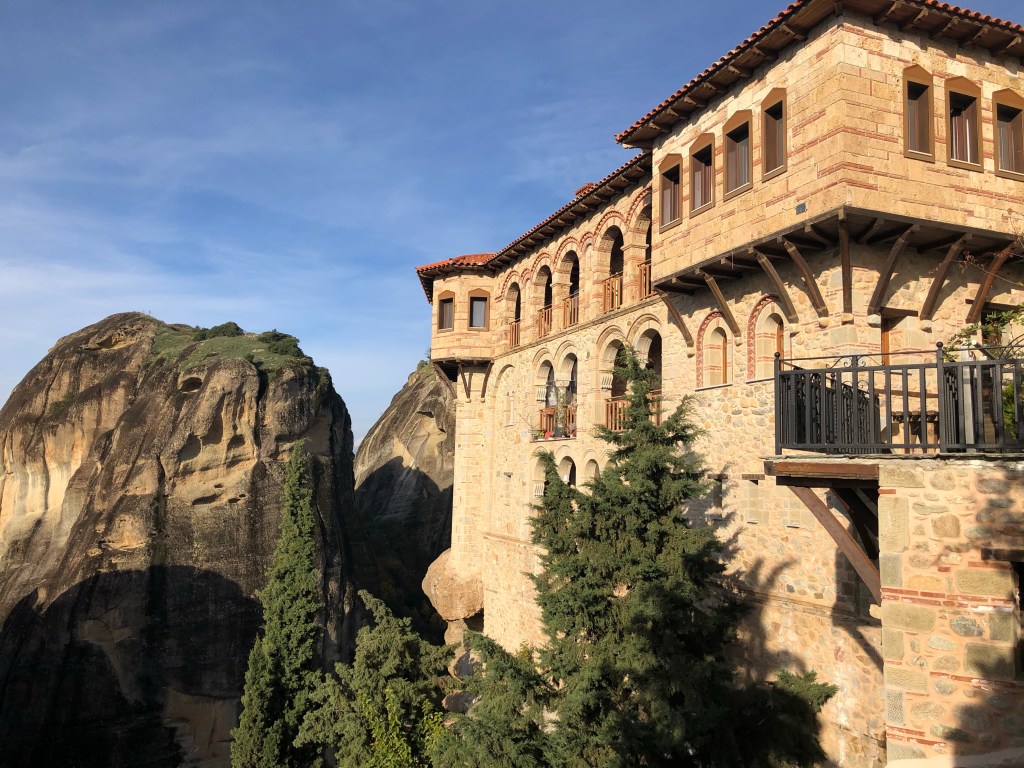
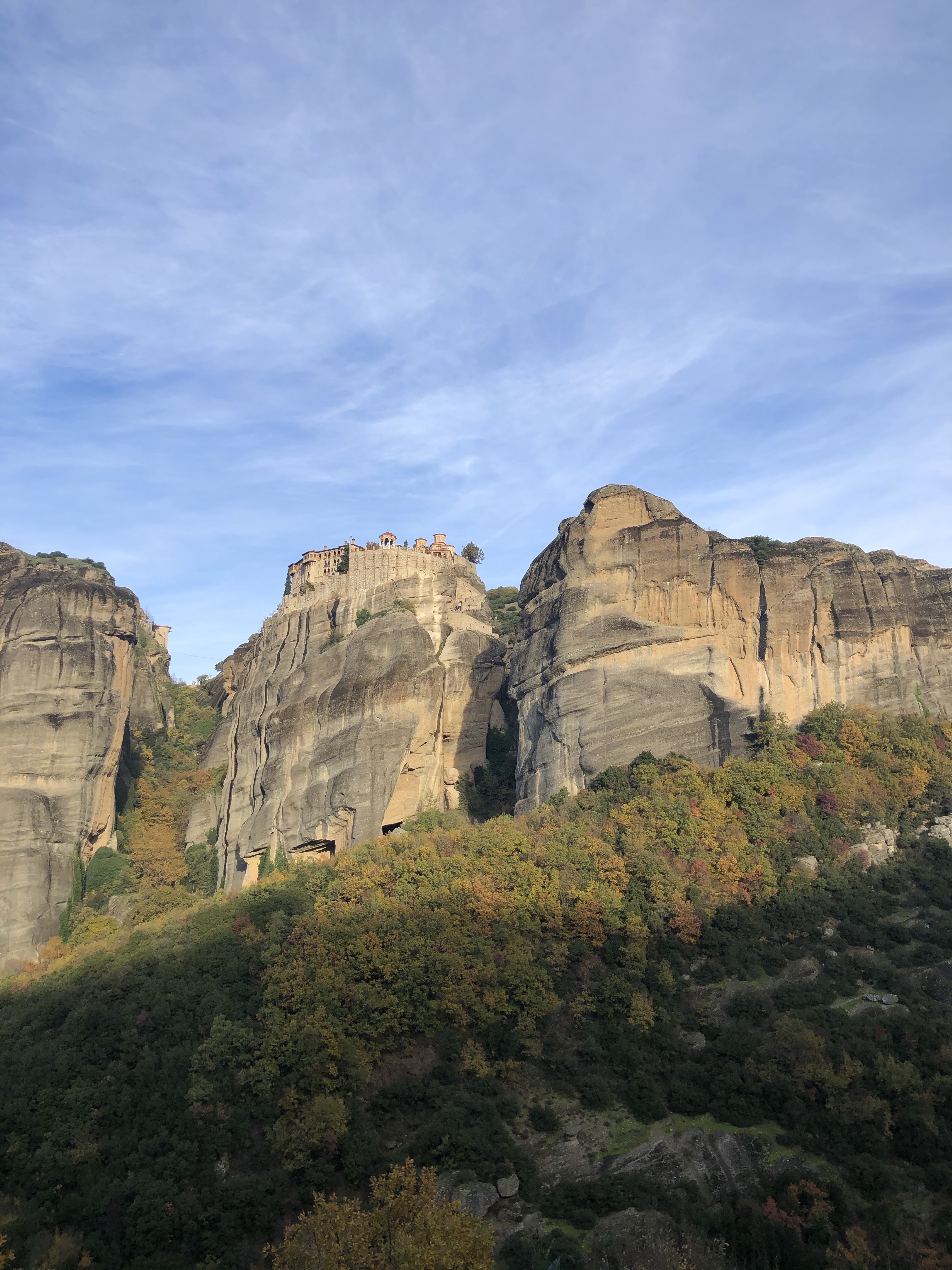
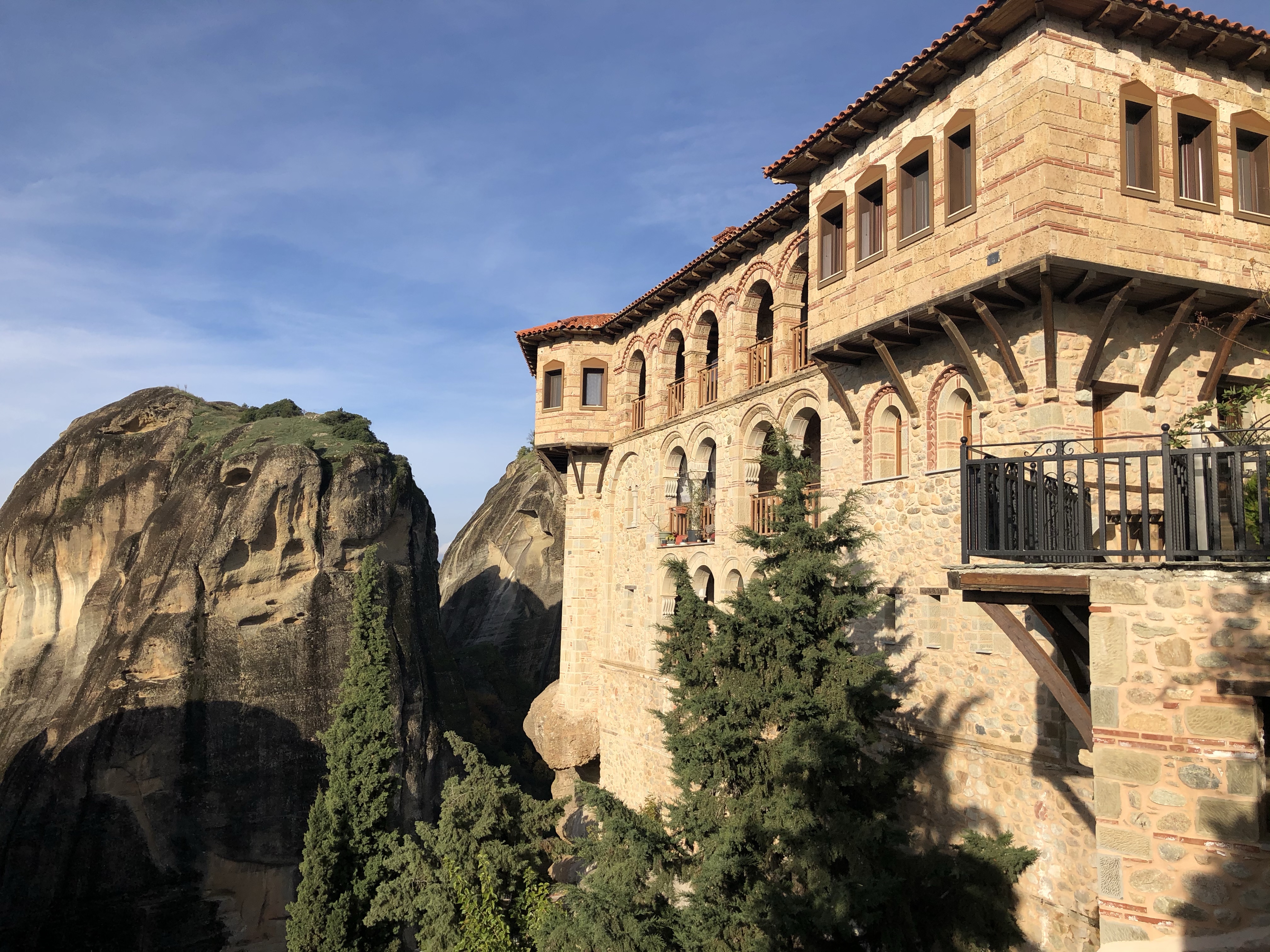
We started our day with a visit to Meteora, a stunning display of God’s glory in nature. These rocks testify to the creativity and majesty of our creator.
Atop many of these rocks are monasteries that date back to the 16th century (some even earlier). Originally monks lived in caves in the rocks, but as more came to the area they were forced to move on up. We saw remarkable reliefs in a 16th century church. They reminded us of the dire need for the clear explanation of the Word of God.
From Meteora we continued south. We took time to stop at Thermopylae, the site of the incredible battle between Greek and Persian armies in 480 BC. The Spartan king Leonidas held the line with 300 Spartan and 700 Thespian warriors, allowing the remaining Greek soldiers to withdraw for another day.
At long last we arrived in Athens, looking forward to visiting Corinth and Mycenae tomorrow and then Athens on our final day of touring.
We started our day in Thessaloniki (Thessalonica) in northeastern Greece. Today Thessaloniki is a large, important town in northern Greece just as it was in the first century. As a harbor town on the Aegean Sea, Thessaloniki had natural prominence as a trading post and connection point with Asia Minor.
In Acts 17 Paul visited Thessalonica with his companions to spread the gospel. In the first century Thessalonica had a large Jewish population, so Paul began his time there by teaching and preaching in the synagogue:
As usual, Paul went into the synagogue, and on three Sabbath days reasoned with them from the Scriptures, explaining and proving that it was necessary for the Messiah to suffer and rise from the dead: “This Jesus I am proclaiming to you is the Messiah.”
Acts 17:2-3
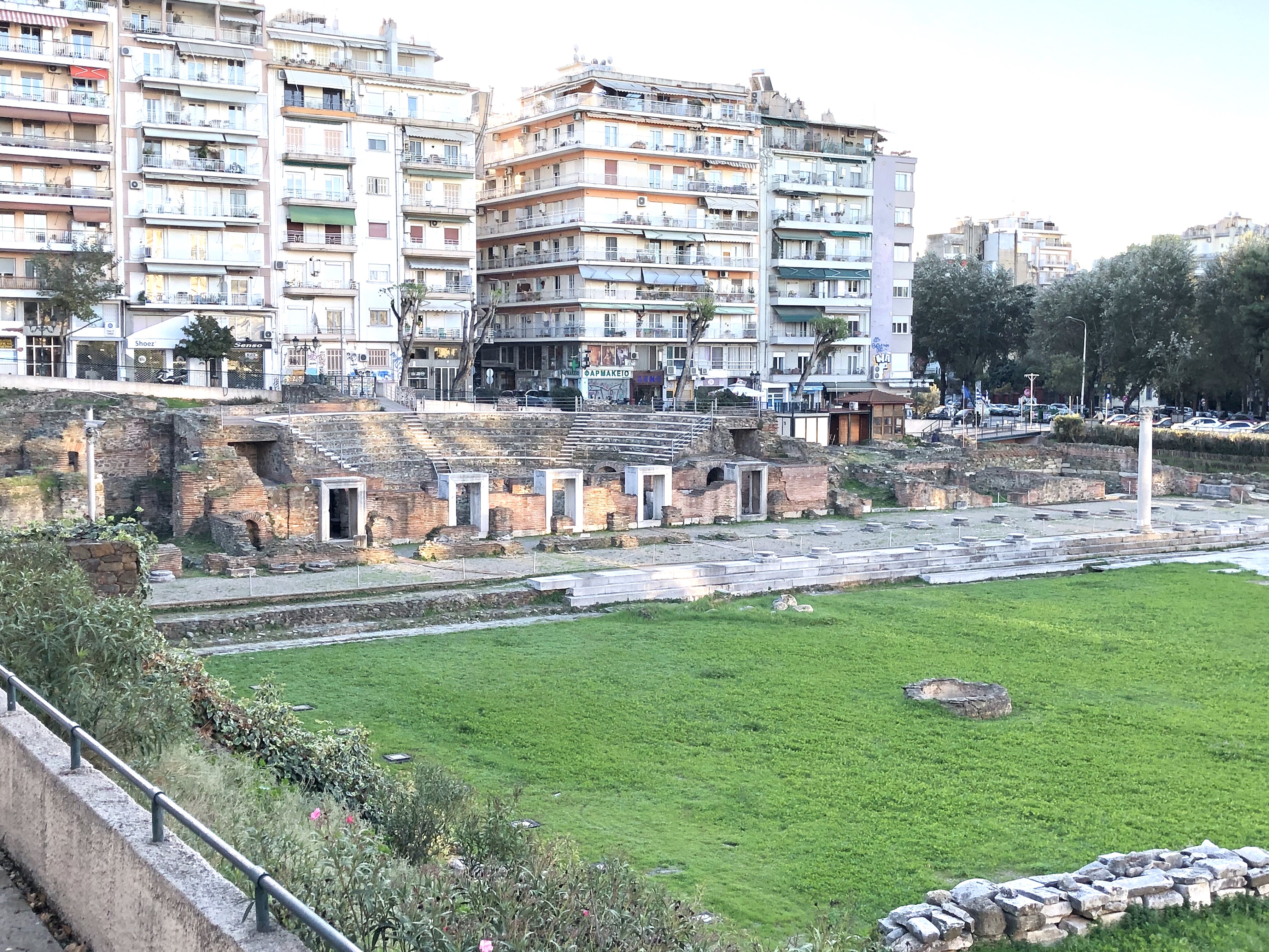
The response was favorable—Jews and Greeks responded, including leading women of the community. That favorable response was quickly followed by jealousy from some unbelieving Jews. They brought some of those first converts to the agora to face accusations. Their charges were both false and true—they accused them of disturbing the city which they had not done. They also accused them of saying there is another king—Jesus. That part was certainly true. Most of ancient Thessalonica lies under the modern city, but a portion of agora is visible today.
Due to the tension in the city, the new believers in Thessalonica sent Paul and Silas away in the dark of night to Berea which wasn’t far to the west. The Bereans were notable because of their response to Paul’s preaching:
The people here were of more noble character than those in Thessalonica, since they received the word with eagerness and examined the Scriptures daily to see if these things were so.
Acts 17:11
Many Jews and Greeks once again believed, but persecution found them in Berea. Silas and Timothy stayed behind to help the infant church while Paul sailed to Athens. There are no 1st century remains excavated today at Berea, but it was still sweet to be in another place where the gospel spread so many years ago.
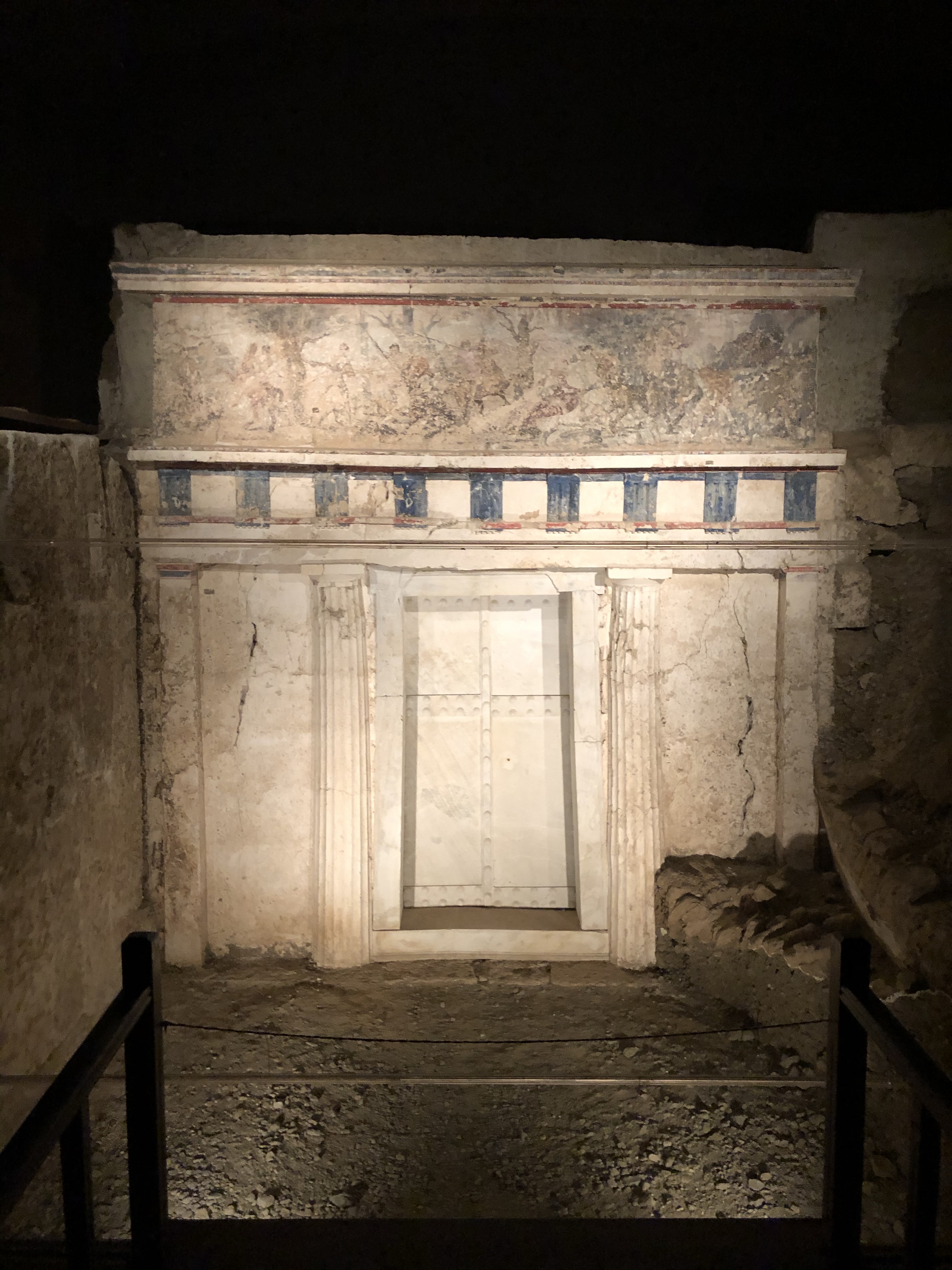
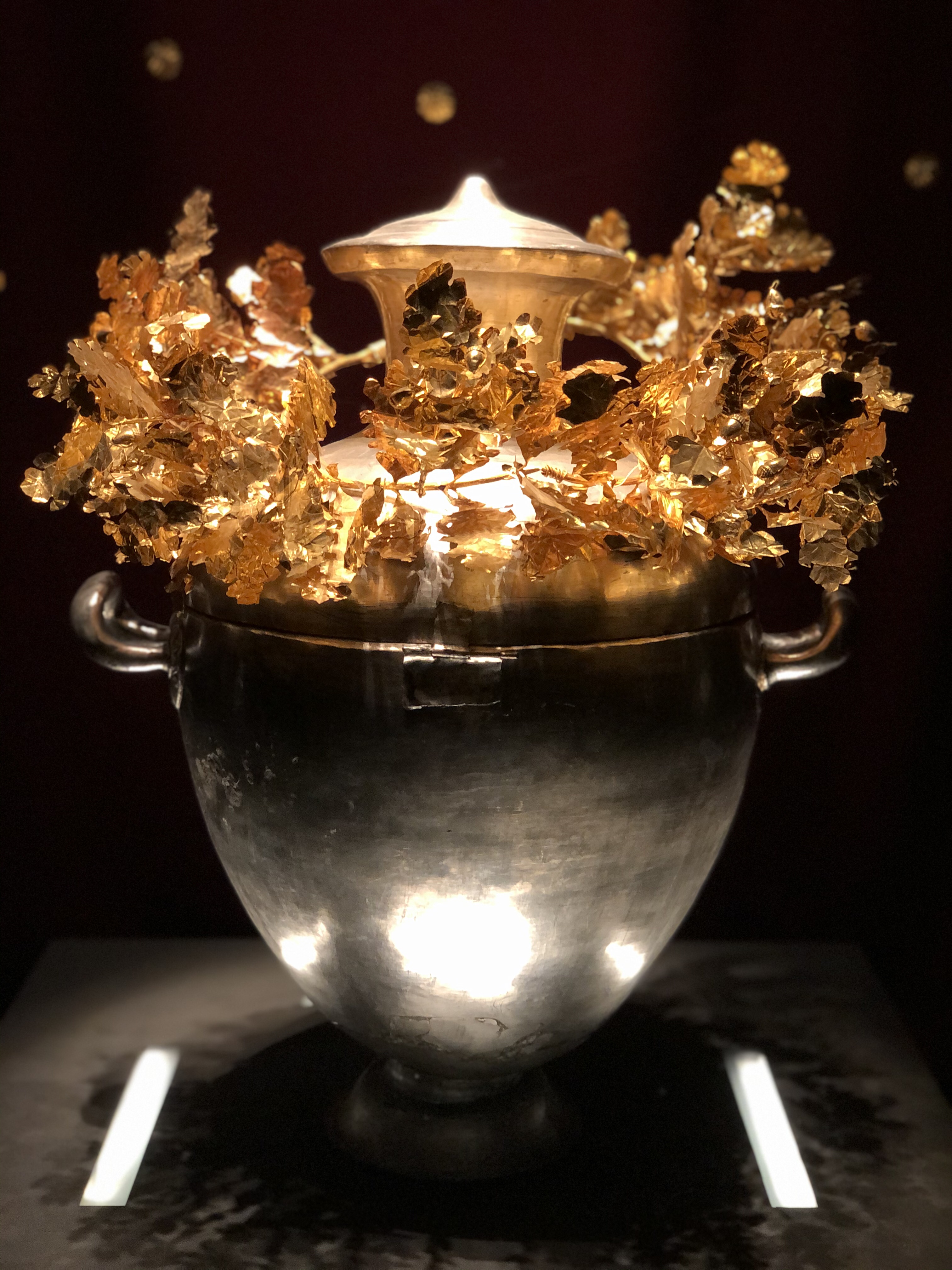
Not far from Berea is the town of Vergina, famous for being the burial ground of Macedonian royalty in the 4th century BC. It is the resting place of Macedonian king Phillip II, the father of Alexander the Great. While this stop didn’t have direct biblical relevance, it was a good reminder of some of the ways God prepared the world to receive the gospel through the spreading of Greek culture and the Greek language. The tomb of Phillip was found undisturbed which makes him a Greek king Tut of sorts. None of his treasures made it to the afterlife with him.
We said a bittersweet goodbye to part of our group as they headed home. The rest of us followed in the footsteps of the Apostle Paul traveling from Israel to Asia Minor— modern day Turkey. Paul didn’t fly Turkish Airlines, instead he used Roman roads.
After a very quick stop in Istanbul we caught a short flight to modern Thessaloniki (biblical Thessalonica) in northeastern Greece. Our luggage didn’t make the transfer, so we had to make due with the same clothes for an extra day!
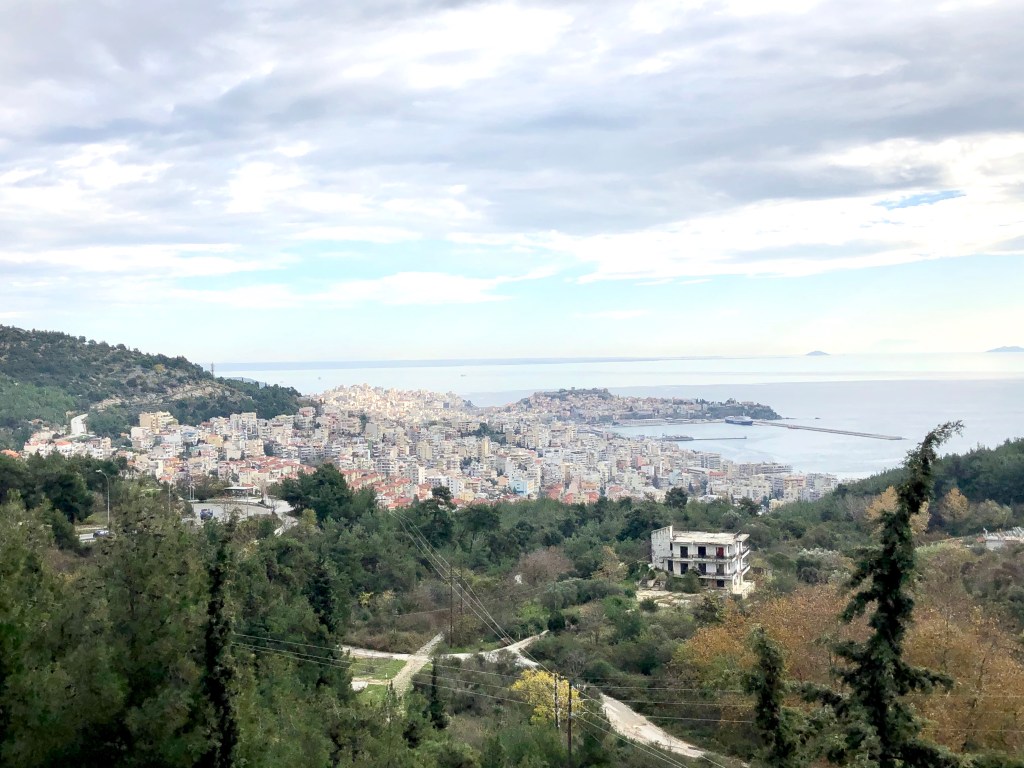
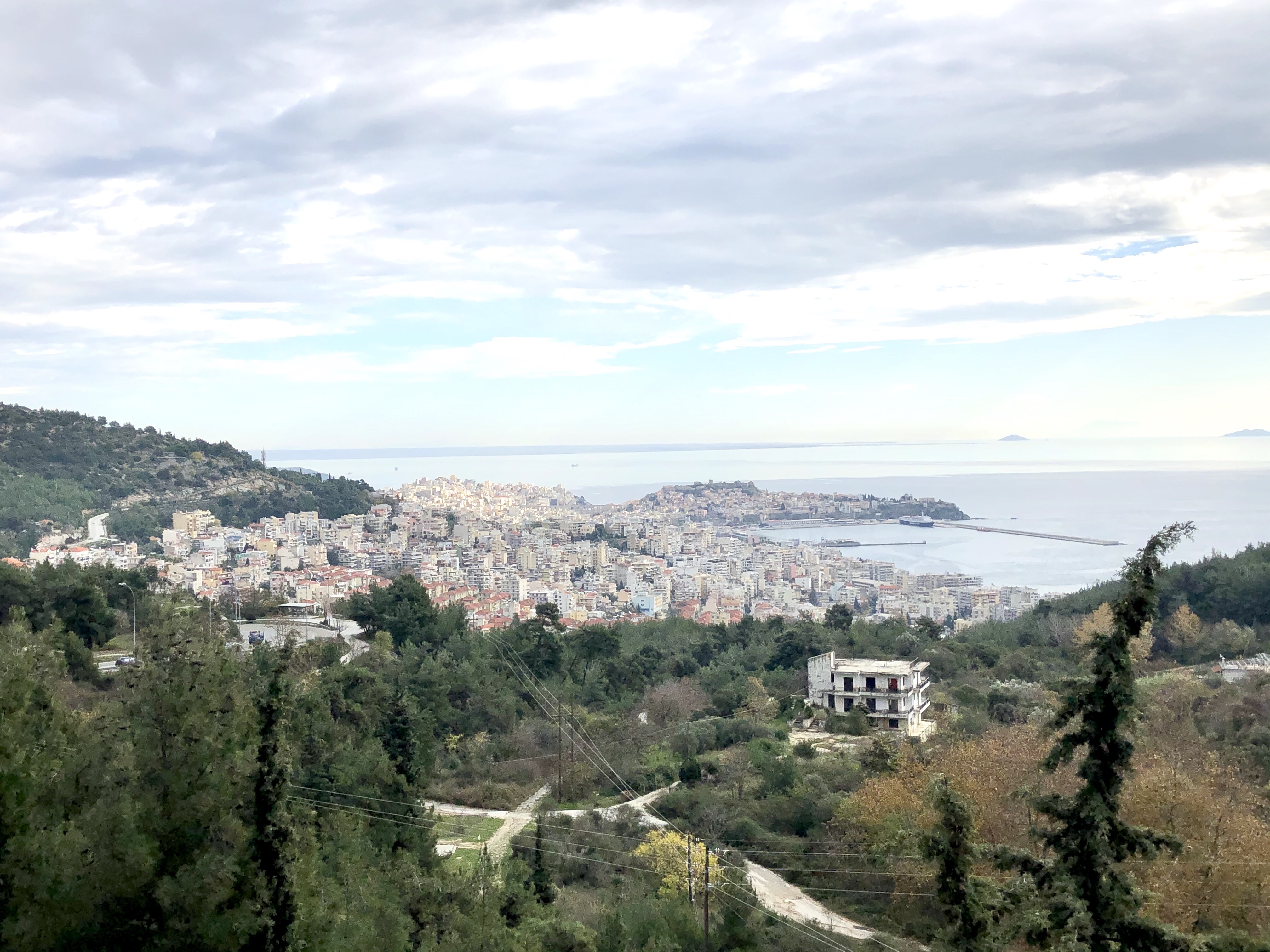
Our first day of touring in Greece focused on Paul’s travels east of Thessaloniki. We stopped for an overlook of Neapolis, the port town in which Paul and his companions landed in Acts 16:11. This was the first time the gospel was proclaimed in Europe. The Lord specifically directed Paul to Macedonia/Greece, and the Roman roads and ports made it possible for this journey to continue. The main Roman road running east/west was called the Via Egnatia and is visible in Neapolis at the bottom of the photo below.
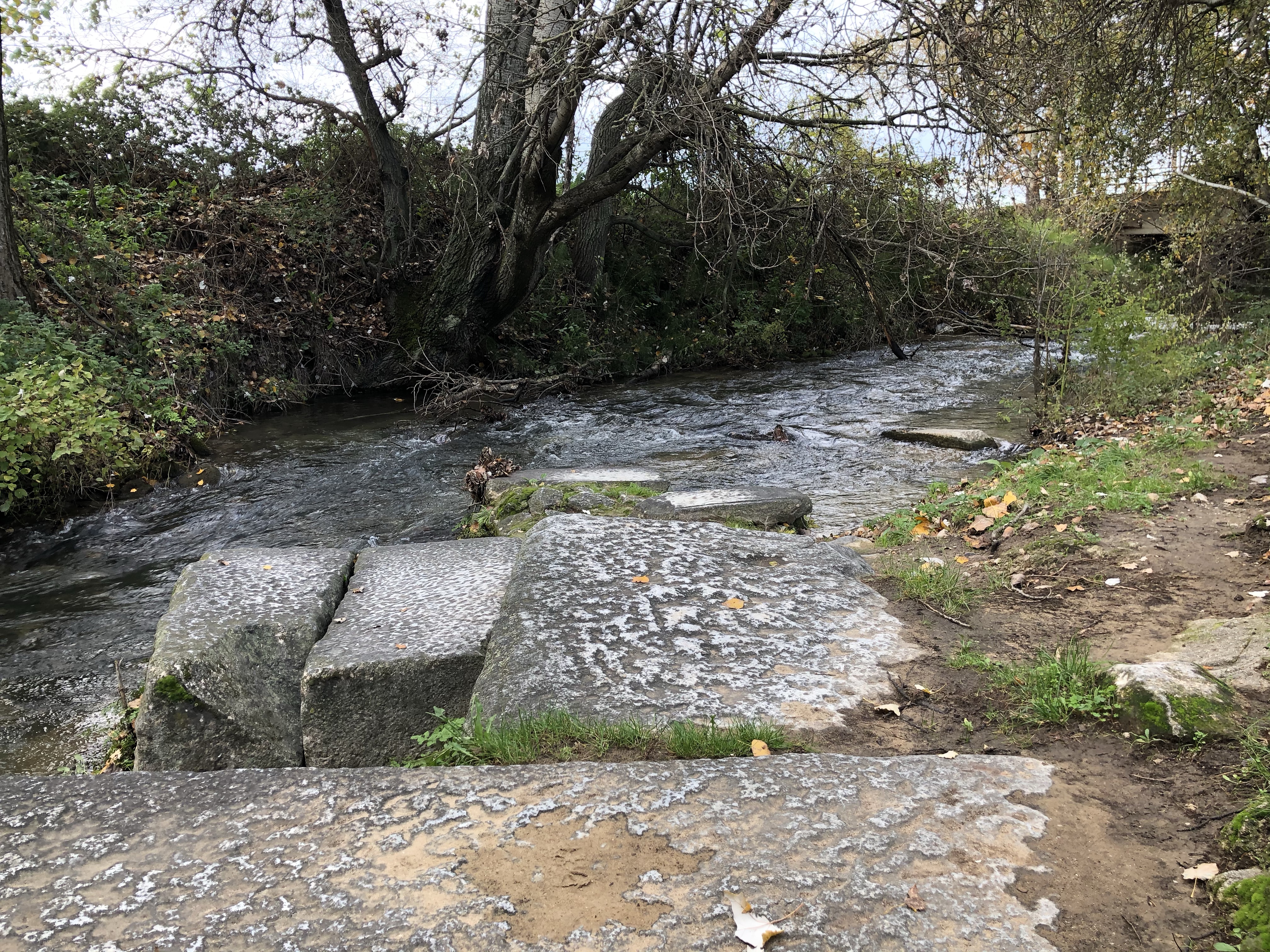
From Neapolis Paul traveled to Philippi. Philippi was a Roman colony in the first Roman district of the region called Macedonia (Amphipolis was the capital of the district). We read in Acts 16:13-15 about Lydia and her household hearing the gospel, believing, and being baptized. These first European believers were made disciples somewhere on this river.
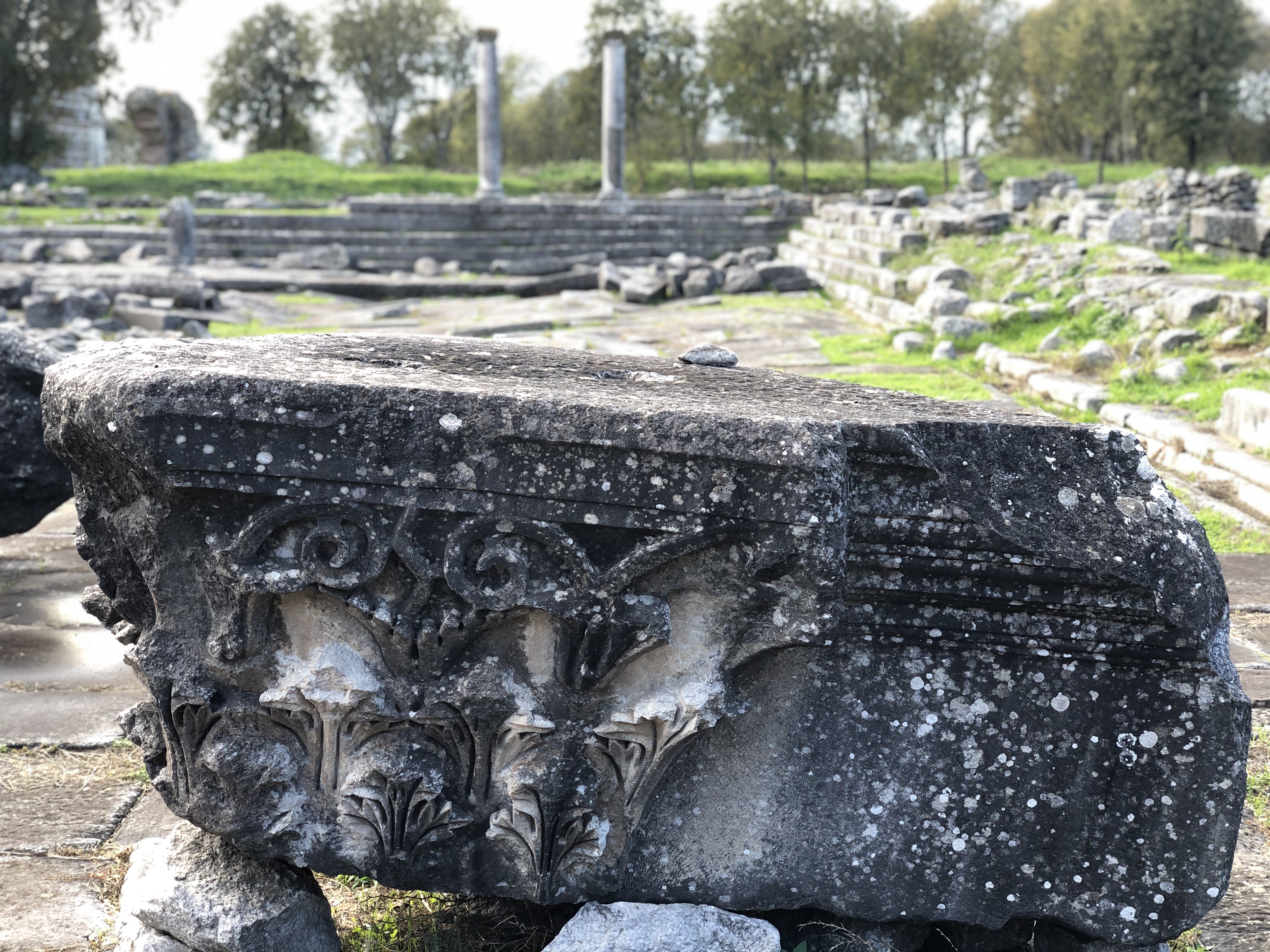
Paul also was used by God in Philippi to deliver a demon-possessed slave girl in Acts 16:16-22. The girl’s owners filed a complaint, and Paul and his crew were brought before the magistrates at the agora—the city municipal center and marketplace pictured below.
Paul and Silas were thrown in jail for the night. While they were singing songs of worship and praying, God sent an earthquake. In Acts 16:23-34 we read that Paul and the other prisoners didn’t leave. The jailer and his household believed the gospel and were baptized, likely in the same spot Lydia was.
In Acts 16:35-40 we read that the magistrates ordered them to be released, but Paul had a strategic reason to decline. He informed them that he and Silas were Roman citizens, and therefore the magistrates needed to come and release them publicly. Roman citizenship was a central component of life in Philippi. Roughly 90 years before Octavian and Mark Antony defeated Brutus and Cassius at Philippi (42 BC). This was the most important battle in Roman history as it marked the transition of Rome from a republic to an empire. Paul wanted to be sure the magistrates at Philippi knew they had done wrong so they would allow the newborn church some breathing room.
The Philippian focus on Roman citizenship also sheds light on Paul’s later letter to the Philippian church. In Philippians 1:27 Paul writes, “Just one thing: conduct yourselves as citizens worthy of the gospel of Christ…” In essence he is saying, your Roman citizenship must be secondary to your heavenly citizenship (see also Philippians 3:20). Citizenship entails a set of shared values and responsibilities. Paul calls the Philippians, and us, to allow the gospel to set our priorities for how we approach life.
Our morning started in Nazareth and a visit to the “Nazareth Village,” a ministry that has recreated 1st century life in Nazareth. Live shepherds, carpenters, and weavers really made us feel like we had traveled in time.
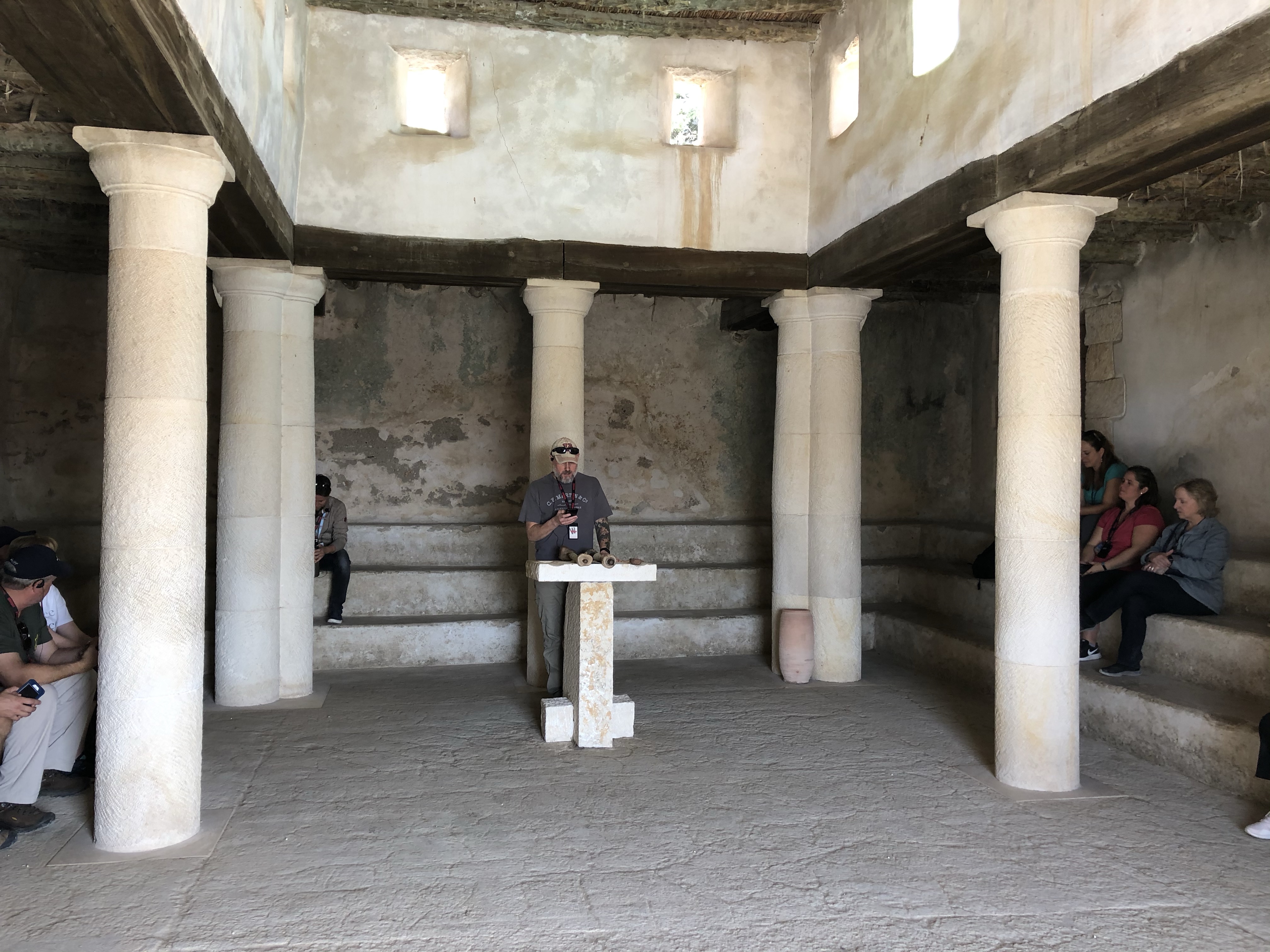
A special highlight of the morning was when pastor Mike read Luke 4:16-30 in a replica synagogue. This is the account where Jesus read from Isaiah 61:1-2a in Nazareth’s synagogue 2,000 years ago. It was a powerful experience as we reflected on Jesus declaring himself to be the Messiah.
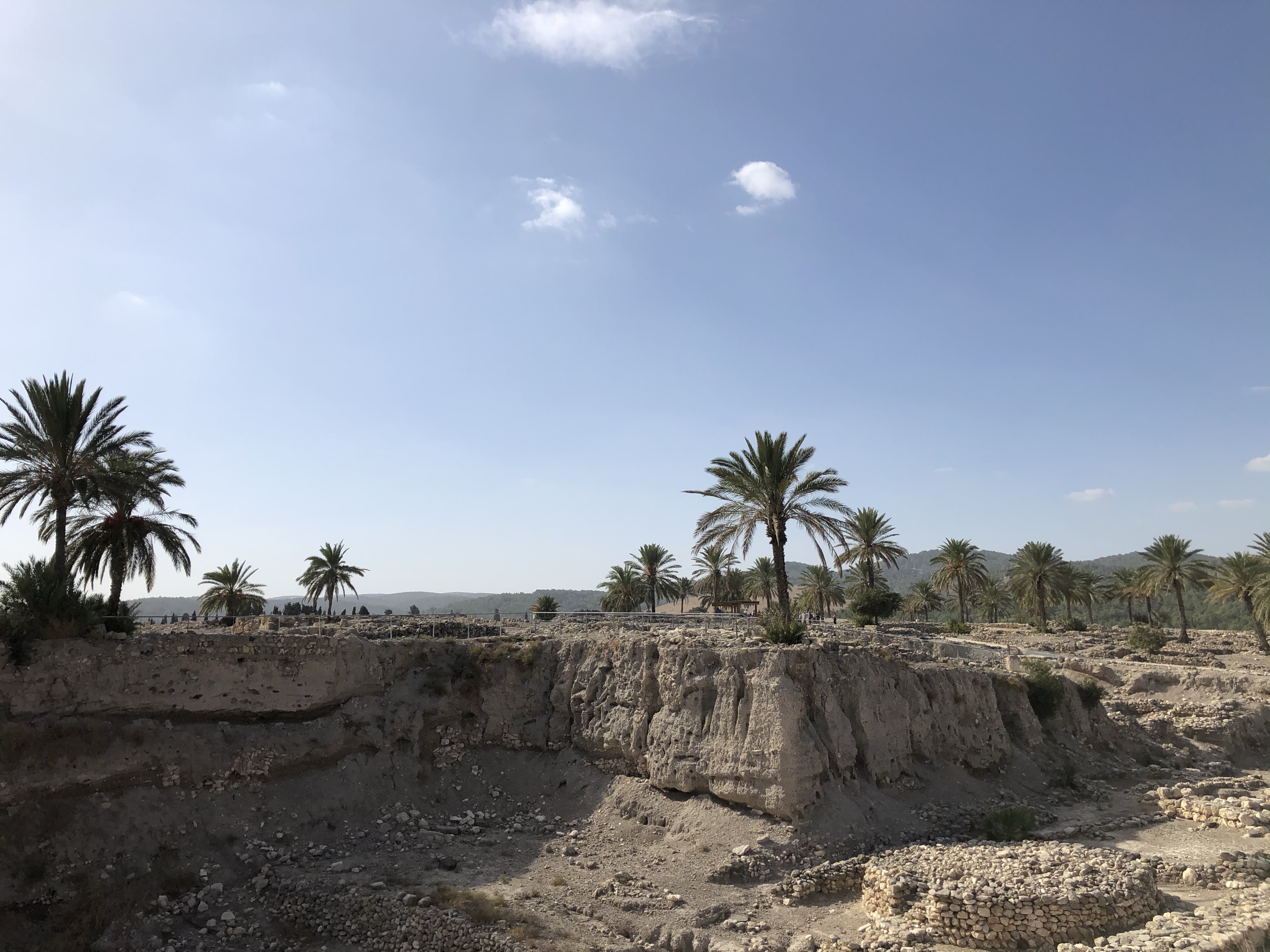
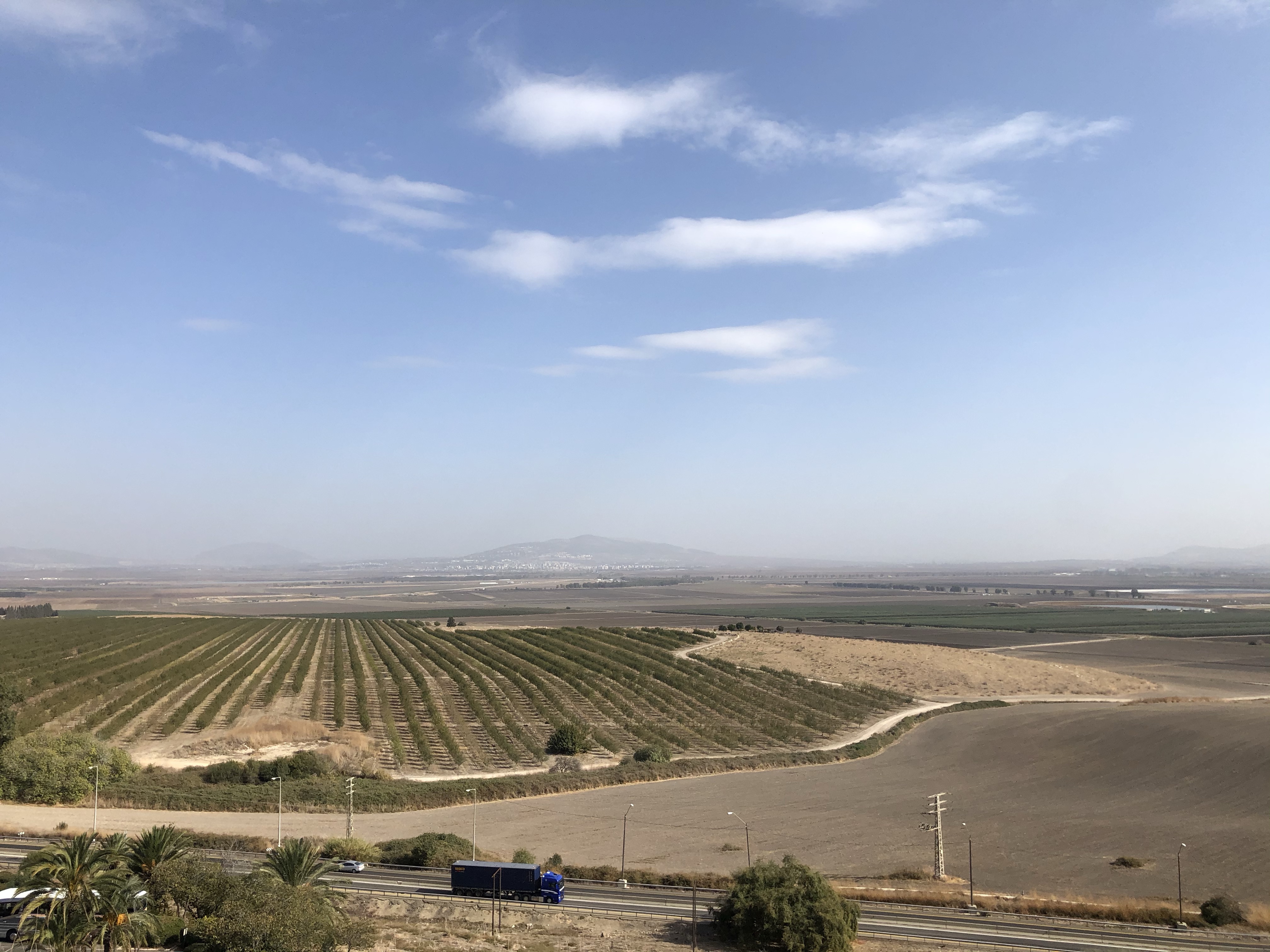
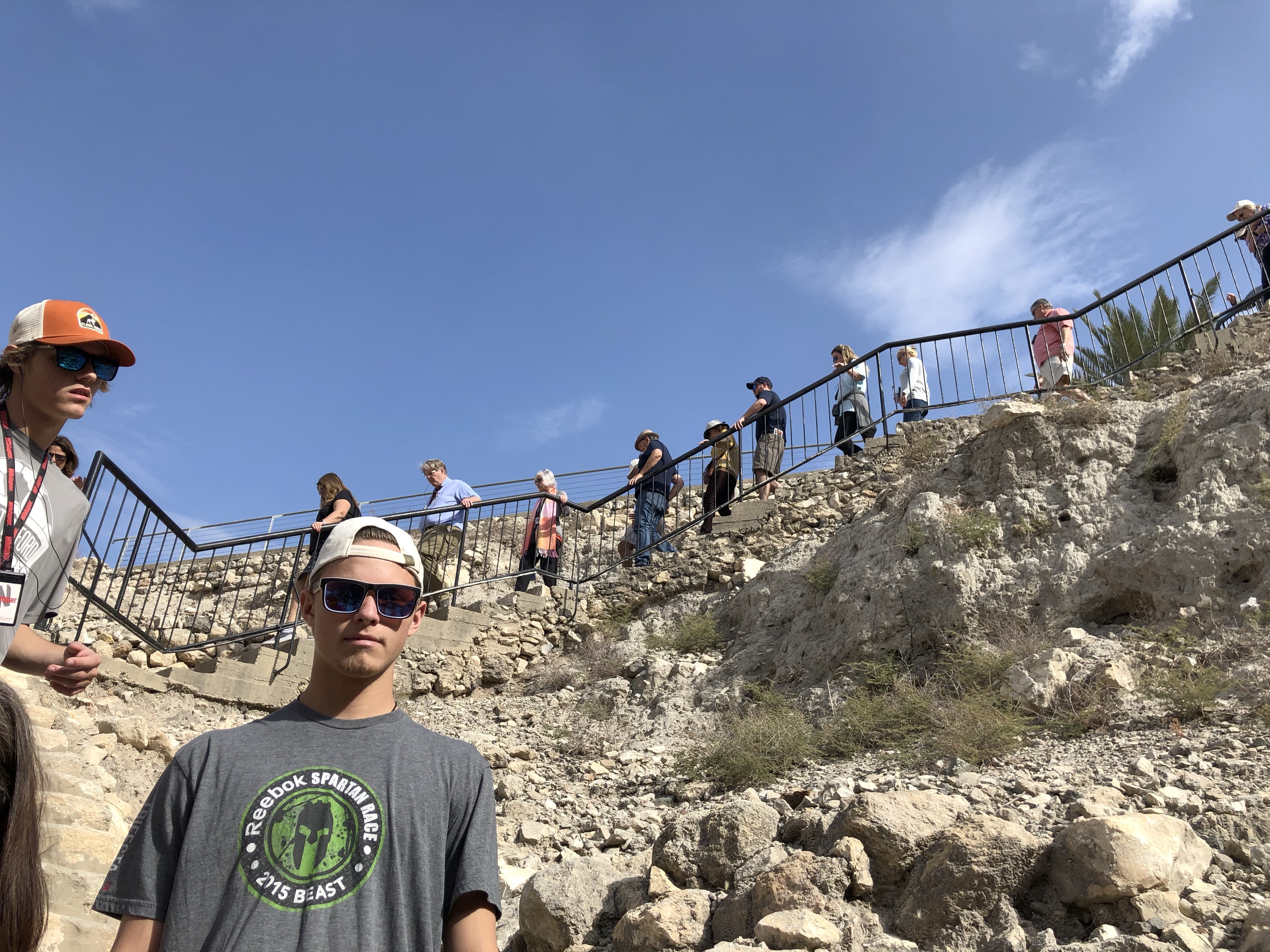
From Nazareth we drove across the Jezreel Valley to Megiddo, the crucial outpost guarding the entrance to the valley. From this ancient tel we had an excellent view of mount Tabor, where Deborah and Barak led the Israelites in battle against Sisera and his army. God provided rain and mud which neutralized Sisera’s chariot advantage (Judges 4 & 5).
Tel Megiddo
The challenge of this passage is Barak’s reluctance to trust God. It was Deborah who had to give the command to charge. Barak was opting for safety and anonymity rather than faith. Yet faith in God is always well-founded, and God provided the victory.
Mt. Tabor is in the distance on the left- barely visible.
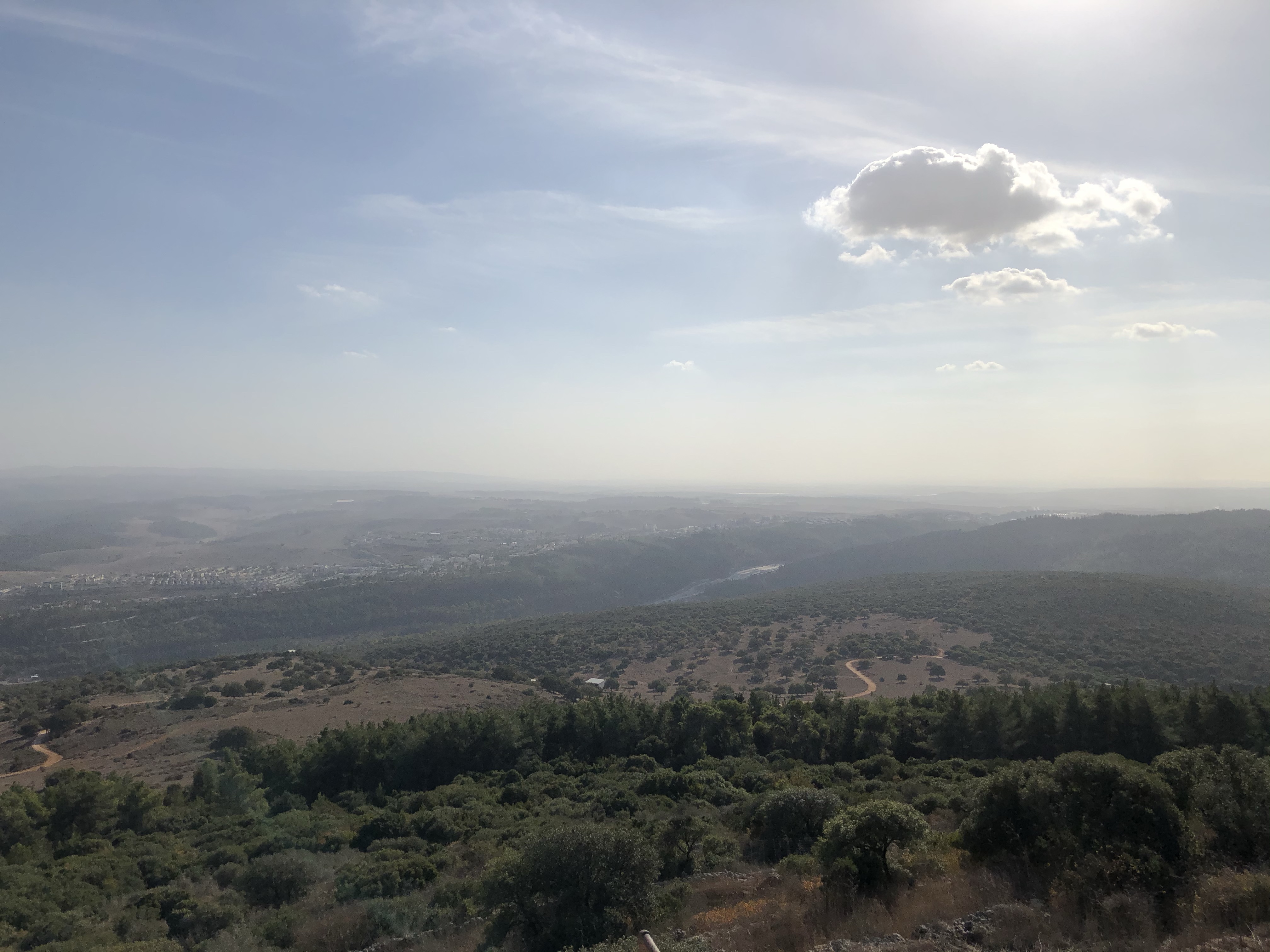
From there we drove up to mount Carmel, the location of Elijah’s confrontation of Ahab and the prophets of Baal. Elijah stood by faith against king Ahab, queen Jezebel, and the vast majority of his culture. God proved his greatness over Baal, and was glorified.
The view from Carmel
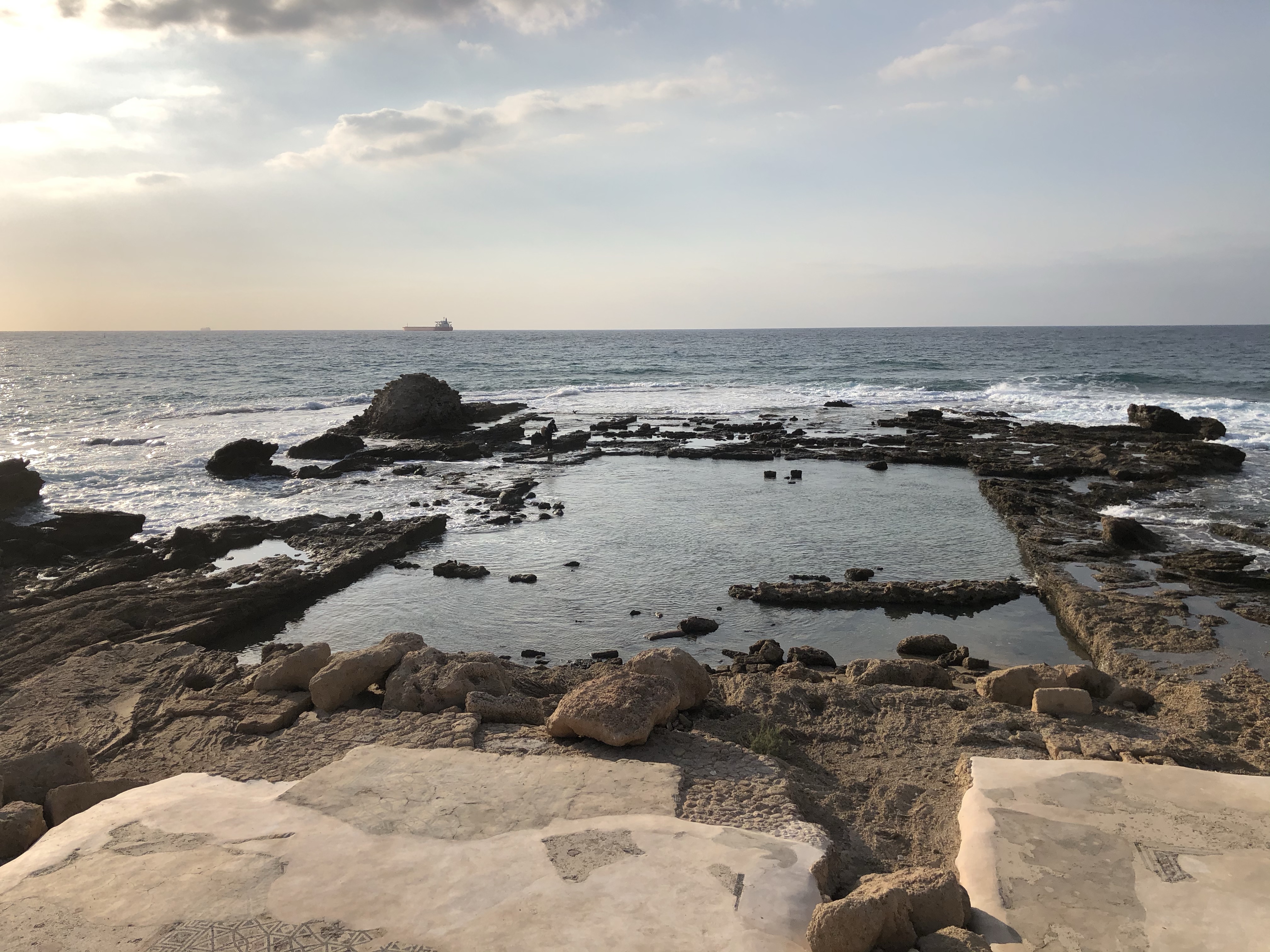
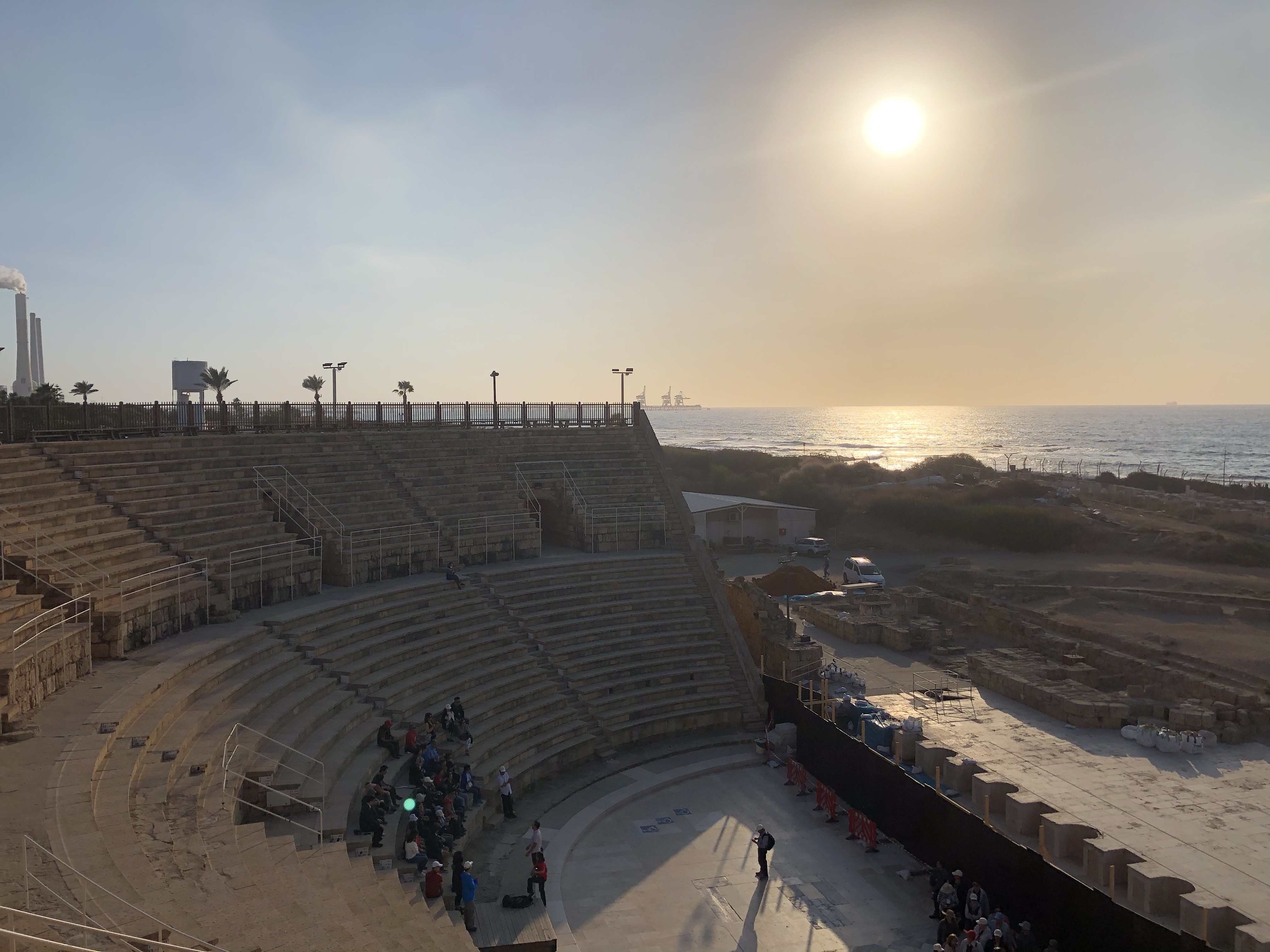
Our final visit was to Caesarea by the sea. This luxurious Herodian city was the Roman capital of Israel during the life of Christ. It was here that the gospel spread to the gentile Cornelius, and here that God struck Herod Agrippa dead for allowing the people to worship him as a god.
It was also at Caesarea that Paul was held captive for 2 years. In that time he faithfully testified to Felix and later Festus, and finally was sent to Rome. Paul could easily have taken the more comfortable route, but he chose to stand out by his faith and speak openly and honestly about Jesus. May we stand out as we walk by faith as he did.
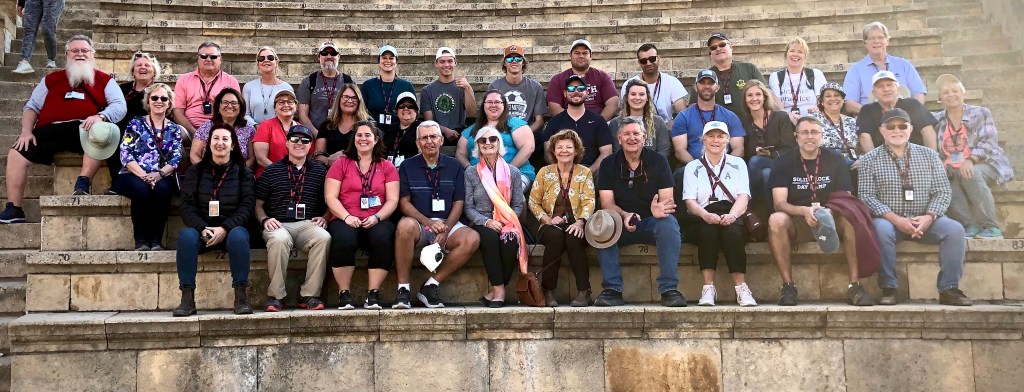
It’s fitting for our touring of Israel to conclude on Thanksgiving. By God’s grace, we had an awesome trip. Every day we saw amazing sights (and sites) that literally brought the Bible to life. We had an excellent guide (Irit) and driver (Munir), which really makes all the difference. They navigated us through the chaos and taught us much about Israel and Israeli culture.
The group was amazing. They followed me up and down ancient tels, on and off of the bus, in and out of water, and through underground tunnels (“put on your water shoes now!”). They endured forced marches through the Old City of Jerusalem, and “new and exciting” food.
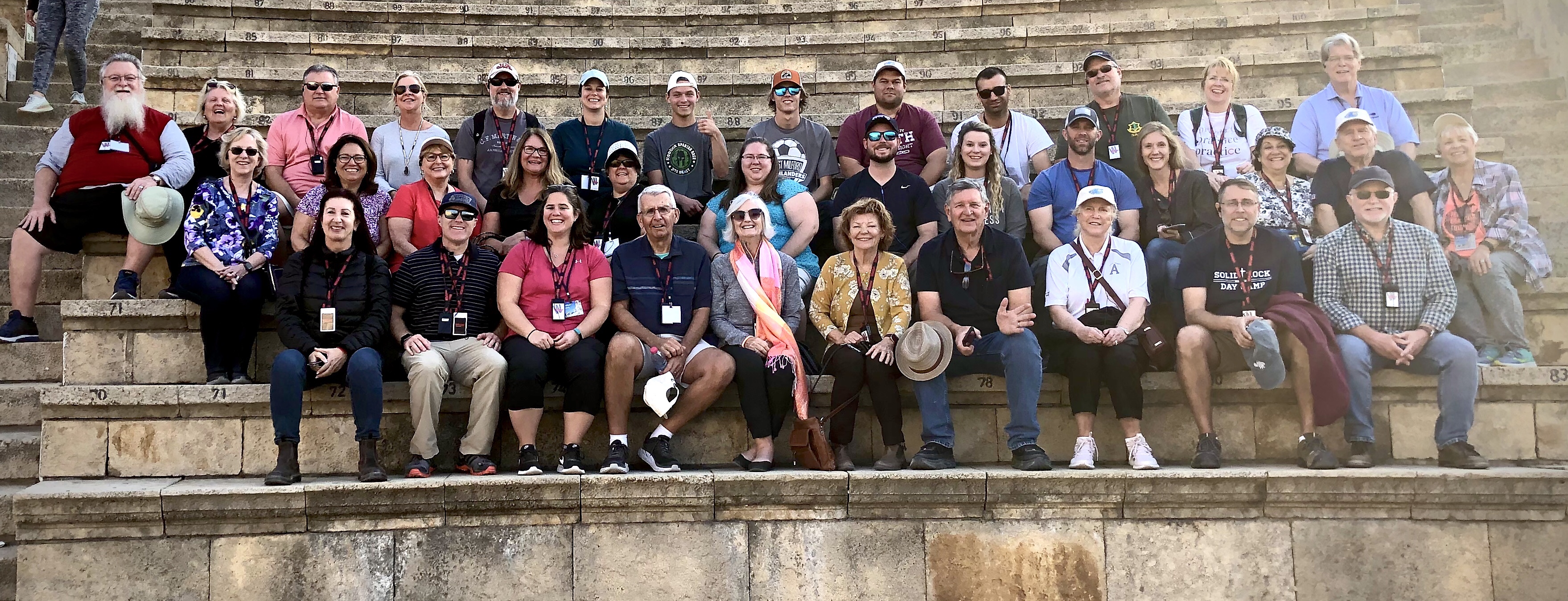
I am extremely thankful for this special group of people. They had courage, enthusiasm, and a high tolerance for data dumps. They were, and are, a joy to spend time with.
Tomorrow we divide and conquer: 19 of our sojourners begin the journey home, while another 16 of us head to Greece, following in the Apostle Paul’s footsteps. What we are thankful for more than anything is that the gospel has spread from Jerusalem by town, city, country, and continent to this day. Yala yala!
It seems so simple in Exodus 20:3- “You shall have no other gods before me.” Yet since the garden in Eden we’ve had a worship problem. Today our tour in Israel centered on worship.
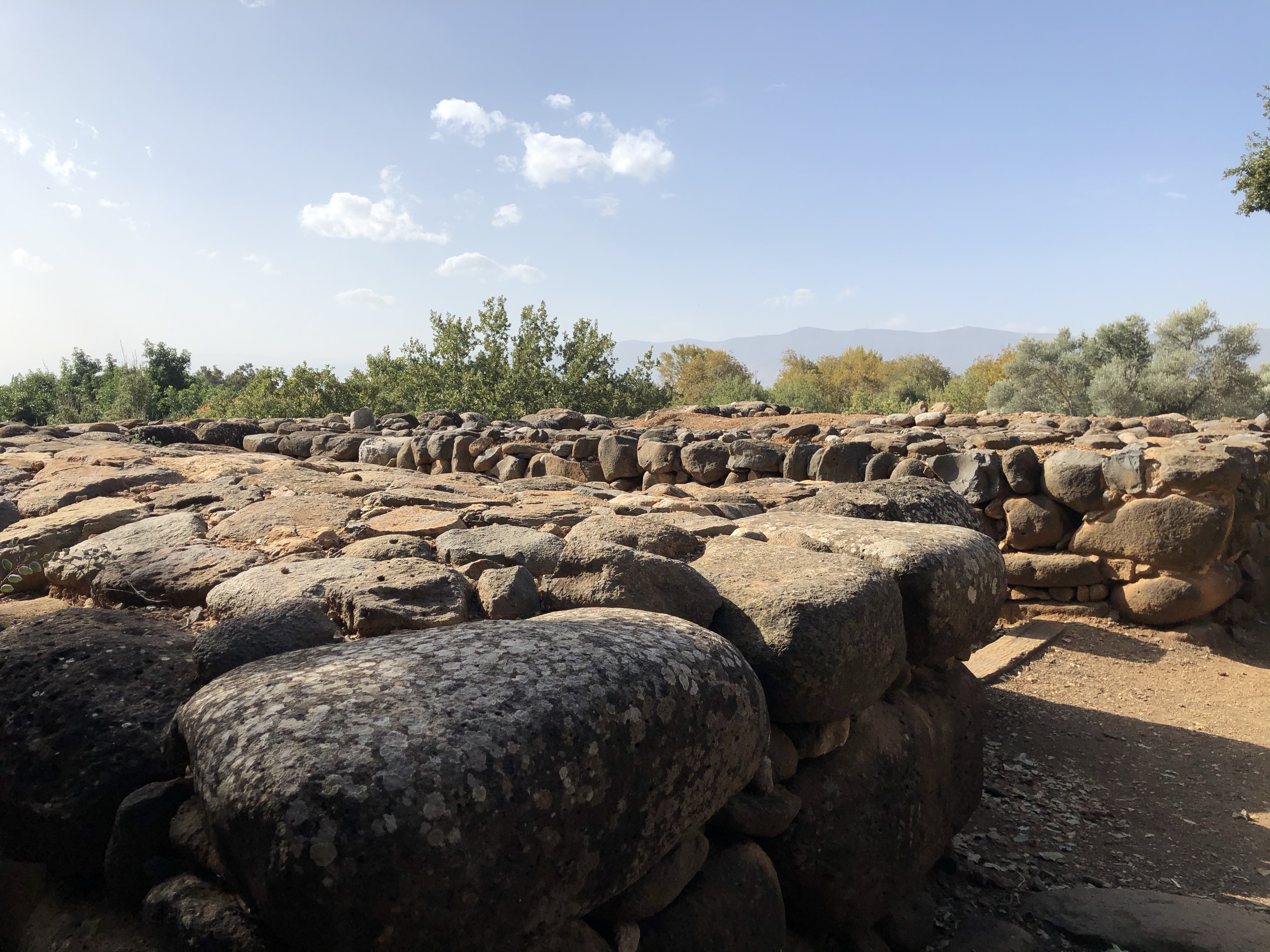
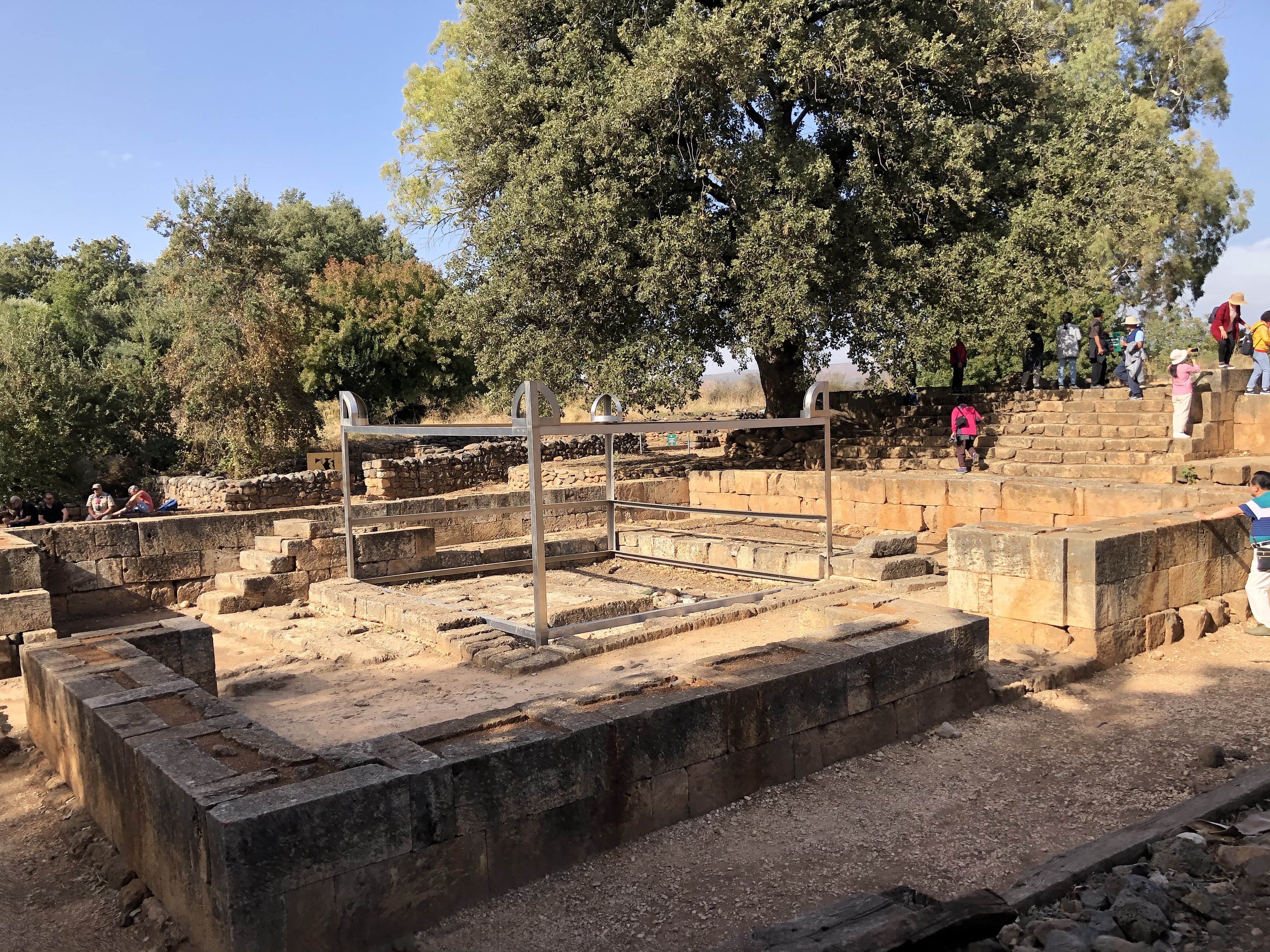
Our first stop was tel Dan. In Judges 18 the tribe of Dan relocated here because they did not have the faith to confront the Philistines in their original tribal allotment. They stole idols and a crooked priest and moved north happy to worship idols. They had a worship problem.
It was also at Dan in the 10th century BC that Jeroboam set up one of two golden calves, promoting false worship for all those in northern Israel. The worship problem continued.
In 1993 at tel Dan archaeologists discovered the tel Dan inscription, a 9th century BC Aramaic inscription from Aramean king Ben-Hadad that mentions the kings of Judah and the house of David. This find was the first extra biblical evidence of the house of David. Once again archaeology serves to confirm the Bible record.
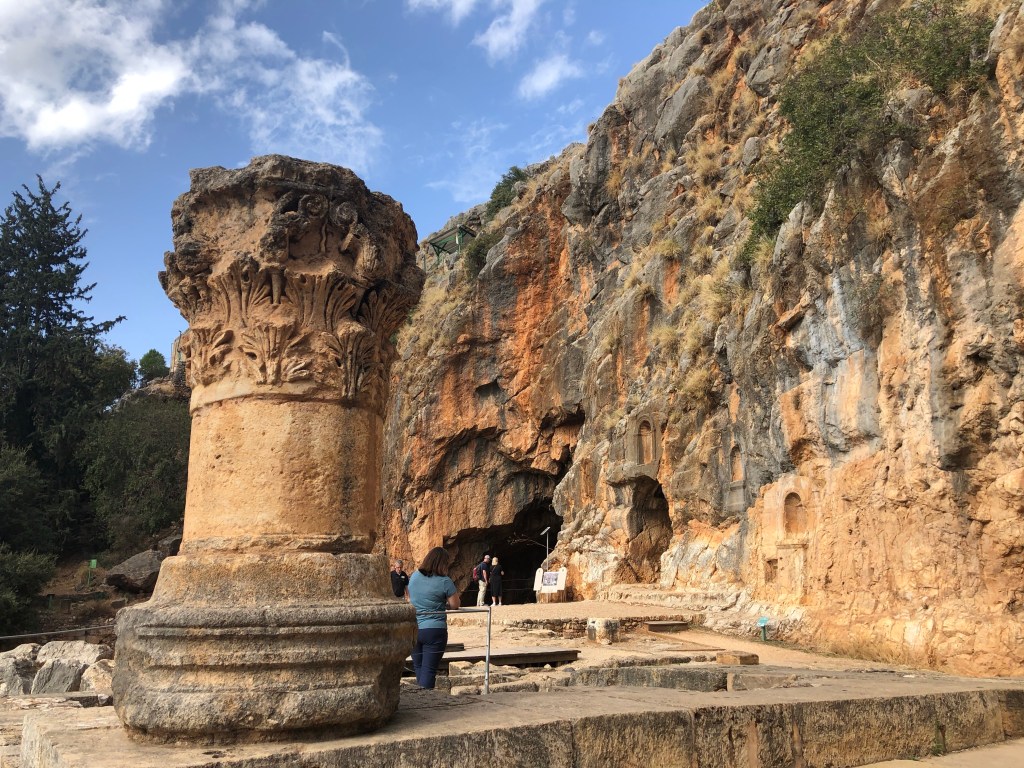
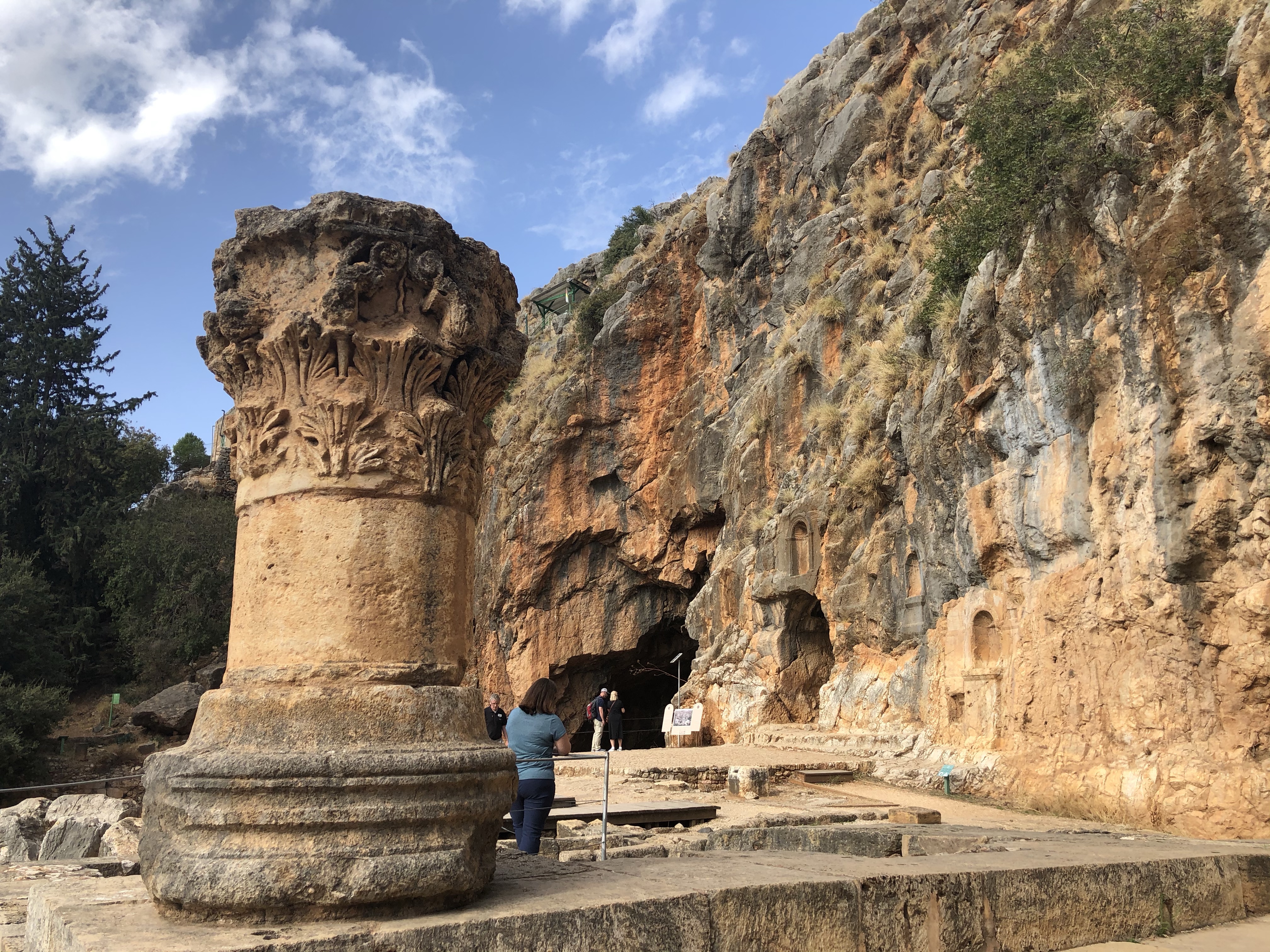
From Dan we headed to Caesarea Philippi. This city was established in the 4th century BC as a worship site of the god Pan. The worship problem at this site persisted throughout subsequent generations. Paradoxically it was near here that Peter made the proclamation that Jesus is the Christ, the son of the living God.
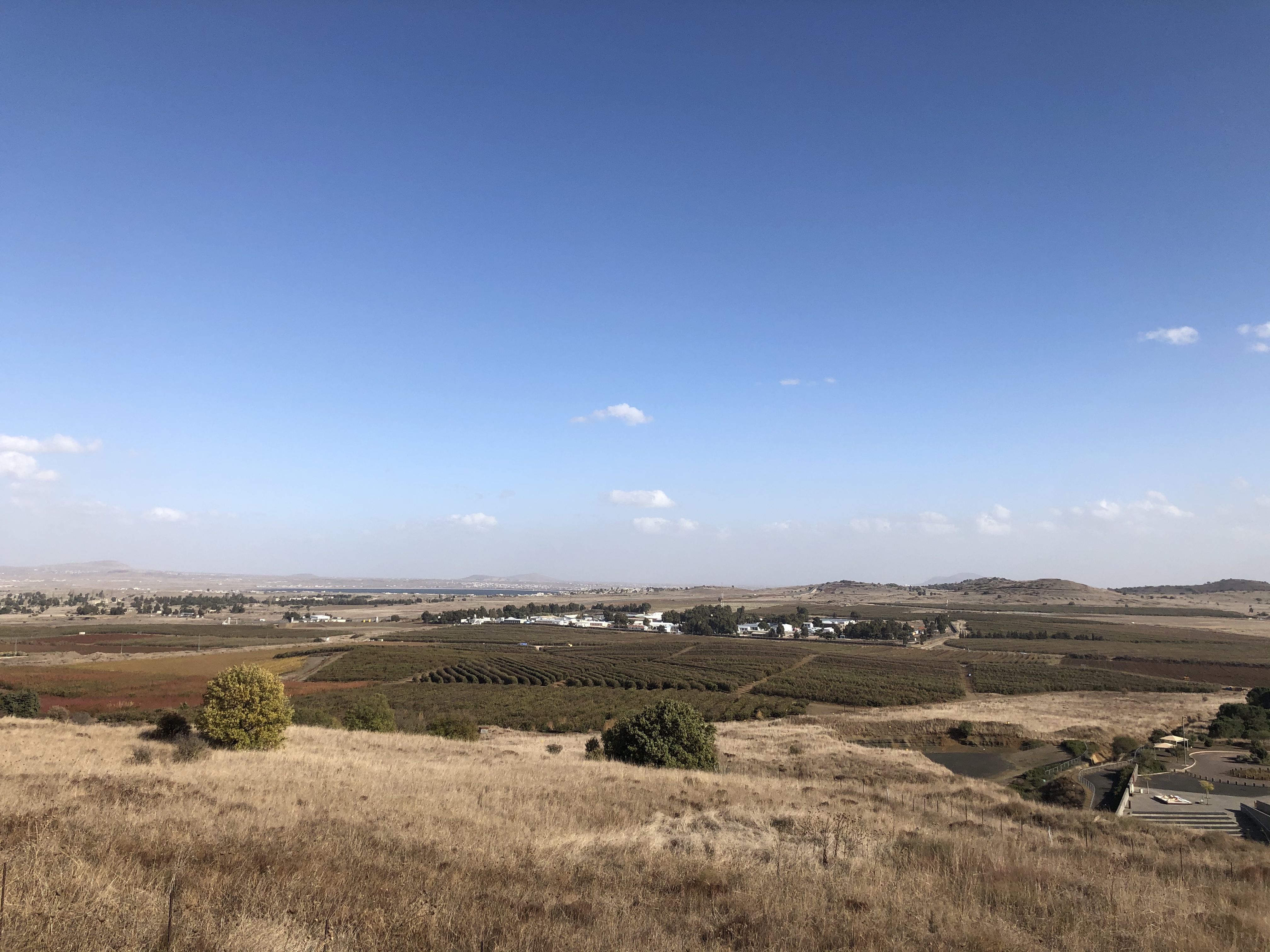
We concluded our touring day with a visit to the Kunetra viewpoint. From this spot in the Golan Heights you can see into Syria. Given the conflict in Syria these last years, we were reminded that peace is often hard to find. This is simply one more manifestation of the worship problem. When it’s all said and done, the ultimate solution to every worship problem is to confess Jesus is the Christ, the Son of the living God.

 Making and Maturing