Making and Maturing

Disciples of Jesus

  • Persecution in Milan

    We received word yesterday that the city of Milan, Italy is actively seeking to prevent Punto Lode (“Point of Praise”), our sister church, from meeting for corporate worship in their building. Last Sunday morning police came to Punto Lode and threatened “an eminent closure of the building.”

    Punto Lode is a vibrant, gospel preaching church of several hundred people that is over 30 years old.  We have supported Sam and Joan Fiore in the planting of Punto Lode since the beginning.  While we know persecution happens every day in this world, this one hits home.

    The legal basis for this maneuver is a city zoning law passed in early 2015. The city has claimed the right to determine what is an authorized place of worship. They have refused to authorize Punto Lode from using their building, which they own, for religious purposes.

    We know what this is: persecution. It is no coincidence that last Sunday our passage of Scripture included Jesus’ words from John 16:33,

    I have said these things to you, that in me you may have peace. In the world you will have tribulation. But take heart; I have overcome the world.

    We are praying that the city would intervene, come to their senses, and allow Punto Lode to continue to worship. We know that God may choose to advance his gospel through hostility, and so we also are praying that he would grant the believers in Milan steadfast faith in him whatever he has ordained.

    We can learn from our brothers and sisters facing this trial.  This is persecution in a modern, Western nation that espouses religious freedom.  Fortunately, this attack is not in line with the Italian constitution which makes provision for freedom of religion. Unfortunately, the powers that be in Milan are not friendly to non-Catholic churches. The Italian courts will have to engage at some point.

    Our recourse is a greater Judge, and I would urge you to petition him on behalf of the believers in Milan enduring this trial.

    Here are a few photos of the building in question from our trip last year to encourage Punto Lode:


  • Hiding Sin Never Works

    There is no darkness, no deep darkness, where evildoers can hide.

    -Job 34:22

    Hiding Sin Never Works

    One of Satan’s greatest lies is that we can successfully hide sin.  We are painfully realizing this as a nation.  The recent avalanche of sexual assault allegations has shocked us, despite the fact that our culture has virtually no moral compass.  Statements like, “It was a known thing, but nobody stood up to them” are particularly disturbing.  These abusers have been hiding in the dark, using their power and influence to prevent their deeds from coming to light.  The use of power to sexually abuse someone has always been and will always be wrong, and these perpetrators have more to worry about than the condemnation of our culture.

    On the one hand, a few of these sexual predators are now rightly facing the shame of their hidden sins coming to light.  On the other hand, many will still temporarily get away with their crimes.  While I would acknowledge that simply being accused of something doesn’t make you guilty of it, I would hazard a guess that the majority of those accused are indeed guilty.

    The public exposure of these secret sins brings to light an uncomfortable truth: hiding sin never works.  This sobering reality is a warning to everyone, calling unbelievers to find refuge in Jesus and believers to be intolerant of secret sin.  In the Bible, God continually warns us about the futility of trying to hide our sin.  Here’s a quick survey of some of these passages:

    Adam and Eve

    It is no coincidence that in Genesis 3:8, after Adam and Eve had committed the first act of rebellion against God, they hid from him: “Then the man and his wife heard the sound of the LORD God walking in the garden at the time of the evening breeze, and they hid from the LORD God among the trees of the garden.”  Our first instinct when we choose to sin is to hide it.  This in and of itself is a recognition of God’s moral standard.  We are ashamed and don’t want our words, deeds, or attitudes to come to light.

    Achan

    In the book of Joshua the Lord gave Israel specific instructions on not plundering Jericho.  Achan, an opportunistic man from the tribe of Judah, had taken spoils from the battle and was literally hiding them in his tent.  Joshua, as the enforcer of God’s law for Israel at the moment, called Achan to honor God by confessing his hidden sin, “So Joshua said to Achan, ‘My son, give glory to the LORD, the God of Israel, and make a confession to him. I urge you, tell me what you have done. Don’t hide anything from me.’”

    David

    In Psalm 69 David acknowledges the fact that his hidden sin is obvious and apparent to God.  In verse 5 he says, “God, you know my foolishness, and my guilty acts are not hidden from you.”  This motivates him to confess his sin and seek forgiveness and grace in the sight of God.

    Persecutors of Christians

    Jesus himself warns his followers about those who will persecute them.  In Matthew 10:26 he tells his disciples, “Therefore, don’t be afraid of them, since there is nothing covered that won’t be uncovered and nothing hidden that won’t be made known.”  He is alluding to the fact that God will judge them in the end, which he makes clear in verse 28, “Don’t fear those who kill the body but are not able to kill the soul; rather, fear him who is able to destroy both soul and body in hell.”

    All People

    In both the first and second testaments we find many places where all people are warned about hiding sin.  In Isaiah 29:15 the prophet Isaiah warns, “Woe to those who go to great lengths to hide their plans from the LORD.  They do their works in the dark, and say, “Who sees us? Who knows us?”  The author of Ecclesiastes concludes in 12:14, “For God will bring every act to judgment, including every hidden thing, whether good or evil.”  In the second testament the Apostle Paul affirms the x-ray vision of God’s judgment in 1 Cor. 4:5, “So don’t judge anything prematurely, before the Lord comes, who will both bring to light what is hidden in darkness and reveal the intentions of the hearts.”  In a similar vein, the author of Hebrews warns in 4:13, “No creature is hidden from him, but all things are naked and exposed to the eyes of him to whom we must give an account.”  On the day of judgment, no one will be able to hide their sin from God’s eyes.

    What Hope Do We Have?

    On the surface, none.  Look at the filth that is in us!  Be appalled at the foul and horrid stench of sexual abuse, and those who cover up or condone such acts!  But beware, this isn’t the only kind of sin we hide.  When we find we are hiding sin, let me offer three brief God-honoring responses:

    Confess Hidden Sin

    Call it what it is.  Come clean.  Like Rodion in Dostoyevsky’s Crime and Punishment, there is no rest for the person who refuses to acknowledge their sin.  Ask for forgiveness from God and from your victims.  This is the first step of faith.  There is no salvation for those who refuse to acknowledge they have sinned.

    Turn to Christ

    In Daniel 2:22, the prophet Daniel offers a poetic expression of both God’s penetrating view into the dark, and the source of light, “He reveals the deep and hidden things; he knows what is in the darkness, and light dwells with him.”  In the gospel of John we find out that Jesus himself is the light of the world, the one who has come to make atonement for our sins—those apparent, and those we have carefully hidden away.  Faith in Jesus’ death as payment for our sins is the only means of being forgiven in the sight of God.

    Accept Earthly Consequences

    When he forgives us, Jesus does not exempt us from earthly consequences of our sin.  He puts our sin in the light of day and says, “I have paid for this.”  If you have commitment crimes, glorify God by turning yourself in to the authorities.  There is no honor or comfort in secretly confessing your sin to God while getting away with it.  Genuine repentance leads to doing what we can to restore what we have broken.

    Hiding sin never works.  Let this be a sober warning to all of us to come into the light.

  • Reflections on ETS 2017

    I’ve had a great time at this year’s annual meeting of the Evangelical Theological Society. ETS is an academic society devoted to advancing precision in Christian theology. While often unseen to the average church goer, ETS gives a sneak peak into the world behind study Bibles, commentaries, etc. So what did I do and why was it beneficial? Here’s a rundown:

    I Read a Paper

    It’s not as boring as it sounds. At ETS scholars read papers on a boatload of topics related to the understanding and application of all things Bible and Christian. My paper was on the Hebrew grammar of Ezekiel’s first vision, and it was well received. Hopefully it will serve to help others understand this vision in the future. In the coming years I hope to do a complete set at least on Ezekiel’s visions, if not all of the apocalyptic visions of the OT.

    William Wilberforce’s Unpublished Journals

    In addition to presenting, I was able to attend many hours of papers on a variety of topics. One highlight was a presentation on the yet unpublished journals of William Wilberforce and what they say about his spiritual life. (Wilbe was responsible for abolishing the slave trade in the UK). In one spot Wilbe wrote,

    My Sundays are so precious to me…

    Indeed.

    Calvin on Suffering & the 5 Martyrs of Lyon

    One very powerful paper was an examination of the letters of 5 college students arrested and executed in 16th century France. These letters (in French, not yet translated into English) were written from prison to Calvin and others, and show how his preaching of the Bible informed their view of their suffering. They believed suffering was a mark of the true church, that God’s providence was always at work even in suffering, and that it was “the school of Christ.” I was deeply impacted by the heart of these martyrs.

    Expository Preaching & Hermeneutics

    I enjoyed a 4 hour session where different scholars presented their interpretation of Genesis 15:6 and what relation it has to Jesus and the NT. This was a compare and contrast session with Christo-centric preaching (every text is about Jesus), Christo-telic preaching (every text is part of the story of Scripture), and Christo-promise preaching (Jesus is only to be found in passages he is explicitly referenced in). There was some great discussion, and I enjoyed connecting with former professors whom I am now privileged to call friends.

    The Tyndale House Greek New Testament

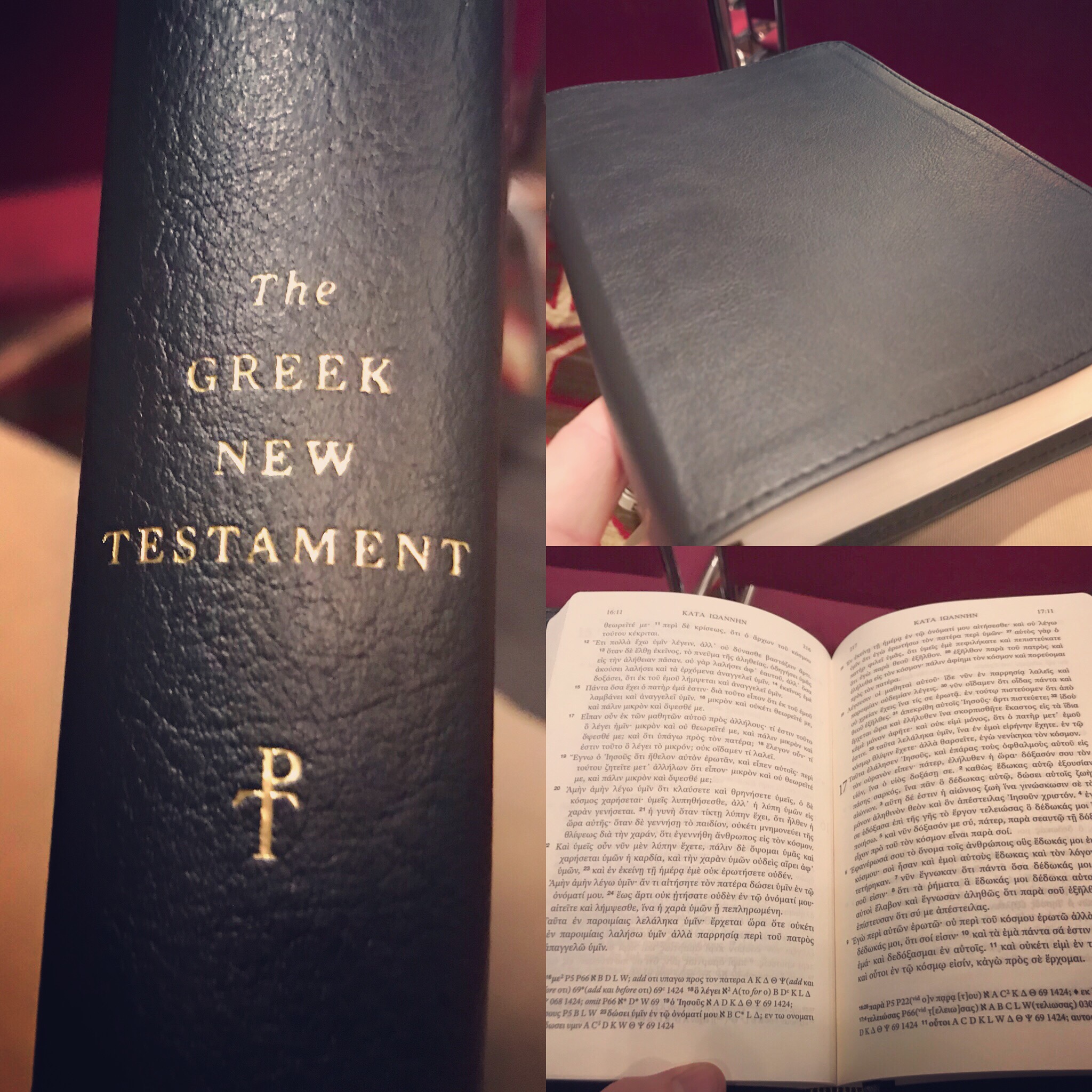
    Evangelical scholars from Tyndale House in Cambridge have just this week published a new Greek New Testament. I enjoyed a 4 hour session where they thoroughly explained their philosophy, and engaged in some Q & A.  Any edition of the OT or NT is important because they seek to make clear what the Word of God actually is. This edition is unique because the editors are firm believers in the inspiration of God’s Word, and they take seriously the earliest evidence we have in Greek manuscripts about the content of the NT. It is a very needed advance in textual study of the NT. Most importantly, they designed this NT to be read. I am so thankful for their 10 years of hard work, and pray that God would bless the continued preaching of his inspired Word. The editors stated clearly they want millions to read this new edition of the NT. Amen!

    Connecting with Colleagues

    One blessing of my time in Providence was the ability to connect with friends from ages past. I had two particularly edifying conversations with brothers from Jackson, Mississippi and Houston. The fellowship was sweet, the counsel Christ honoring, and I left my time with them greatly encouraged.

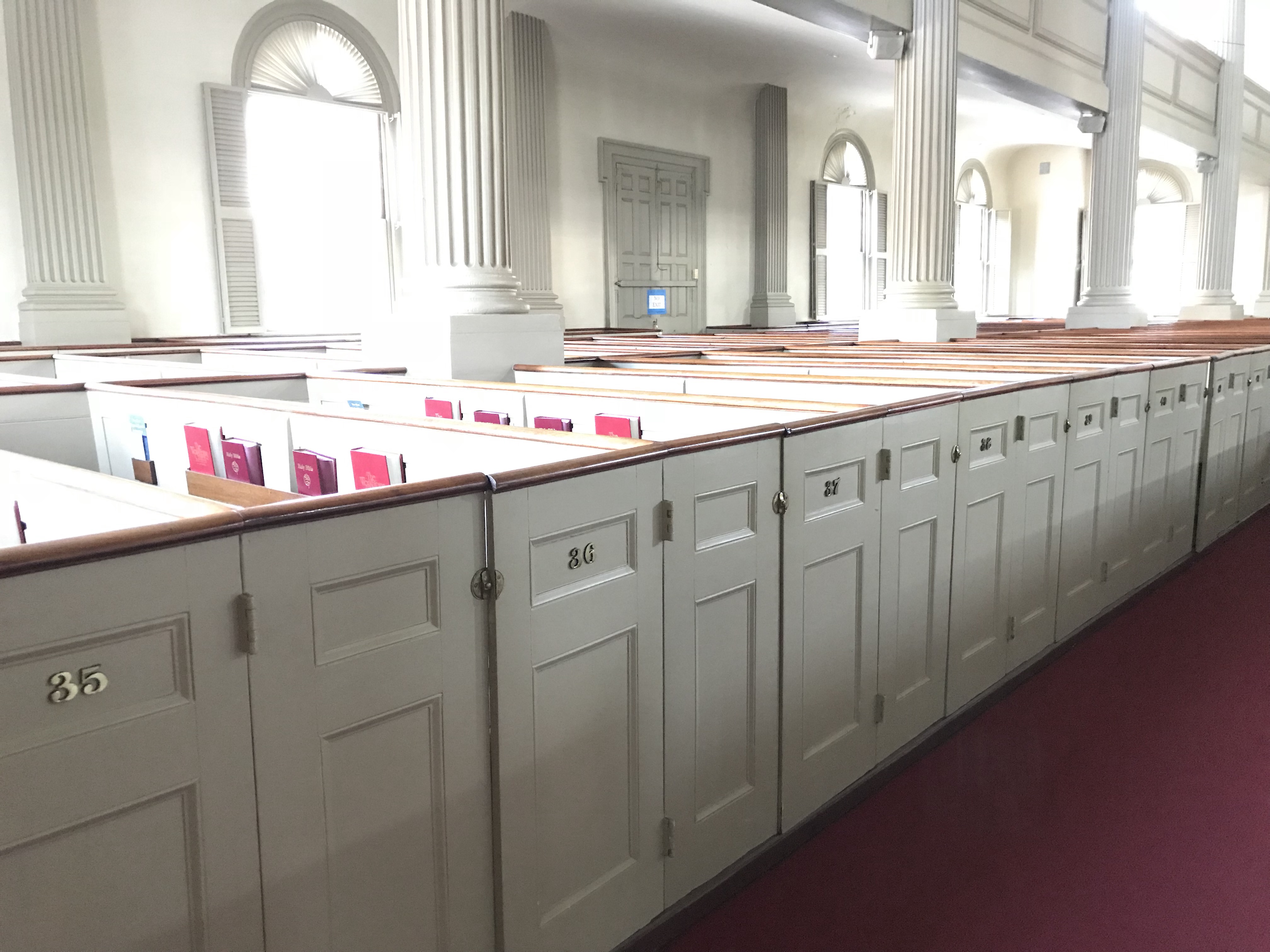
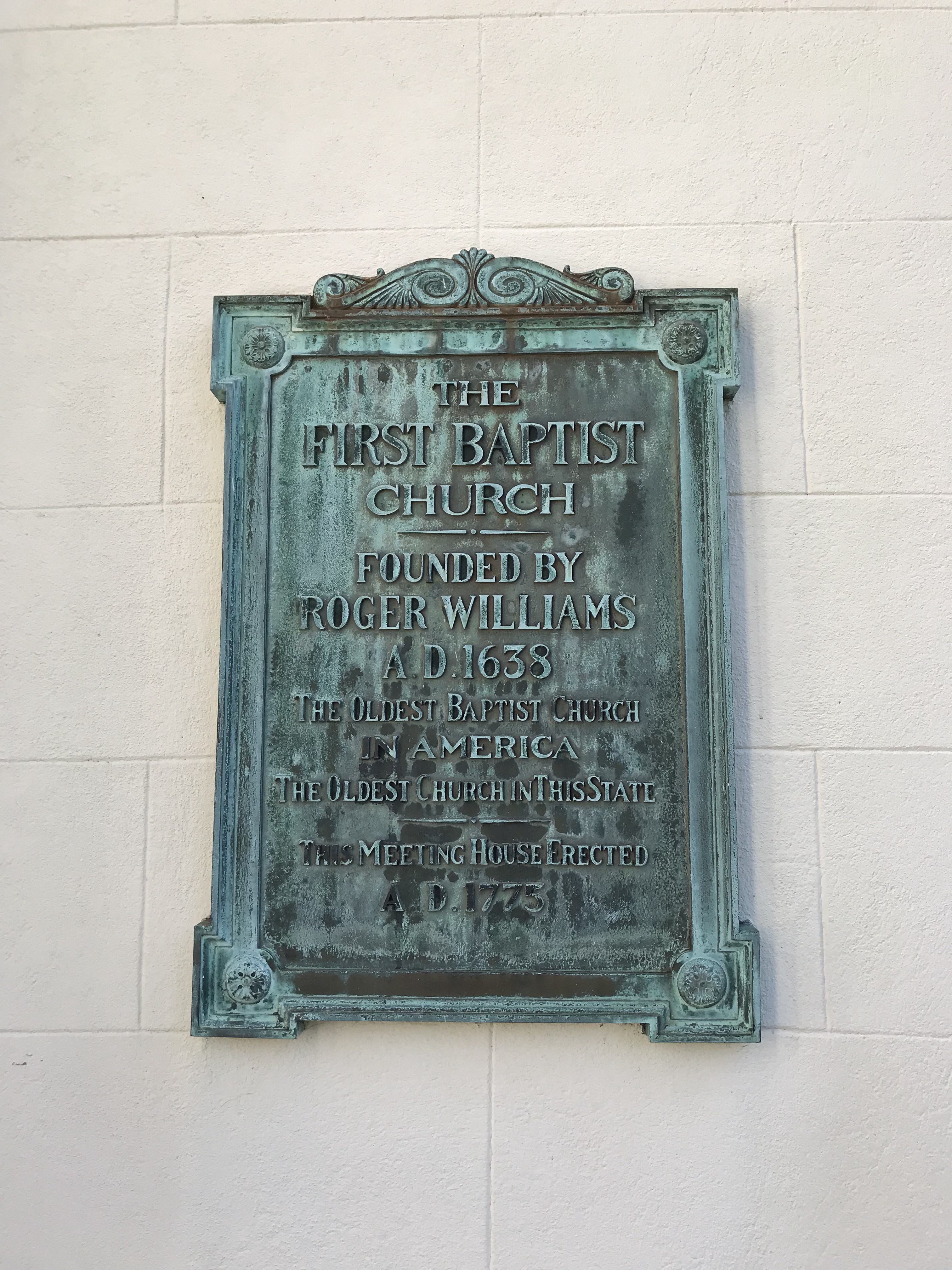
    The Oldest Baptist Church in America

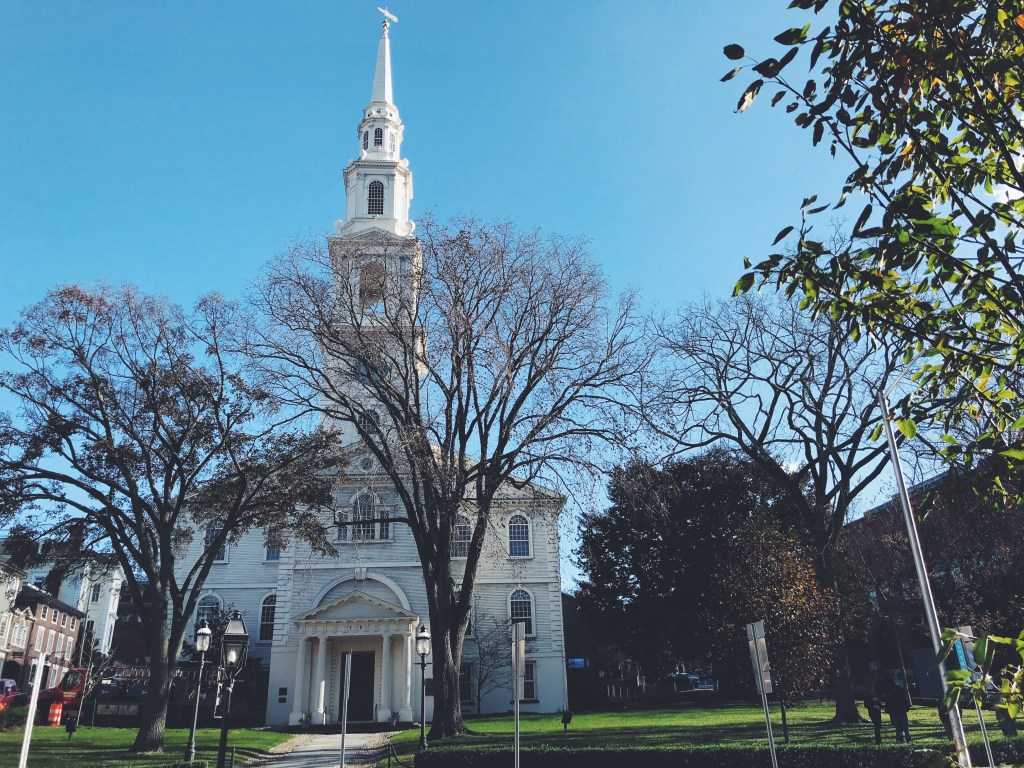
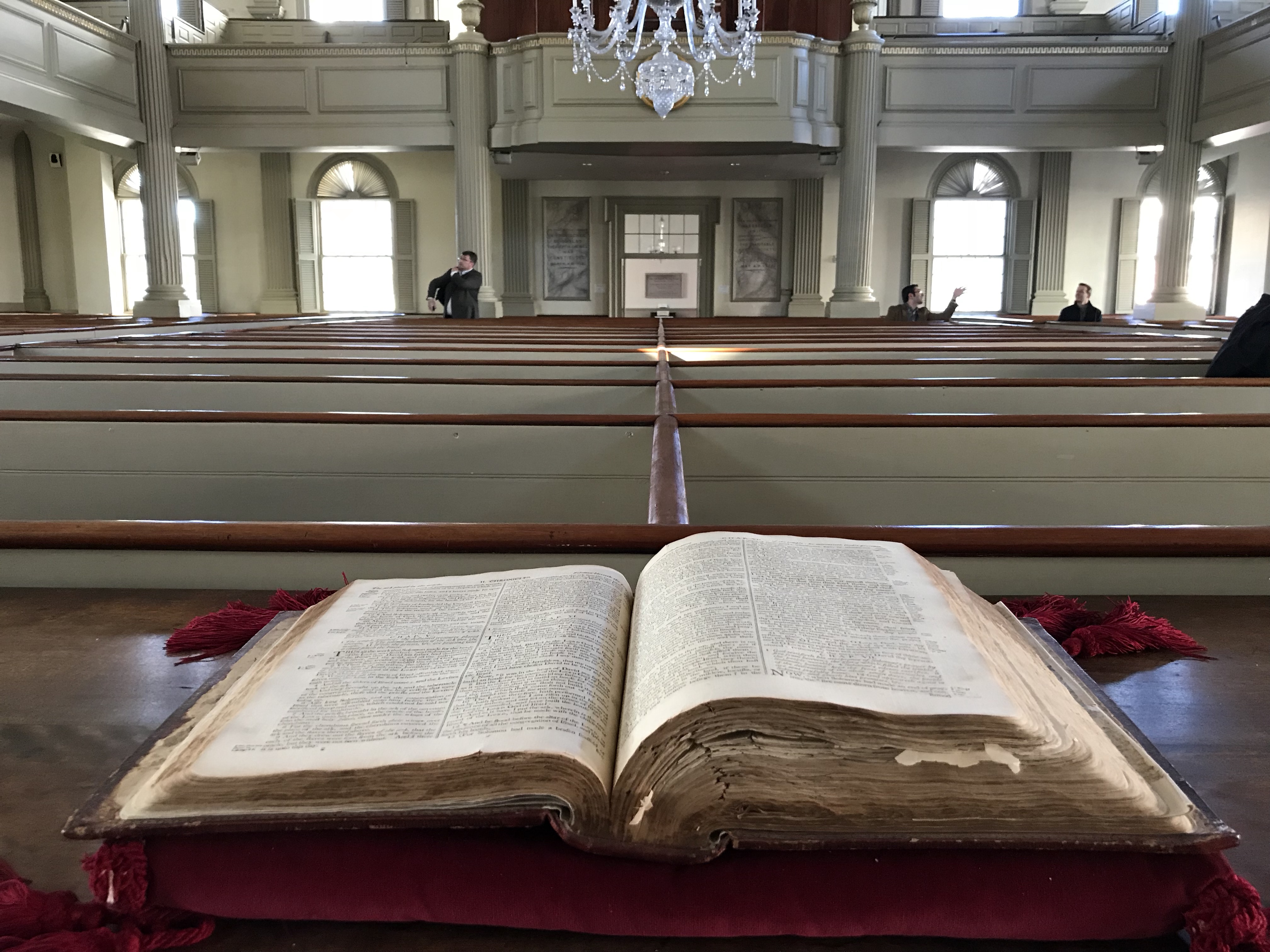
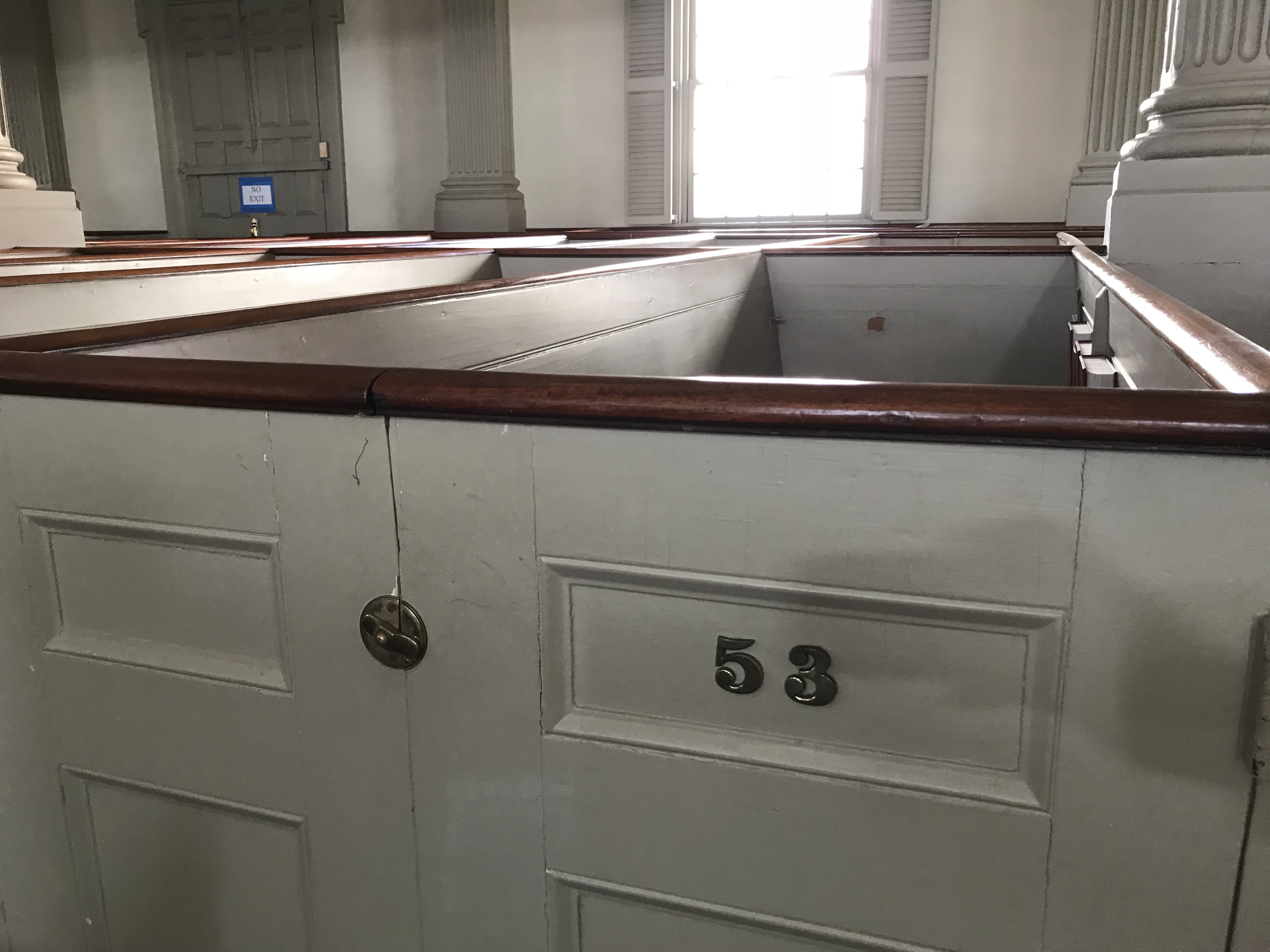
    Why not? Providence is home to the original baptist church in America, built in 1638. It was originally a church plant founded by Roger Williams. At first they met in homes, but they quickly realized the benefit of a space dedicated to ministries of the church in the advancement of the gospel in their community. The current building was constructed in 1774-75.

    I am thankful for the opportunity to come to ETS this year, to be refined and challenged, and most of all to be encouraged in the scholarly side of the mission to glorify God by making and maturing disciples of Jesus.

  • Why You Should Care About the Reformation

    October 31st is Reformation Day–the day we celebrate a movement that “began” in 1517 when the now famous German monk/theology professor Martin Luther challenged the preaching of indulgences. This is an overly simplistic historical understanding of what happened, but it gets the main point across.

    In truth, scores of men and women contributed to the recovery of the Bible and proclamation of the biblical message of salvation. The unique convergence of technology, politics, economics, and theology created a perfect environment for people at large to rediscover and receive the Word of God.

    Why should we care about what theologians were debating 500 years ago?

    Without the Reformation, you wouldn’t have a Bible.

    In 16th century Europe, Bibles, always in Latin, were the possession of the church. The average person (and often priest) couldn’t read Latin. This wasn’t a problem because the official position of the Roman Catholic church was that only church leadership should read and interpret the Bible. The average person couldn’t be trusted with such an important task.

    Long story short, the theological convictions of men like Martin Luther and William Tyndale, combined with access to Greek and Hebrew texts of the Bible and the invention of the printing press, resulted in the widespread (albeit illegal) availability of Bibles in German and English. Pastors did something unusual at the time: they started reading and preaching directly from the Bible.

    Without the Reformation, you wouldn’t have access to God.

    Or, at least you wouldn’t think you have access to God. In the Roman religious system, the priestly class is the only qualified mediator between you and God. If you pray on your own, you would likely pray to a “saint”–a super Christian of sorts as designated by the Roman church. These exalted humans, treated like gods or goddesses, would theoretically plead your case to God.

    In the Reformation, reading of the Bible resulted in a remarkable discovery: Jesus’ death on our behalf makes it possible to have direct access to God. In Hebrews 4:16 people read,

    Therefore, let us approach the throne of grace with boldness, so that we may receive mercy and find grace to help us in time of need.

    It is notable that in no part of the Bible do we find prayer to a human. Why? Because by faith in Jesus we can approach God’s throne directly and receive mercy.

    Without the Reformation, you wouldn’t have assurance.

    When it comes to thinking about “salvation”– your personal state of forgiveness of sin in the sight of God and hope for enteral life versus judgment–without the Reformation you would simply be unsure. You know you have committed “mortal” sins, sins that remove God’s grace from you, and for which you have to make satisfaction. Your priest will tell you what to do, but no doubt your time in purgatory continues to get longer and longer. Maybe you’ll make a pilgrimage or start a monastery to alleviate the punishment, but there’s still no guarantee on how long you’ll have to suffer before entering heaven.

    Once again, the reading of the Bible exposed this entire system to be theologically fraudulent. We can be sure of our state before God because we are justified not by our works, but by faith in Jesus and his works on our behalf. His life, his death, and his resurrection are our hope. We read in the Bible verses like Romans 8:1,

    Therefore, there is now no condemnation for those in Christ Jesus.

    Or Galatians 2:16,

    …and yet because we know that a person is not justified by the works of the law but by faith in Jesus Christ, even we ourselves have believed in Christ Jesus. This was so that we might be justified by faith in Christ and not by the works of the law, because by the works of the law no human being will be justified.

    All those who have genuinely put their faith in Jesus for their salvation can be absolutely confident of their justification, sanctification, and glorification.

    Without the Reformation, you wouldn’t have worship songs.

    Part of the Reformation was the reclaiming of the worship service as something Christians do rather than something done to them. This meant the restoration of music as a meaningful way to exalt God when Christians gathered. Luther was the early champion of this renaissance, writing many songs for use in worship services, some like “A Mighty Fortress Is Our God” that Christians still sing today.

    These songs were ways of teaching truth in a memorable way and encouraging believers. The Reformation produced a legacy of writing worship songs that remind us of God’s character and the great truths of the gospel.

    Without the Reformation, you wouldn’t have a high view of marriage.

    Before the Reformation, the teaching and practice of the church was that celibacy was a holier state of life than matrimony. Marriage was necessary for procreation and to combat lust, but it wasn’t thought of as sanctified. Once again, the Bible came to the rescue. Marriage is not only designed by God for human benefit, but in Ephesians 5 it serves as a picture of the gospel to the world.

    Not only did pastors now get married (did you know that Martin Luther married a runaway run?), but they also taught their congregations to view marriage as a divine blessing, designed for our good. In short, marriage wasn’t to be tolerated, it was to be treasured.

    Without the Reformation, you wouldn’t have a high view of vocation.

    As with marriage, before the Reformation serving as a priest or in a higher church position was viewed as the pinnacle of careers. Other jobs were just that. But as people read the Bible, they learned that before sin entered the world God created humans to work. The mundane, routine jobs that needed to be done were infused with biblical significance. What better way to love your neighbor than to be an excellent baker or blacksmith or clock-maker? These weren’t just jobs, they were vocations–a calling by God to serve him in a specific way. People discovered verses like Colossians 3:23-24,

    Whatever you do, do it from the heart, as something done for the Lord and not for people, knowing that you will receive the reward of an inheritance from the Lord. You serve the Lord Christ.

    So What?

    We could go on and on. The people who were instrumental in the Reformation weren’t perfect. They are flawed just as we are. Yet by God’s grace, he used them to effect much needed and eternally significant change.

    Thank God for the Reformation. Thank God that he is sovereign over history. Thank God for the recovery of the Bible, and the preaching and teaching of the truths we find in the Bible. Treasure the gospel as found in the Word of God, and make sure that whatever happens in your world, you never lose sight of what matters most.

  • Is the World Ending?

    I’ve had more people ask me this question this week than in the last 17 years combined. The combination of triple hurricanes, devastating fires, earthquakes, the threat of nuclear war, and the solar eclipse has reminded many of Jesus’ words in Mark 13:8,

    For nation will rise up against nation, and kingdom against kingdom. There will be earthquakes in various places, and famines. These are the beginning of birth pains.

    Looking to God’s Word, we can answer the question “Is the World Ending” in three different ways depending on what the person means by it. I think it is beneficial to consider all three angles to foster our own faith and to be ready to answer those around us who are asking.

    Answer #1- Yes, the World Is Ending

    This answer comes straight out of Mark 13:8 above. In the context, Jesus was explicitly answering a question by his disciples about “the end of the world.” When will Jerusalem be destroyed? When is it all going to go down? Jesus’ answer, however, warns them to be ready to walk by faith through crazy times. He tells them there will be wars, earthquakes, famines (and the storms and droughts that cause them), and that these are the beginning of the birth pains.

    So, in essence, Jesus says wars and storms and earthquakes are signs that “the end” is coming. But those things have been happening since Jesus ascended into heaven in the 1st century AD. When people ask if the world ending, tell them the end has already started.

    This coincides with other language God uses in the New Testament about the “last days.” Luke, Peter, Paul, and the author of Hebrews all assumed we are already in the last days (2 Timothy 3:1- “But know this: Hard times will come in the last days”). By “last days” they mean nothing else needs to happen before Jesus’ return. He came, died for our sins, and rose from the dead. The only thing left is his return and judgment.

    Answer #2- Maybe

    If by “is the world ending?” the person means, “is Jesus going to return tomorrow and judge the living and the dead?” the answer is a firm maybe. Most Christians have believed and continue to believe that the Bible teaches Jesus could return at any moment. Luke tells us in Acts 1:11 that after Jesus physically ascended into heaven, angels told the disciples,

    Men of Galilee, why do you stand looking up into heaven? This same Jesus, who has been taken from you into heaven, will come in the same way that you have seen him going into heaven.

    To be sure, there are different takes on the exact nature of Jesus’ return. Without going into all the details, the things that the Bible says will happen before Jesus’ return could plausibly have happened or be happening. I’m talking here about the gospel going to the nations, the time of great tribulation, false prophets, signs in the heavens, anti-Christs, etc. Or, they might not have happened yet. Hence the maybe.

    Answer #3- No, the World Isn’t Ending and Will Not End

    If by “is the world ending?” the person means, “is the world going to be destroyed” the answer is a firm no. This is because when Jesus returns, he is not coming to destroy the earth but to restore the earth. This is a primary theme of the Bible, and yet many so called prophecy churches and ministries totally ignore it.

    In Revelation 21:1-2, John describes what happens on earth after Jesus has returned and dealt with sin and evil. He writes,

    Then I saw a new heaven and a new earth; for the first heaven and the first earth had passed away, and the sea was no more. I also saw the holy city, the new Jerusalem, coming down out of heaven from God, prepared like a bride adorned for her husband.

    Heaven comes to earth, the earth is made new, and all will be right and good. This is the final scene in the Bible and the ultimate hope of the gospel: man restored to a right relationship with God, living in community with God, and stewarding the earth for God. No more sea (read: hurricanes), no more pain and suffering and death. Why? Because of Jesus’ work on the cross sin and Satan have been defeated.

    Now What?

    Be ready. Anytime we think about “the last day,” we need to consider our readiness. We need to ask have we put our faith in Jesus for the forgiveness of our sins? Are we ready to meet the Lord face to face?

    Also, we need to be careful not to get caught up in the hype. Let’s focus on our purpose on earth: making and maturing disciples of Jesus for the glory of God. Just before he left earth Jesus told his disciples,

    It is not for you to know times or periods that the Father has set by his own authority. But you will receive power when the Holy Spirit has come on you, and you will be my witnesses in Jerusalem, in all Judea and Samaria, and to the end of the earth.  -Acts 1:7-8

    As believers in Jesus we need not be fearful or anxious about the return of Jesus. Instead, let us continue to clearly and urgently call the world to repent of their sins and turn to Jesus in faith, no matter what the weather is like.

    PS- Don’t Believe Date-Setters

    If anyone (preacher, radio show host, celebrity, etc.) tells you Jesus is returning on a specific date run far away from them. Check out Mark 13:32.