Making and Maturing

Disciples of Jesus

  • From the Translators of the King James Version


    Four hundred years ago Bible translation was controversial. Five hundred years ago William Tyndale was executed for it. The English Bible you possess, no matter what translation you read, is the descendant of five hundred plus years of previous translation work.

    The most popular Bible in English since 1611 has been the “King James Version.” It is so named because King James himself commissioned its translation as a way of appeasing both Puritans and Anglicans. The story of the KJV is a long story, and one I won’t tell here.

    Today the KJV is beloved by many, and borderline worshiped by some. More and more English speakers struggle to understand it; long sentence structures, rare vocabulary, and odd pronouns stand as road blocks to comprehension.

    Yet when it was translated, it stood as the culmination of previous translators who risked their lives to render the Word of God into English, including John Wycliffe. The team of men (over 50) who translated for King James did so without fear of losing their lives. Even so, they faced critics on every side; some suggested their work was unnecessary, others that it was ungodly.

    Therefore, the translators of the King James Bible wrote two original prefaces to the King James Version. First, they addressed King James himself. Second, they addressed the common reader. In these works, they defended the need for their translation and some of their philosophy. Here are a few highlights from their preface, words frozen in time yet that still urge us to treasure our Bibles:

    1. The Word of God is a priceless treasure. The KJV translators were overjoyed that James was now king, particularly so that they would be able to continue “the preaching of God’s sacred Word among us; which is that inestimable treasure, which excelleth all the riches of the earth…” Recall that many had died in England’s religious civil war, and some of those dead were executed for translating the Bible into English.
    2. The goal of Bible translation is understanding. They saw the translation issue as crucial to the spiritual health of the people of England. “But how shall men meditate in that, which they cannot understand? How shall they understand that which is kept close in an unknown tongue?”
    3. Bible translation stands on the shoulders of past scholars. The KJV translators made no claim to superiority. They said, “we are so far off from condemning any of their labors that travailed before us in this kind…” Rather, they understood that the work of previous translators paved the way for their own work, “Yet for all that, as nothing is begun and perfected at the same time… so, if we building upon their foundation that went before us, and being helped by their labors, do endeavor to make that better which they left so good; no man, we are sure, hath cause to mislike us; they, we persuade ourselves, if they were alive, would thank us.”
    4. Bible translation should be continuously improved. This is implicit in their view of their own improvement of previous English translations. They said, “Truly (good Christian Reader) we never thought from the beginning, that we should need to make a new Translation, nor yet to make of a bad one a good one, but to make a good one better…”
    5. The Bible, when translated with accuracy, is the Word of God. They said that “the very meanest translation of the Bible in English, set forth by men of our profession containeth the word of God, nay, is the word of God.”
    6. Translation is slow, hard, work that requires access to many scholarly resources. “Neither did we think much to consult the Translators or Commentators, Chaldee, Hebrew, Syrian, Greek or Latin, no nor the Spanish, French, Italian, or Dutch.” This means they didn’t think they were above needing help, so they consulted the resources they had at their disposal.
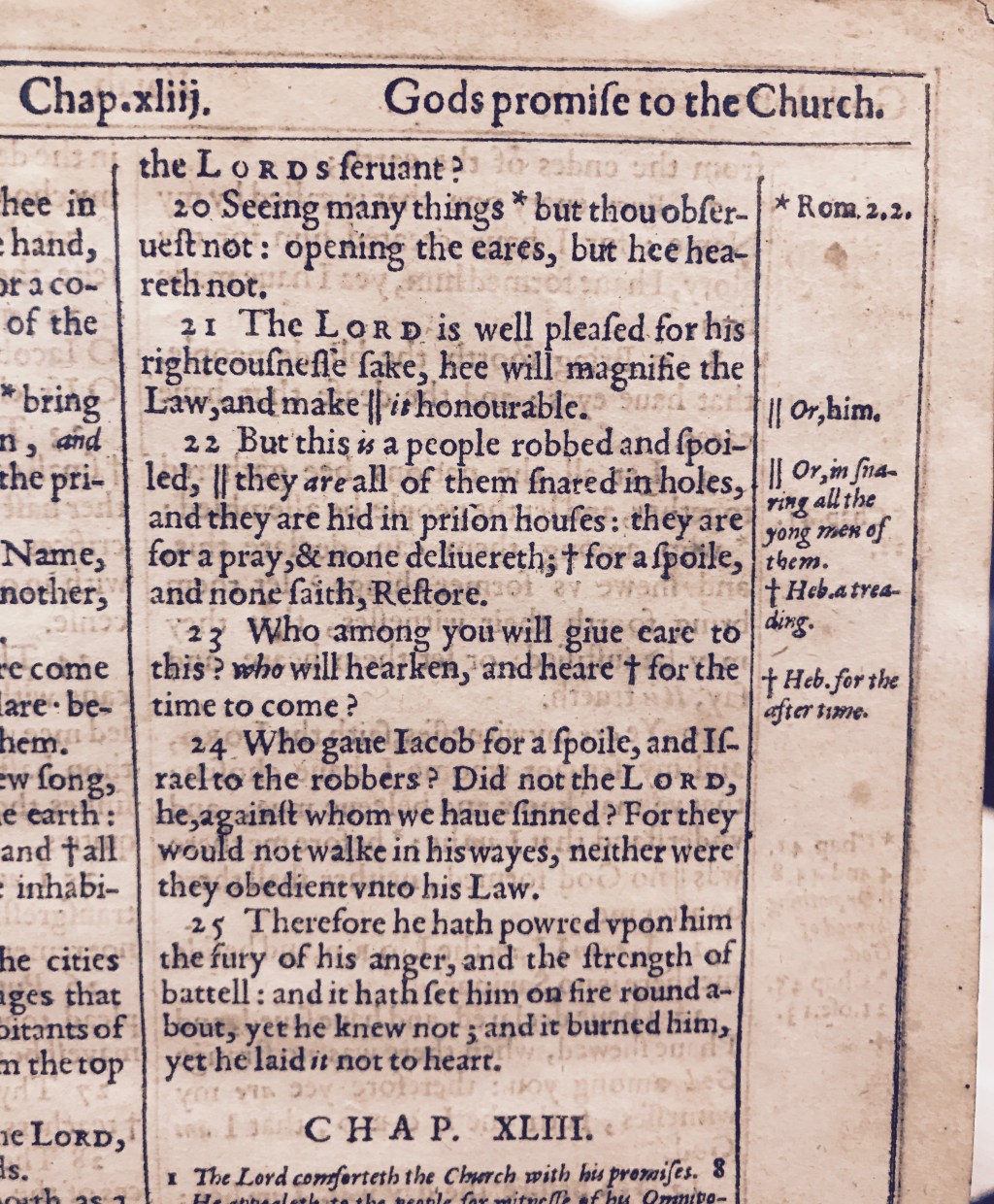
    7. Translations often need notation when the best choice for how to render a word or phrase isn’t clear. The original KJV contained around 8,000 marginal notes. The use of marginal notes was controversial to some because people felt it conveyed uncertainty as to God’s Word. After acknowledging that sometimes the meanings of particular words are in doubt, the translators argue, “Now in such a case, doth not a margin do well to admonish the Reader to seek further, and not to conclude or dogmatize upon this or that peremptorily?”
    8. Translations need revision. “…neither did we disdain to revise that which we had done, and to bring back to the anvil that which we had hammered…”

    There is no doubt, based on their own words, that if the translators of the King James Version were alive today, they would be on the cutting edge of biblical exegesis, textual criticism, and Bible translation. They would relish the opportunity to study manuscripts in depth, revise their previous work, and improve the clarity and quality of their translation.

    At the bare minimum, we can learn from them to treasure the word of God in translation, and to be thankful for the embarrassing riches we have in access to biblical manuscripts, knowledge of the world of the Bible, and possession of many translations and study aides—all of which help us to know God through his Word.

    (The featured image shows part of a page from a first edition, 1611 King James Bible.  Notice the presence of the marginal notes.  The image shows Isaiah 42:20-25).


  • Idols Are Dumb

    What use is a carved idol after its craftsman carves it? It is only a cast image, a teacher of lies. For the one who crafts its shape trusts in it and makes idols that cannot speak.

    Woe to him who says to wood: Wake up! or to mute stone: Come alive! Can it teach? Look! It may be plated with gold and silver, yet there is no breath in it at all.

    -Habakkuk 2:18-19

    When We Worship False Gods, We’re Talking To Ourselves

    I talk to myself from time to time. I’m sure we all do it. Sometimes I talk to Dallas, my yellow lab. She never talks back. Why? Because we’re not characters in a Disney movie. When I talk to her I’m just voicing my opinion, maybe venting a complaint, but I’m definitely not looking for conversation.

    The prophet Habakkuk says this is what idolatry is. It isn’t a conversation, it’s a monologue, where we are the most important (and only) voice. He describes the folly of the idol-maker, who crafts an idol then expects it to speak to him.

    Idols Are Dumb

    Not dumb as in “unintelligent,” but dumb as in “incapable of speech.” Note Habakkuk’s observations in 2:18-19—an idol is a “teacher of lies,” and it “cannot speak.” How can it teach if it can’t speak? The idol simply reflects the heart desires of the idol-maker. Whatever it’s “telling” you is a lie.

    Habakkuk describes an idol as “mute stone.” Crucially, the idol maker must command his wooden idol to “Wake up!” He asks, “Can it teach?” Nope. Because idols are dumb.

    The image is ridiculous: a man crafts a wooden image in the shape of a person, he overlays it with silver and gold, and then says, “Come to life! Give me meaning! Solve my problems!” It’s akin to us walking out of the Apple store and thinking what’s in our bag will resolve all of our issues. It’s like believing that once our checking account hits a certain number that then we won’t be anxious anymore.

    If idols cannot speak, they cannot impart instruction, provide wisdom, or give meaning. Think about that for a moment. When we worship false gods (like money, popularity, pleasure, power, etc.), we are worshipping something than cannot speak to us. It cannot guide us, or explain answers to our deepest questions.

    Idolatry Is a Speaking Sport

    Idols don’t speak to us, we speak to them. We tell them to come to life, to give us what we want. We provide the meaning. In the end, we end up being the chief god. Habakkuk observes that the idol maker gives significance and meaning to the idol, and then turns around and worships it. Idols end up being parrots- they just repeat whatever we’ve said to them.

    Note the implication of this truth: when we worship false gods, we are the god. We speak the message that we want to hear. If the idol maker wants Baal, he makes Baal. At the end of the day, we know that we don’t have the answers to life’s biggest questions. In fact, we usually don’t have answers for life’s smallest questions. We need a God who speaks.

    God Speaks, So Be Silent

    Idols are dumb, but the God who exists isn’t. Habakkuk highlights this dramatic contrast in Habakkuk 2:20,

    But the LORD is in his holy temple; let the whole earth be silent in his presence.

    Habakkuk isn’t merely saying we should be silent in respectful awe of God, although that is definitely appropriate. He is comparing the living God to dead idols, and he is saying that we should stop talking to our dumb idols and start listening to the God who actually speaks.

    Don’t miss it: genuine worship of the true God requires listening to him. When was the last time you purposefully put yourself on “silent mode” to hear God speak through his Word? How can you create time and space to stop the noise in your world so that you can just revere God in his majesty? Idols are dumb, but our God isn’t.


  • Redeem Your Summer

    “We cared so much for you that we were pleased to share with you not only the gospel of God but also our own lives, because you had become dear to us.”
    -1 Thessalonians 2:8

    It’s time to take hold of your summer for the glory of God. As we face the constant bustle of activity during the year it’s easy to run out of time for building relationships in our families and in our church. Have you ever lamented:

    • “I wish we had more quality time together as a family.”
    • “I wish I had more quality spiritual friendships in the church.”
    • “I wish I had more opportunities to eat breakfast for dinner.”
    • “I wish I had more chances to throw water balloons at our pastors.”

    I give you a single solution to all of these issues:

    Summerfest 2017 logo

    Summerfest

    Summerfest is our Wednesday night all-church food, fun, and fellowship spectacular. We’ve purposefully designed it to be friendly to all ages, and to have a spiritual focus. Summerfest is a great way for us to spend quality time together focused on three goals:

    1. Building relationships in the church– Come and meet new people! Get to know them in a relaxed atmosphere. Find out who those new families are. Catch up with those friends that you haven’t been able to spend time with recently.
    2. Families spending time together– Come as a family. There’s a little something for everyone at Summerfest, from toddlers to teenagers to big kids. Create some great memories as a family together.
    3. Growing in the grace of knowledge of the Lord Jesus– As we spend time together, we want to focus on a topic of spiritual benefit from the Bible. This year our theme is “Creation Redeemed: The New Heaven and Earth.” We will be looking to the Bible to find out how we will be spending eternity. We will have a special teaching time for our young children focused on the same topic. This will be a great way not only to spiritually encourage Christians, but also to share the gospel with those who may not yet know Christ.

    The Details

    Summerfest is Wednesday evenings during the month of July (July 5, 12, 19, and 26) at Green Pond Bible chapel (1083 Green Pond Rd., Newfounldand, NJ 07335). Here’s the rundown:

    • 6ish-7 PM: Dinner. The church will be providing the main dish (7/5- Pasta, 7/12- Tacos, 7/19- Breakfast for Dinner, and 7/26- Subs). Please bring a side or desert to share. Weather permitting we will eat outside so bring a lawn chair or blanket if that’s how you roll. Bonus: we’ll have an always epic game of 9 square going during dinner.
    • 7-7:30 PM: Creation Restored Teaching Time. Children ages 5-9 years will separate out to hear a message specifically designed for them. Ages 10 and up will head into the sanctuary for an interactive lesson from the Bible (candy-catching, anyone?). Our nursery will be available for children ages 0-4 during the teaching time.
    • 7:30-8:00 PM: Family Friendly Game Time. Imagine your family trying to win a competition. What could go wrong?
    • 8:00- 9:00 PM: SYG bonus activity. High schoolers—stick around for a some extra special games and fun.

    The Challenge

    Don’t let the summer slip away without investing time in you and your family’s spiritual growth. Set aside Wednesday nights in July for Summerfest. Even better—invite your neighbors to come too. There’s no better way to love people for the glory of God than by spending time together.

  • Why I Won’t Be Preaching on John 7:53-8:11

    This Sunday (June 18, 2017), our passage from God’s Word is John 8:12-30. Some of you will notice right away that the previous week we stopped at John 7:52, which means we are going to move past John 7:53-8:11, the account of Jesus’ encounter with the woman caught in adultery.

    Your Bible probably has this scene in brackets with a note that says “The Earliest Manuscripts Do Not Include 7:53-8:11” or something like that. It should probably say more than that. We have over 5,000 manuscripts that contain some part of the NT in Greek. Of those, for any given book, certain manuscripts are of greater value because of their antiquity, their contents, or their historical circumstances. When we look at the manuscript evidence, we conclude without doubt that John 7:53-8:11 was not part of the gospel of John as the Apostle wrote it.

    The Manuscripts

    In the case of John 7:53-8:11, here are the specifics:
    1. It is not found in a wide diversity of manuscripts from the early Christian world.
    2. It is not found in the earliest manuscripts of the gospel of John. These manuscripts aren’t perfect, but they are a powerful witness as to the text of John in the 2nd century AD.  And it’s not even close- the earliest manuscript that has it included was written in the 400s AD.
    3. It is not found in “significant” manuscripts. These are manuscripts that have proven to be very helpful in the study of the history of the text of the NT.
    4. It was inserted into John and sometimes Luke in the 5th century AD (350 ish years after the writing of John).

    The Context

    There are contextual indications that John 7:53-8:11 is out of place in John:

    1. In the original, 8:12 reads “Jesus spoke to them again…” To whom? 8:20 clarifies- he was teaching in the temple near the treasury. His audience was the religious leaders who had been listening to him at the Feast of booths in 7:10-52 (cf. 7:45, 48, and 8:13).

    2. John 8:12-20 is a direct rebuttal by John of the Sanhedrin’s claim that no prophet would come from Galilee in John 7:52. When Jesus refers to himself as the light of the world, there is an allusion to Isaiah 9:1-2, which explicitly refers to God’s Messiah shining as a light in Galilee.

    3. In 8:14 Jesus tells the leaders they don’t know where he is from, referring to their ignorance that he was born in Bethlehem, and that he is ultimately from Heaven. This all flows directly out of the controversy on the Temple Mount during the Feast of Booths from chapter 7.

    How Did It Get in There?

    Both the manuscript and contextual evidence are clear: John 7:53-8:11 was not part of the Spirit inspired gospel of John. It likely was an oral tradition that eventually was inserted in John (either here or after John 21:25) or in Luke after Luke 21:38.

    Because it was found in the manuscripts available to Bible translators in the 16th century, especially those who worked on the King James Version, it has been a part of English Bibles from the beginning.

    The earliest modern experts on the text of the Bible did not print this passage in their Greek New Testaments. Many commentators, including evangelical experts on John, do not comment on this passage but instead include it as an appendix in their commentaries.

    Themes

    This event where Jesus shows compassion on a woman caught in adultery, which may or may not have happened, is consistent with the character of Jesus in the rest of the gospels. That is to say, there is nothing in the passage that would be considered anti-gospel or heretical. In the passage, we find the following on display:

    Compassion for sinners
    First of all, we know Jesus often responded to people thought of as the worst of sinners with grace and compassion. Consider the woman at the well from John 4:1-42 or the sinful woman of Luke 7:36-48.

    Rebuke of hypocrisy
    Second, we know Jesus often rebuked the hypocrisy and judgmental attitude of the religious leaders he encountered. Indeed, this is a major theme of Jesus’ ministry. After he healed the man born blind in John 9 Jesus confronted the spiritual blindness of the leadership in John 9:35-41.

    Call to changed life
    Finally, we know that Jesus called people who put their faith in him to a new life marked by saying no to sin. When he healed the invalid at the pool of Bethesda in John 5 he told him to sin no more (John 5:14).

    Why Is John 7:53-8:11 Still In There?

    So if we know for sure this shouldn’t be in the Bible, why is it still in my Bible? There are at least two reasons for this:

    1. Bible translators understand that some pastors, churches, and denominations are fiercely committed to this passage. By including it with a note, translators let pastors/elders lead their congregations. In this case, I think this is the wrong decision, because pastors aren’t always at your side when you’re reading the Bible.

    2. Tradition is hard to fight when it comes to the Bible. Bible publishers have the difficult task of reaching many different expressions of Christianity, and this is an unfortunate side effect of that reality. The first edition of the RSV in 1952 did not include this passage, but by 1971, due to popular outrage, it was put back.

    Can I Trust My Bible?

    So, what other parts of my Bible shouldn’t be there? There are a very small number of passages that we are confident aren’t original and yet persist in Bible translations. A few of those that are well known would be this passage (John 7:53-8:11), 1 John 5:7 (the longer version), and the long ending of Mark (Mark 16:9-20).

    None of these passages teach a contrary gospel. Knowing that they are not original does not change our faith in any way. Nonetheless, it is important to use the resources God has given us to be sure that we are preaching the inspired Word of God.

    The fact that so few passages are in this category, and that they do not impact the content of the gospel, means that we can have absolute confidence in the message of the Bible.

    A Bible translation is the Word of the God to the degree that it accurately translates the original text of the books of the Bible. Our English translations in general are clear, accurate, and complement each other well. But the nature of translation is why pastors need training in Greek, Hebrew, and Aramaic.

    Conclusion

    Unless we have a blind presupposition that John 7:53-8:11 must be original, we have to conclude that it is a later addition to John. It is interesting, it is consistent with what we know of Jesus, and may have happened, but it is not the inspired Word of God. For all of these reasons, this Sunday we will move right along to John 8:12.

  • Highlands Bible New Location

    God is at work in Vernon

    When I sit back and consider what God has done through our Highlands Campus over the last year and a half, I am legitimately amazed. It reminds me of that famous William Carey quote from 1792-

    Expect great things from God; attempt great things for God.

    We launched HBC with just over 30 people, and as of today we already average over 100 in attendance. We’ve seen a church body emerge that loves God deeply and loves each other. We’ve rejoiced in baptisms, we’ve cried through trials, and we’ve prayed for God to continue his work.

    We Have Moved

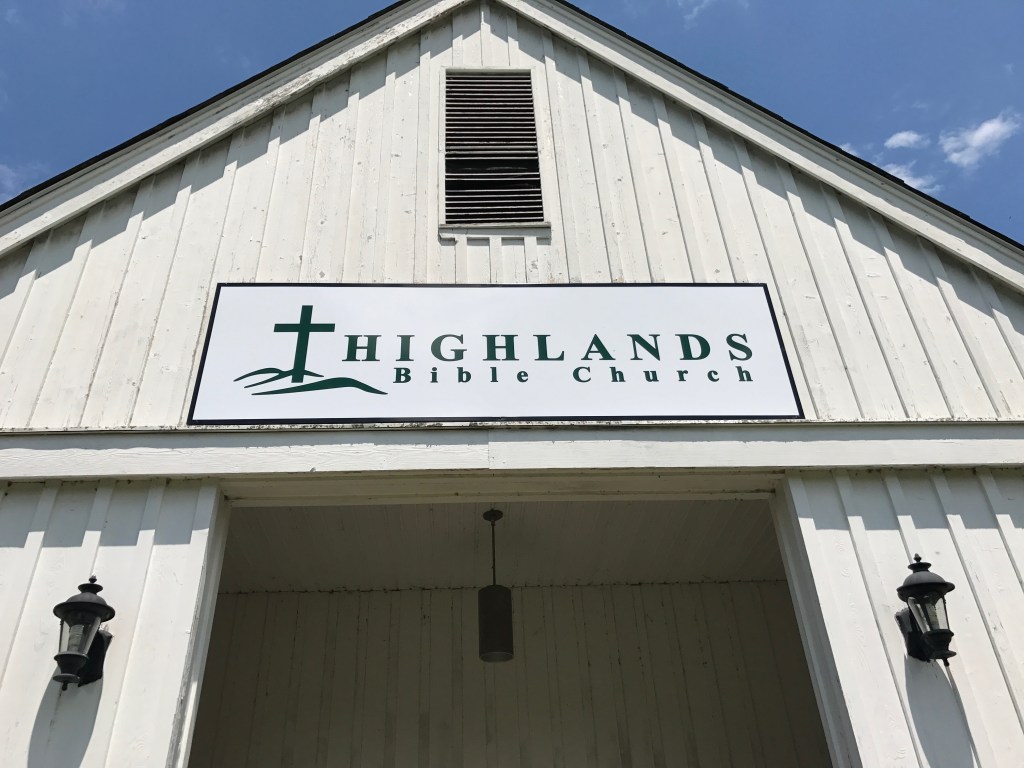
    This Sunday is an especially big moment, because for the first time HBC will be having services at our new location: 307 NJ-94, Vernon Township, NJ 07462 (across from the Highlands State Bank).

    The Lord has seen fit to abundantly bless us with this location, and we want to use it to glorify him by making and maturing disciples of Jesus. We want to be faithful to proclaim the gospel clearly in the center of Vernon, and to minister the gospel as we love the people of Vernon.

    Expecting Great Things

    There’s a ton of excitement about our new location, and we are anticipating a big crowd Sunday at 9:30 AM. If you live in the Vernon area and need a place to worship, come worship with us— we’ve got a seat saved for you. If you’re a part of the Green Pond campus and you’re looking to visit our new Highlands campus location, consider waiting a few weeks as we get settled in.

    Keep Praying

    God has immensely blessed both our Green Pond and Highlands campuses this year. His Spirit is using his word to change lives, and we are thrilled to be participants in and beneficiaries of his work.

    Praise God with us for this past year of Highlands ministry at Cedar Mountain School. Pray with us that God will glorify his name in our new home. Pray that people would be drawn to attend HBC. Pray for the making and maturing of disciples of Jesus.