Making and Maturing

Disciples of Jesus

  • You Were a Refugee Once Too

    So then you are no longer strangers and aliens, but you are fellow citizens with the saints and members of the household of God. -Ephesians 2:19

    Imagine you are one of the 4.18 million Syrian refugees seeking to find a new place to eat and sleep. You have fled your home, probably leaving loved ones and the vast majority of your earthly possessions. You have lots of questions for your family. Where will we sleep tonight? Where will we get food? Will anyone speak my language? Where will we end up? Will I be able to find a job?

    Contrast that uncertain state of being with our current circumstances. We have different kinds of questions. Where will we go out to eat tonight? What kind of car should I buy? Which college will my children attend? Where can I get the new iPhone? In many ways, we don’t have much in common with refugees.

    According to the Bible, however, non-Jewish believers in Jesus are described as being former spiritual refugees. In Ephesians 2:19 Paul says that Gentile believers were first refugees (strangers and aliens) with no home, no roots, no claim to land, and no inheritance. Yet because of the death and resurrection of Jesus we are now called “fellow citizens with the saints” and part of the “household of God.” In short- we were out, but now we are in.

    The recent refugee crisis brings this black and white image into full color. Think about that word picture for a moment. We were spiritually homeless, wandering without hope (Ephesians 2:12). But now, because of Jesus, we who were on the outside are insiders (Ephesians 2:13). Paul compares coming to faith in Jesus Christ (and becoming a part of the community of believers that is the church) to finally being at home. Words such as security, confidence, and hope come to mind.

    By faith in Jesus we now have citizenship with the saints- with all the rights and privileges that entails. By faith in Jesus we now have a family- the church. We are no longer refugees.

    This spiritual truth should lead us to compassionate care for literal refugees. In fact, God says as much to Israel in Exodus 22:21, “You shall not wrong a sojourner or oppress him, for you were sojourners in the land of Egypt.” They could relate, and so they should show special care for sojourners.

    Care for refugees is not our natural response. Whenever you have over four million displaced persons seeking a new home, problems will arise. Not surprisingly, fear and suspicion are common responses to mass migration. As one example, the conservative Swiss political party won big in recent elections due to an anti-immigration stance. Will the refugees take jobs? Will their presence result in higher taxes? Will they try to take over the country? Fear says, “Better just to send them somewhere else. They don’t belong here.”

    Let’s never forget that we didn’t belong as citizens with the saints or as members of the household of God. Let’s never forget that Jesus brought us near when we were far away. Perhaps God is giving Christians an opportunity to show love to these refugees precisely because we were refugees too.
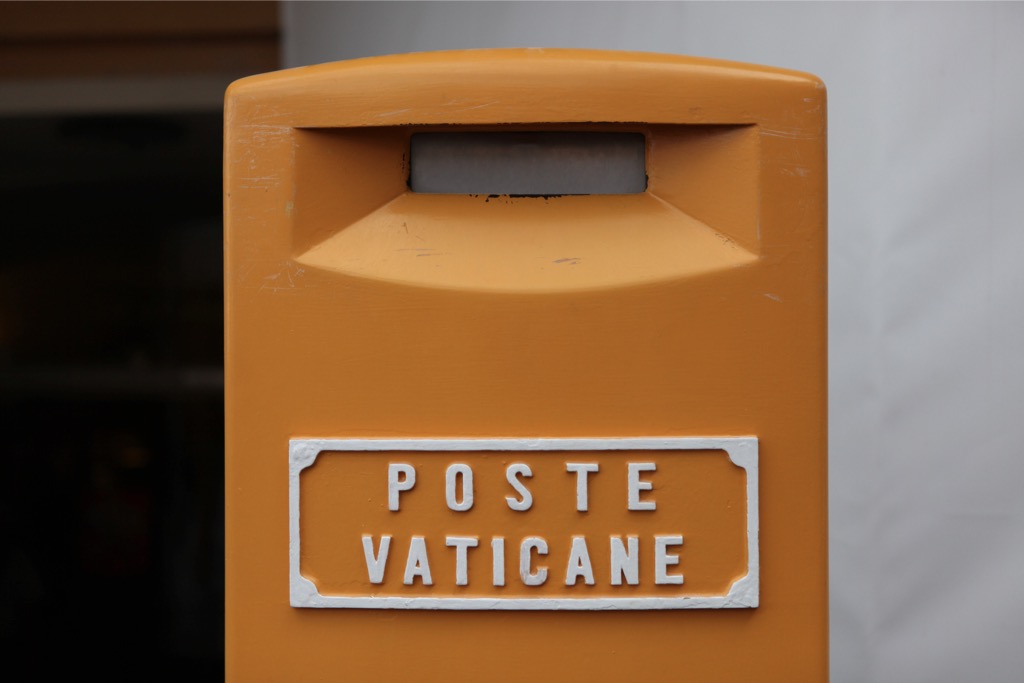
  • Check it out here.  What a great opportunity to clearly articulate the gospel!  Pray as pastor Andy will be in attendance.

  • Who Offers Forgiveness?

    The pope himself cannot remit guilt, but only declare and confirm that it has been remitted by God. -Martin Luther, Thesis #6, 1517

    Last week Pope Francis announced that for a year priests are allowed to forgive the sin of abortion. His motivation is compassion for those who have felt, for one reason or another, the need to terminate the life of their child. As far as I can tell, this is a well meant expression of mercy… with one huge theological problem: neither the papacy, nor the church can limit or dictate forgiveness for sins.

    The practical reality of life on the ground for Roman Catholicism is that the Roman Catholic Church, via its leadership, is the dispenser of God’s mercy to people. When we look to the Bible, however, we find that it is God alone who may forgive sin.

    Recall the famous incident in Capernaum from Mark 2. Jesus is preaching in a home and it was so crowded there was no room for anyone to get in. Four friends of a man paralyzed got creative and lowered their friend through the roof (awesome moment, by the way). Jesus looks at the man and says, “Son, your sins are forgiven” (Mark 2:5).

    When he said this, the religious leaders of the community in attendance took offense. Jesus was blaspheming! They knew that only God can forgive sins (Mark 2:7). Jesus, aware of their attitude, objects to their objection. He asks which is harder, to say “your sins are forgiven” or “rise, pick up your bed, and walk.”

    Side note: which is harder? In that moment, the speech act of forgiveness seems easier because it cannot be visually verified, and the healing seems “harder” in the sense that it cannot be faked and will yield empirical evidence. However, surely a righteous God forgiving sin is harder than the Creator of the universe healing a broken body. I digress…

    Crucially, Jesus does not object to their premise; he agrees: only God is able to forgive sins. Instead, he proves his own right to forgive sins by performing the healing: “‘But that you may know that the Son of Man has authority on earth to forgive sins’—he said to the paralytic— ‘I say to you, rise, pick up your bed, and go home’” (Mark 2:10-11). Jesus says I will prove to you I am God, and therefore that I can indeed forgive sins.

    Back to the issue at hand. If the Pope can declare certain sins forgivable for certain times, why wouldn’t he declare all sins forgivable at all times? This is exactly what Martin Luther was asking in Thesis #82, “Why does not the pope liberate everyone from purgatory for the sake of love (a most holy thing) and because of the supreme necessity of their souls?” It was a rhetorical question (and for the record purgatory is another RCC doctrine that is shockingly absent from the Bible). The short answer is, because the pope doesn’t forgive, only God does.

    But aren’t there passages where Jesus gives the church authority to forgive? What about John 20:22-23? In that passage Jesus says to his disciples: “Receive the Holy Spirit. If you forgive the sins of any, they are forgiven them; if you withhold forgiveness from any, it is withheld.” Jesus is giving the church the authority to preach the gospel, and therefore offer forgiveness to sinners via the gospel. There’s a huge difference between announcing forgiveness of sins and accomplishing forgiveness of sins.

    The disciples announce forgiveness by preaching the gospel. If a person repents and believes, the disciples can affirm “you are forgiven”—not because of church policy but because of the cross of Christ. If someone rejects the gospel and refuses to repent and believe, the disciples can accurately announce, “you are not forgiven”—not because of their power, but because the person has rejected God’s vehicle of forgiveness: the gospel.

    Forgiveness is not a function of the church, but of the death and resurrection of Jesus Christ. In Colossians Paul writes, “He has delivered us from the domain of darkness and transferred us to the kingdom of his beloved Son, in whom we have redemption, the forgiveness of sins” (Colossians 1:13-14). In 1 John the apostle John writes, “If we confess our sins, he is faithful and just to forgive us our sins and to cleanse us from all unrighteousness” (1 John 1:9). Forgiveness is God’s work.

    Priests don’t need permission to forgive sins, because they don’t do it. Jesus died to pay the penalty for sin and conquered death in resurrection; therefore any person can be forgiven by confessing their sin to God and turning to Jesus in faith. Or, in the words of Martin Luther:

    Any Christian whatsoever, who is truly repentant, enjoys plenary remission from penalty and guilt, and this is given him without letters of indulgence. -Martin Luther, Thesis #36, 1517

    The wrong of abortion may be forgiven because of the cross of Jesus Christ, and don’t let the pope tell you otherwise. God’s grace is sufficient, and it’s available all the time.

  • Love > Like

    Husbands, love your wives, as Christ loved the church and gave himself up for her.

    -Ephesians 5:25

    My daughter Kate said it. “Love is more than like.” That is a six year old explaining to a four year old the semantic difference between “love” and “like.” Simple. Effective. Brilliant.

    15 years ago Lindsay and I were married. I liked Lindsay from the first days we spent time together in college (Hotchkiss lounge at TMC, thank you Andy and Beth Lichtenberger!). It didn’t take long before I knew that I loved her. 15 years and 4 kids later, I am still learning that love is more than like.

    God calls me not merely to like Lindsay, but to love her as Christ loved the church and gave himself up for her. Like doesn’t result in sacrifice. Like doesn’t put others first. Like doesn’t lead to confession and repentance. Like doesn’t mean unconditional commitment. Love does. Jesus loves us that way, and I am learning to love Lindsay that way. I have a long way to go.

    Love has so much bound up in it: will, emotion, decision, sacrifice, choice, attraction, commitment. 15 years into this game, I’m more aware than ever that love > like.

    Lindsay is a precious gift of God to me… a gift that I often take for granted. How awesome are her mom skills? How patient is she? How real is her faith? There’s so much to like about Lindsay: she’s a beautiful, intelligent, soft spoken, remarkably capable woman who walks by faith. But love is more than like. I love you, Lindsay!

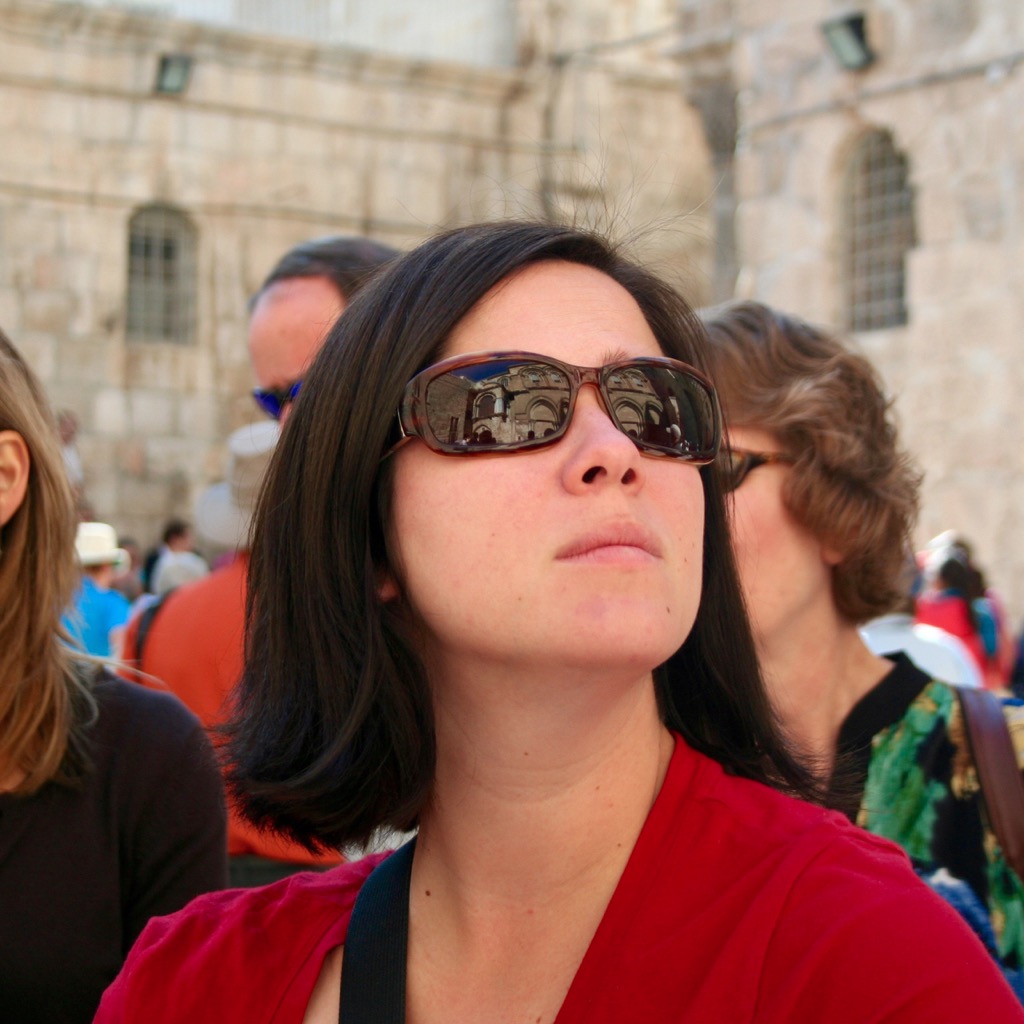
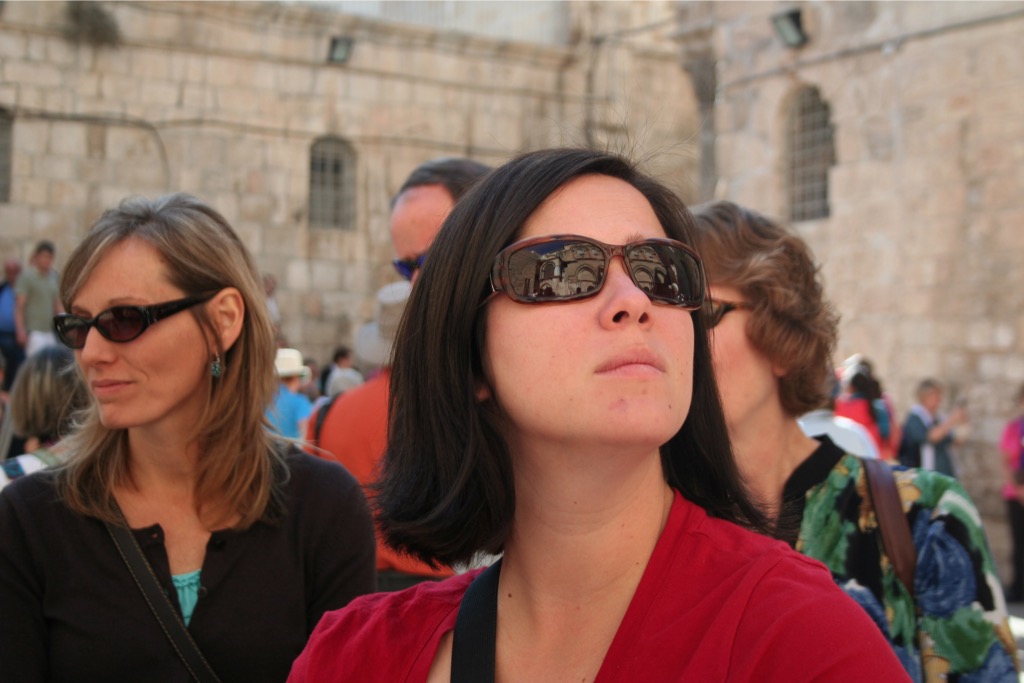
    (The photo above is one of my favorites of Lindsay in Jerusalem… she’s a rock star!)