Making and Maturing

Disciples of Jesus

  • Election Cycle Spiritual Prep Kit

    This is so that the living will know that the Most High is ruler over human kingdoms. He gives them to anyone he wants and sets the lowliest of people over them.

    -Daniel 4:17

    It’s time for our quad-annual dose of democratic frenzy. I’m just going to go out on a limb and guess that one of your local church elders is not running for president. In that case, we know that the names on our ballots (however we end up voting!) will not be elder-qualified. Tempered with that caveat, we must endure the next three months of politicking. But what spiritual principles can help us maintain our faith and avoid despair as we walk this gauntlet?

    God is sovereign over all nations.

    In Daniel 4 Nebudchadnezzar’s pride as ruler of Babylon is answered by God humbling him with a fit of insanity. The purpose of this humbling is “so that the living will know that the Most High is ruler over human kingdoms” (Daniel 4:17).

    This means that whatever happens with the election, we can take comfort knowing who’s driving the bus of history and our nation. God’s sovereignty humbles us when we overestimate our greatness, even as a nation, and points us to faith in him.

    God appoints all rulers.

    We also learn in Daniel 4 that God appoints rulers over the nations, “He gives them to anyone he wants and sets the lowliest of people over them” (Daniel 4:17). The apostle Paul affirms this truth in Romans 13:1, “ Let everyone submit to the governing authorities, since there is no authority except from God, and the authorities that exist are instituted by God.”

    This means we can wake up the morning after the election with faith in God ready to submit to whoever won the day. We especially need this truth if our preferred party/candidate loses the election.

    Democracy is a blessing, not a right. Use it wisely.

    Technically democracy is a right in our nation, but historically speaking most of the world’s population has not had a direct say in their government. The gospel has thrived under such conditions without interruption. In a world broken by sin, democracy may be the best form of government as it provides so many checks and balances on its rulers.

    This means we shouldn’t take democracy for granted. It is a blessing to be used with discernment. We should seek wisdom from God as we vote, knowing that he graciously gives it to those who ask in faith (James 1:5).

    Honoring God with our speech is not optional.

    In Ephesians 4:29 the apostle Paul calls Christians to God-glorifying speech: “No foul language should come from your mouth, but only what is good for building up someone in need, so that it gives grace to those who hear.”

    As we speak and interact with others about the election, political issues, and candidates, let us do so in ways that build up rather than tear down. It is possible to speak intelligently about an issue without it devolving into an argument, but it requires much grace and maturity. This is especially difficult on social media, so let us be vigilant to give grace if/as we post.

    We need to pray for our government.

    Finally, in 1 Timothy 2:1-2 we are called to pray for our leaders, “ First of all, then, I urge that petitions, prayers, intercessions, and thanksgivings be made for everyone, for kings and all those who are in authority, so that we may lead a tranquil and quiet life in all godliness and dignity.”

    Our governments—federal, state, and local—are facing immense challenges due to the coronavirus and its fallout. Pray for wisdom for our leaders. Pray for humility and repentance over sin. Pray for clarity and compassion as they make decisions. Most of all, pray that their governing would result in a peaceful nation where the gospel thrives as we lead tranquil lives in all godliness and dignity.


  • It’s Time to Gather Again

    “Let us hold on to the confession of our hope without wavering, since he who promised is faithful.  And let us watch out for one another to provoke love and good works, not neglecting to gather together, as some are in the habit of doing, but encouraging each other, and all the more as you see the day approaching.”  

    -Hebrews 10:23-25

    It’s time.  

    My brothers and sisters at Green Pond Bible Chapel, I want to gently encourage you to consider resuming gathering with the church.  While watching our services via livestream has been a blessing in the midst of lockdown, it is not sufficient to sustain our spiritual health in the long run.  

    Let me walk through five spiritual reasons to resume gathering, and then I’ll mention two practical considerations and one caution.

    1. Being with our church family encourages us.  When I see the gathered church I am reminded of the work God is doing in us, to us, and through us.  Prolonged absence from the church body dampens that encouragement, and therefore can cause discouragement.  It’s not hard to see why John wrote, “I hope to see you soon, and we will talk face to face” (3 John 14; Paul says the same in Romans 15:24 & 1 Corinthians 16:7).

    2. Hearing the live singing of praise to God with our church family inspires us.  The single act of the church singing together helps us to mature as disciples of Jesus.  Consider Colossians 3:16, “Let the word of Christ dwell richly among you, in all wisdom teaching and admonishing one another through psalms, hymns, and spiritual songs, singing to God with gratitude in your hearts.”  Singing praise to Jesus is a two way street—we praise God and encourage each other.  I miss hearing your voices!

    3. Seeing the church reminds us to serve and pray.  When I see the individuals who make up our church family I am reminded of their needs and how I can bear their burdens and intercede for them.  The old proverb “Out of sight, out of mind” is legit.  It’s much easier to be mindful of the needs in our body when we are regularly seeing each other.

    4. When I hear live preaching I am more engaged in the Scripture.  This may not be true for everyone, but it is for me and I would guess it’s true for most people.  There’s no experience like hearing the Word as someone is preaching live and growing in knowledge and love of Jesus.

    5.  When we are isolated from the church, we are more easily drawn into temptation.  The fact is the physical gathering of the church gives a shot in the arm to our battle against sin.  All week we face challenging circumstances walking as a minority in an unbelieving culture, but on Sunday we are the majority.  We walk together.  

    In addition to those spiritual reasons to gather, let me offer a few practical reasons.

    1.  We have the right kind of space for you.  We have been blessed with facilities that allow us to offer corporate worship space for those who prefer to be in a strict mask only environment, as well as space for those who feel wearing a mask inhibits their ability to participate in corporate worship.  We are taking advantage of great weather and worshipping outside as much as possible.  We ‘ve made improvements to our fellowship hall to facilitate seating limits and social distancing, including moving in sanctuary chairs and installing air conditioning.

    2.  Kingdom Kids is up and running.  If you need child care for children under the age of 5 we have you covered.  We’ve adapted our program to account for the recommendations from the state of New Jersey.  As we have more volunteers available, we’ll expand our Kingdom Kids programs.

    Finally, let me offer one word of caution.  If you are in an at risk group, please be wise.  Saints who are at risk should stay home until they are comfortable resuming corporate worship.  There’s no magic bullet for that.  We love and miss you, but we can wait a little longer until we see you again.  

    We’ve made adjustments.  We’ve got tons of hand sanitizer.  We’re social distancing.  We’ve got masks.  Let’s watch out for each other, and let’s not neglect meeting together.  It’s time to gather again.  Lord willing, I’ll see you Sunday at 10:10 AM.

  • Lloyd-Jones Quote

    Many of you have asked for the Martin Lloyd-Jones quote from our sermon July 26 on Hebrews 4:14-16. It’s from his classic “Spiritual Depression” and refers to Psalm 42.

    “The main art in the matter of spiritual living is to know how to handle yourself. You have to take yourself in hand, you have to address yourself, preach to yourself, question yourself…

    You must turn on yourself, and say to yourself “Hope in God”… and then you must go on to remind yourself of God, who God is, and what God is and what God has done, and what God has pledged himself to do.

    Then having done that, end on this great note: defy yourself, and defy other people, and defy the devil and the whole world, and say with this man, “I shall yet praise him for the help of his countenance, who is the health of my countenance and my God.”

    -Martin Lloyd-Jones

    Lloyd-Jones was a gifted preacher and was the pastor of Westminster Chapel in London for 30 years.

  • Marriage as a Taste of Something Greater (in light of our 20th Anniversary)

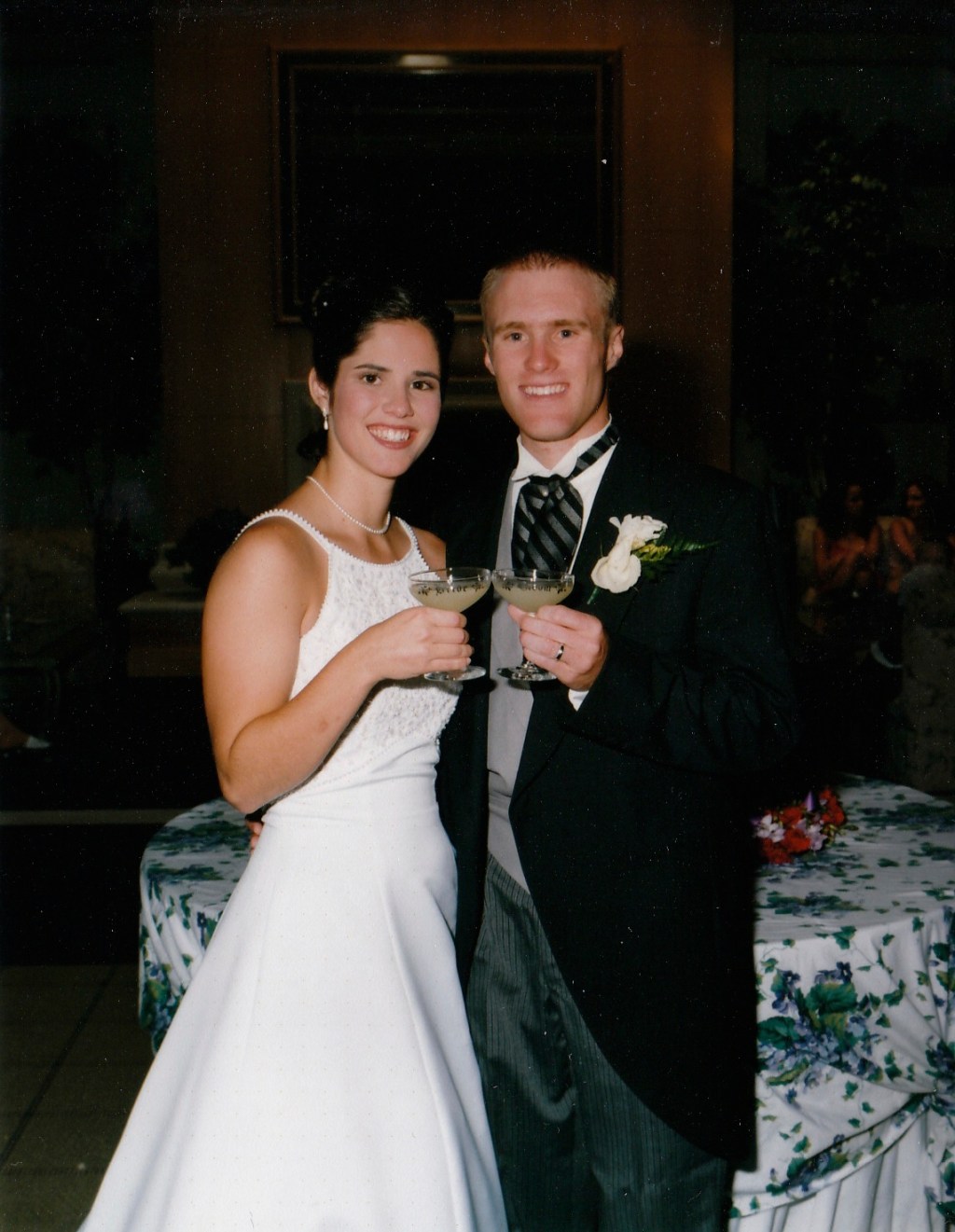
    Today, July 22, 2020, Lindsay and I have been married 20 years. I love my bride, and usually take time each year to publicly proclaim said love to the internet. She’s truly a blessing from the Lord—as a co-laborer, friend, mother, and human being (see here for more on that).

    We have had the blessing of two decades of joyful union. Every marriage has its challenges. We’ve had a few bumps, but no crises. I attribute that to Lindsay’s patience and servant’s heart. God has been gracious to me in Lindsay.

    When I think about the joy I’ve experienced in our marriage, I am reminded of the fact that marital bliss is a foreshadowing of the joy we will experience forever with Jesus. At the end of John’s vision in Revelation he describes the blessing of the marriage feast at the uniting of Jesus with his bride:

    Then he said to me, “Write: Blessed are those invited to the marriage feast of the Lamb!”

    -Revelation 19:9

    The beauty of a bride, and the joy of a marriage are little glimpses of the beauty of God’s work in salvation and the joy of eternal life. Even the bride’s wedding dress is a picture of the purity of the church (Rev. 19:6-7). The love in our marriage is a picture of the love of God for us (Eph. 5:22-33). The covenant basis of our marriage is a picture of the covenant relationship we have with God established by Jesus’ shed blood. The forgiveness we show each other in marriage is a picture of Jesus’ forgiveness of the church.

    Jonathan Edwards describes the beginning of eternity with Christ in light of Revelation 19 and the marriage picture with a focus on joy:

    This shall be the day of the gladness of Christ’s heart, wherein he will greatly rejoice, and all the saints shall rejoice with him. Christ shall rejoice over his bride, and the bride shall rejoice in her husband, in the state of her consummate and everlasting blessedness.

    -Jonathan Edwards

    I’m looking forward to the next two decades and beyond with my bride. We will no doubt endure the normal challenges of marriage in a broken world. At the same time, we will experience more love and joy and blessing. The best part is, those gifts from the Lord are just a taste of what’s to come.

  • Freedom from Slavery to the Fear of Death

    “Now since the children have flesh and blood in common, Jesus also shared in these, so that through his death he might destroy the one holding the power of death—that is, the devil—and free those who were held in slavery all their lives by the fear of death.” 

    -Hebrews 2:14-15

    The Coronavirus pandemic has brought the reality of death—something largely absent from Western culture at large—back into the center of our field of vision.  Hospitals running out of room to store dead bodies will do that to us.  Our default has often been to distract ourselves from the topic of death, even as we seek to defer it through medicine.  But like previous generations who faced disease or war, we are now looking our mortality right in the eye, and people are scared.

    Ever since sin entered the world humanity has been enslaved to the fear of death, but the gospel of Jesus changes this.  The author of Hebrews tells us that Jesus shared our flesh and blood existence in the incarnation so that he could die for us and therefore free us from the fear of death.  Christians have been freed from slavery to the fear of death.  

    So what?  How does this help us when we struggle with the fear of death?  Let me offer three applications, one objection, and one example as encouragement to live free from the fear of death:

    Three Applications

    1. We can be at peace in the midst of trials.  When we face the possibility of death, we can be at peace.  This peace comes through an acceptance of God’s sovereignty, through prayerfully submitting our circumstances to his care, and via the sure work of Jesus for us (see Philippians 4:6-7).  The opposite of peace is a state of agitation—being worked up.  We don’t have to fret when we get sick.
    2. We have hope in the midst of hype.  When others around us, including the media, go into a frenzy because of coronavirus, or the next disease, we need not follow their lead.  We can act with faith-based prudence rather than fear-based panic.  As we encounter a crisis (or a perceived crisis), we must let faith dictate our response.  When we focus on the steadfast, immovable character of God, hope in him will sustain us.  “In God, whose word I praise, in God I trust; I will not be afraid.” -Psalm 56:4 
    3. We have confidence to move forward in faith.  This is the hardest part, but trusting in God we can take steps of obedience.  This means moving forward is not primarily about faith in ourselves, or governments, or heath care experts, or medical professionals.  It’s never about guarantees of safety.   So whether we’re going to a dangerous unreached people group to translate the Bible or we’re simply going outside, we can do so by faith.   

    One Objection

    But shouldn’t we be as safe as possible?  Yes and no.  Faith-driven prudence means we make wise decisions as long as those decision do not prevent us from God-glorifying obedience.  This is why the great missionaries of 18th & 19th centuries were right to risk their lives for the advancement of the gospel.  It would have been safer to stay home, but it would also have been wrong.  This leads us to an example of living and dying free from the fear of death.

    One Example

    David Brainerd was a missionary to Native Americans in Connecticut, New York, and New Jersey from 1743-46.  He died from tuberculosis at only 29 years old.  His mentor Jonathan Edwards published the account of his life because he felt we could learn much from the example of Brainerd, including how to die.  He wrote in his introduction,

    The reader “will also see, how all ended at last, in his sentiments, frame, and behaviour, during a long season of the gradual and sensible approach of death, under a lingering illness; and what were the effects of his religion in dying circumstances, or in the last stages of his illness.”

    -Jonathan Edwards

    Edwards’ analysis is that Brainerd’s life was well lived, and his attitude towards death commendable.  Brainerd was in significant pain, but he was not afraid of death.  On the contrary, as his sickness worsened he wrote,

    “I had little expectation of my living the night through, nor indeed had any about me: and I longed for the finishing moment! …My soul breathed after God, ‘When shall I come to God, even to God, my exceeding joy?’ Oh for his blessed likeness!”

    -David Brainerd

    A few days later he wrote,

    “I am almost in eternity. I long to be there. My work is done: I have done with all my friends: all the world is nothing to me. I long to be in heaven, praising and glorifying God with the holy angels. All my desire is to glorify God.”

    -David Brainer, emphasis Jonathan Edwards

    Brainerd wasn’t a retired missionary dying at 95 years old.  He was 29 years old, seemingly with decades ahead of him to serve the Lord.  His faith in God prevented him from becoming bitter at the occasion of his early death.  Edwards said, 

    “He also expressed much satisfaction in the disposals of Providence, with regard to the circumstances of his deathHe also mentioned it as what he accounted a merciful circumstance of his death, that he should diehere (in Northampton, MA).”

    -Jonathan Edwards re: David Brainerd’s death

    Brainerd was not only at peace dying young, he was at peace with where on earth God ordained for him to die.  He was no slave to the fear of death, because Jesus died for him and rose from the dead.  If you are reading this and you have put your faith in Jesus, you are free from slavery to the fear of death.  We are free indeed.