Making and Maturing

Disciples of Jesus

  • Where Jesus Walked

    Israel 2019 Day 8

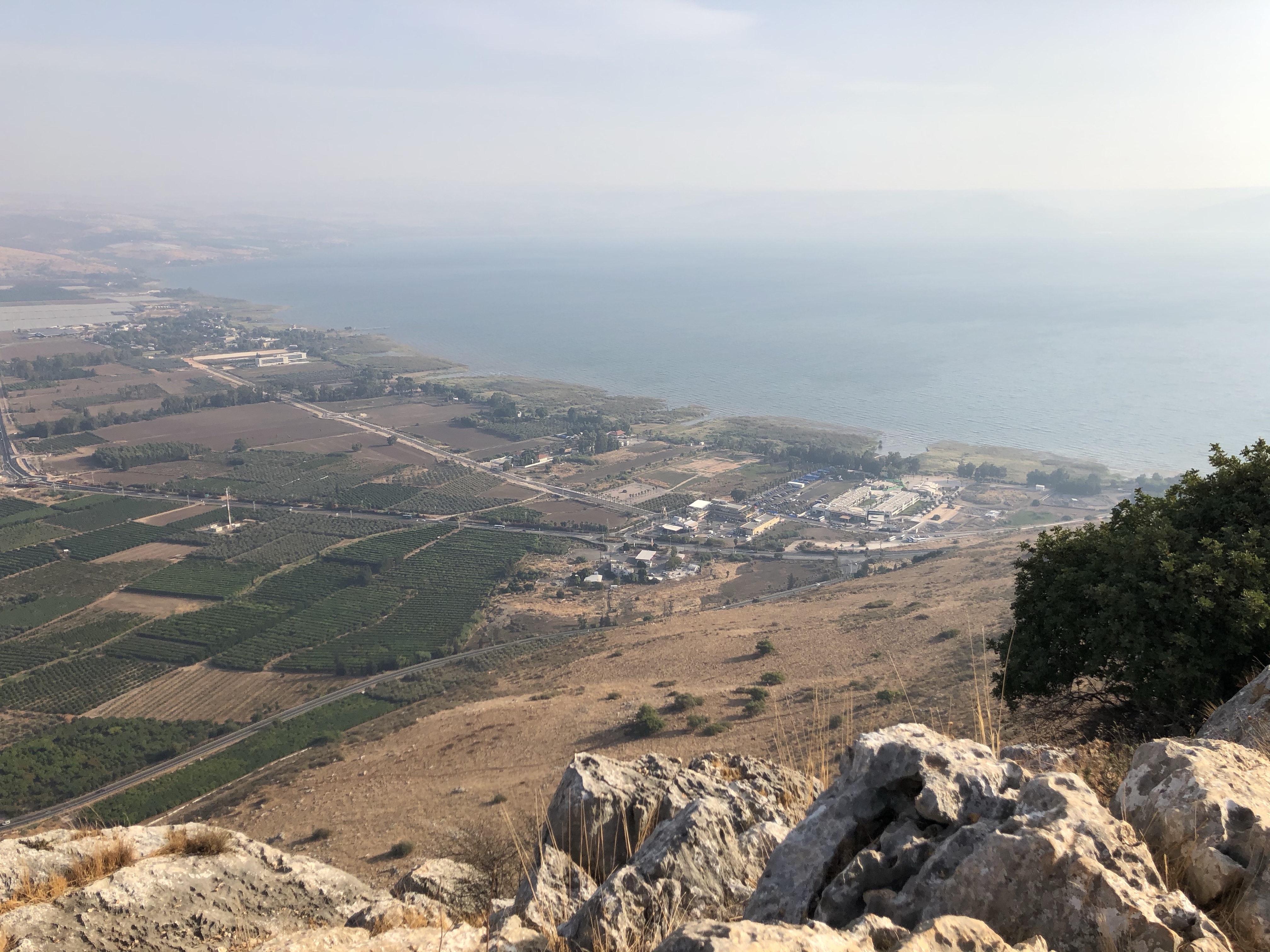
    We started our day driving up from Tiberias to the cliffs of Arbel for an amazing view of the Sea of Galilee. We saw the area where Jesus did the vast majority of his ministry, and got a great bird’s eye view of the region.
    We drove back down to the Sea of Galilee around the west side and stopped at one traditional location for the “mount of beatitudes.” No one could say for certain exactly where Jesus delivered the sermon on the mount, but it was likely on the west side of the lake on one of the lower hills that drift down into the water. We talked briefly about how shocking Jesus’ message was to the religious establishment of his day. We also discussed how the beatitudes aren’t a checklist to earn salvation, but rather a description of who we are in Christ.

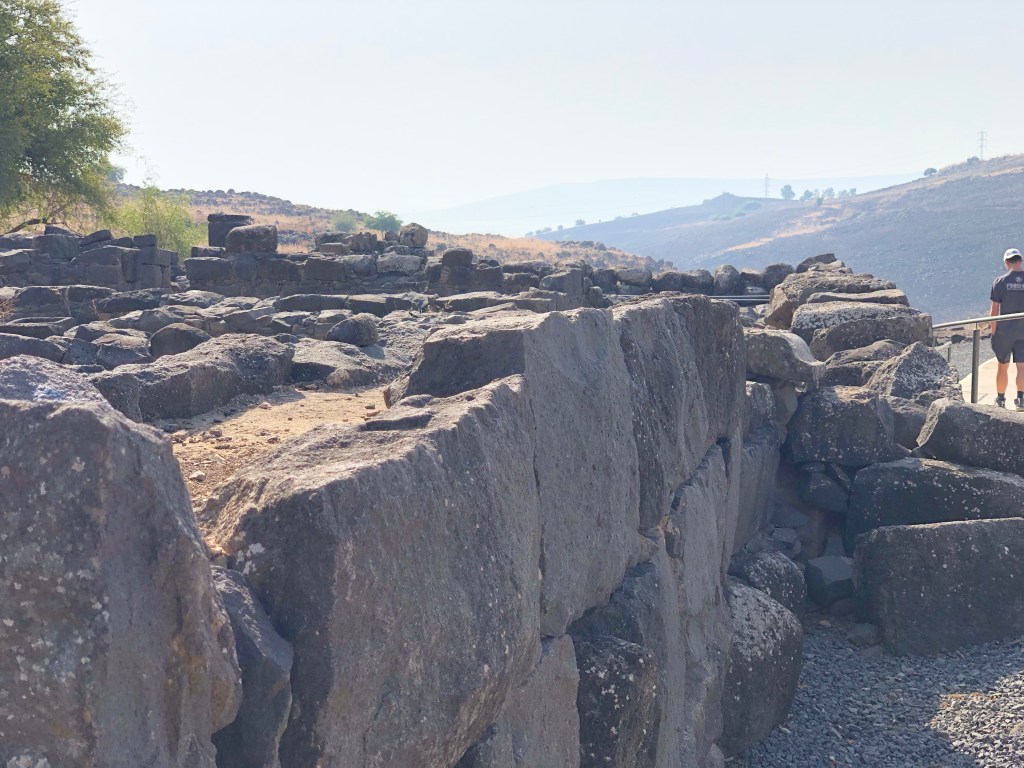
    We continued around the western side of the Sea of Galilee and stopped by Chorazin. The three towns Chorazin, Bethsaida, and Capernaum were all condemned by Jesus in Matthew 11 for witnessing his mighty works and refusing to repent and believe. Jesus’ message was clear: repent and believe the gospel.
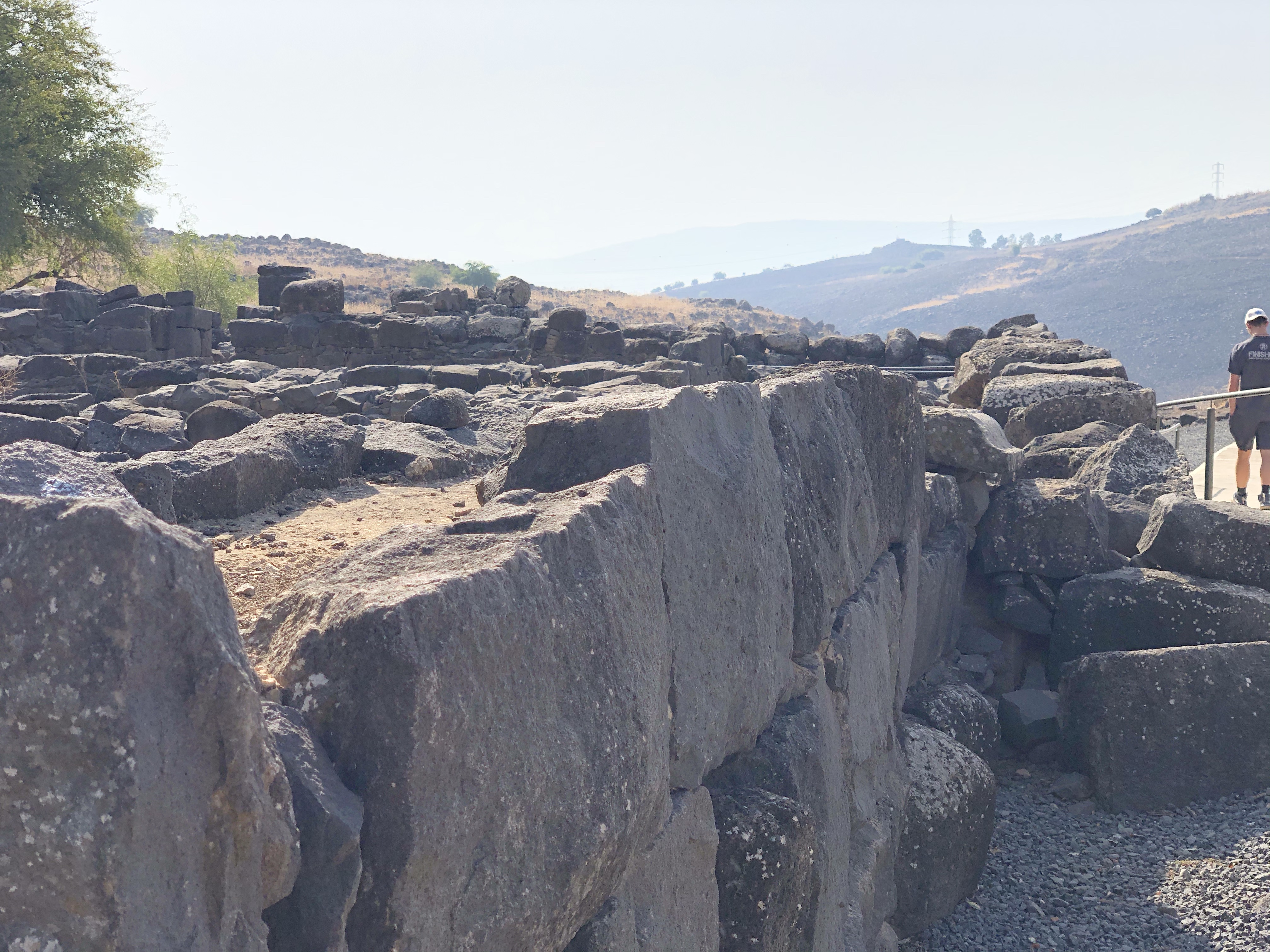
    Just a few minutes down the hill on the shore of the lake is Capernaum, the Galilean headquarters for Jesus. So much happened here! Jesus healed the paralytic lowered into Peter’s mother’s house, he healed the man with the withered hand in the synagogue, and he raised Jairus’ daughter from the dead. Yet so many refused to worship him.
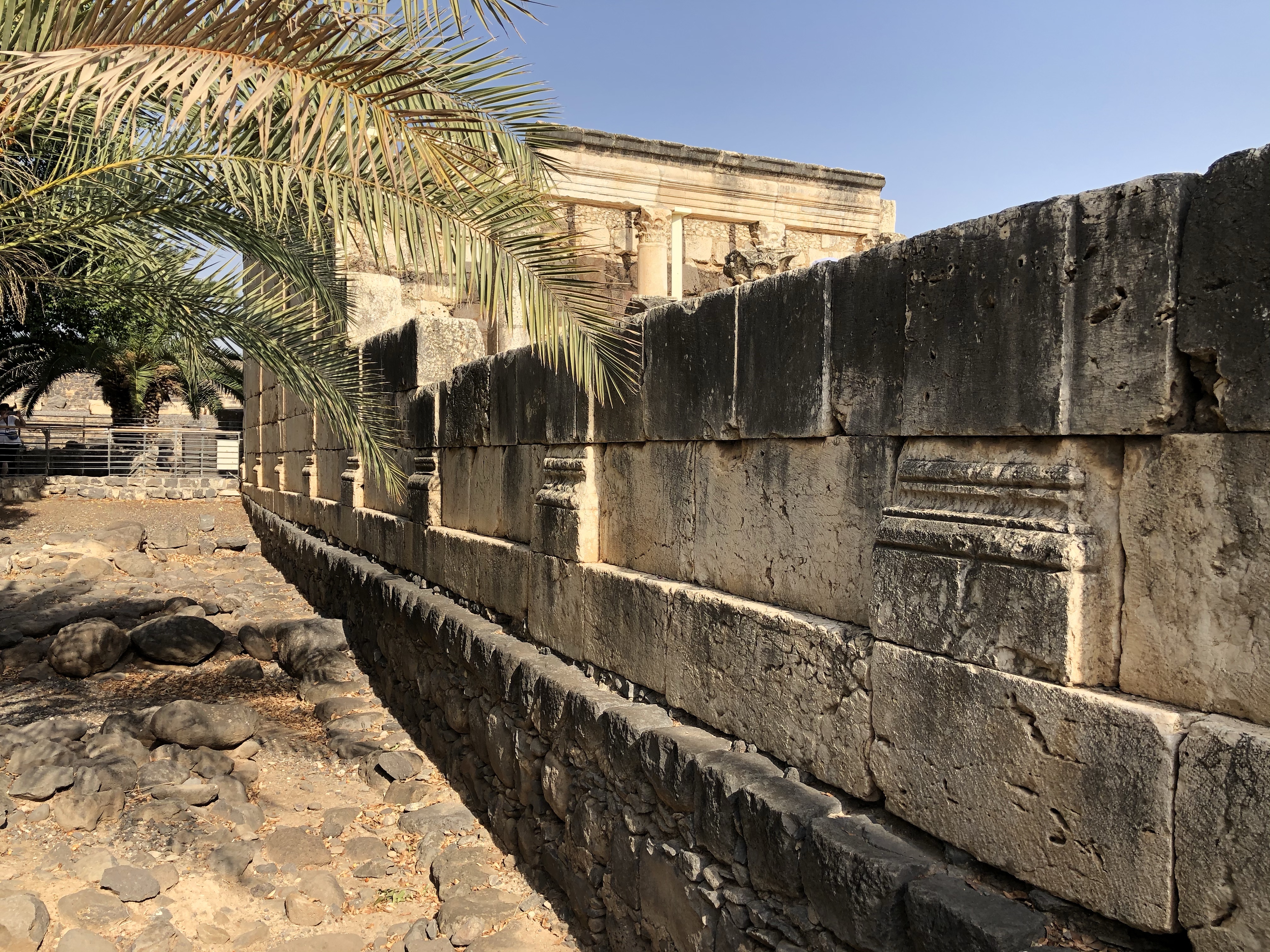
    We continued our day with a visit to Gennesar. This kibbutz discovered a 1st century boat on their property and did an amazing job preserving it. It was this kind of boat Jesus and his disciples probably used.
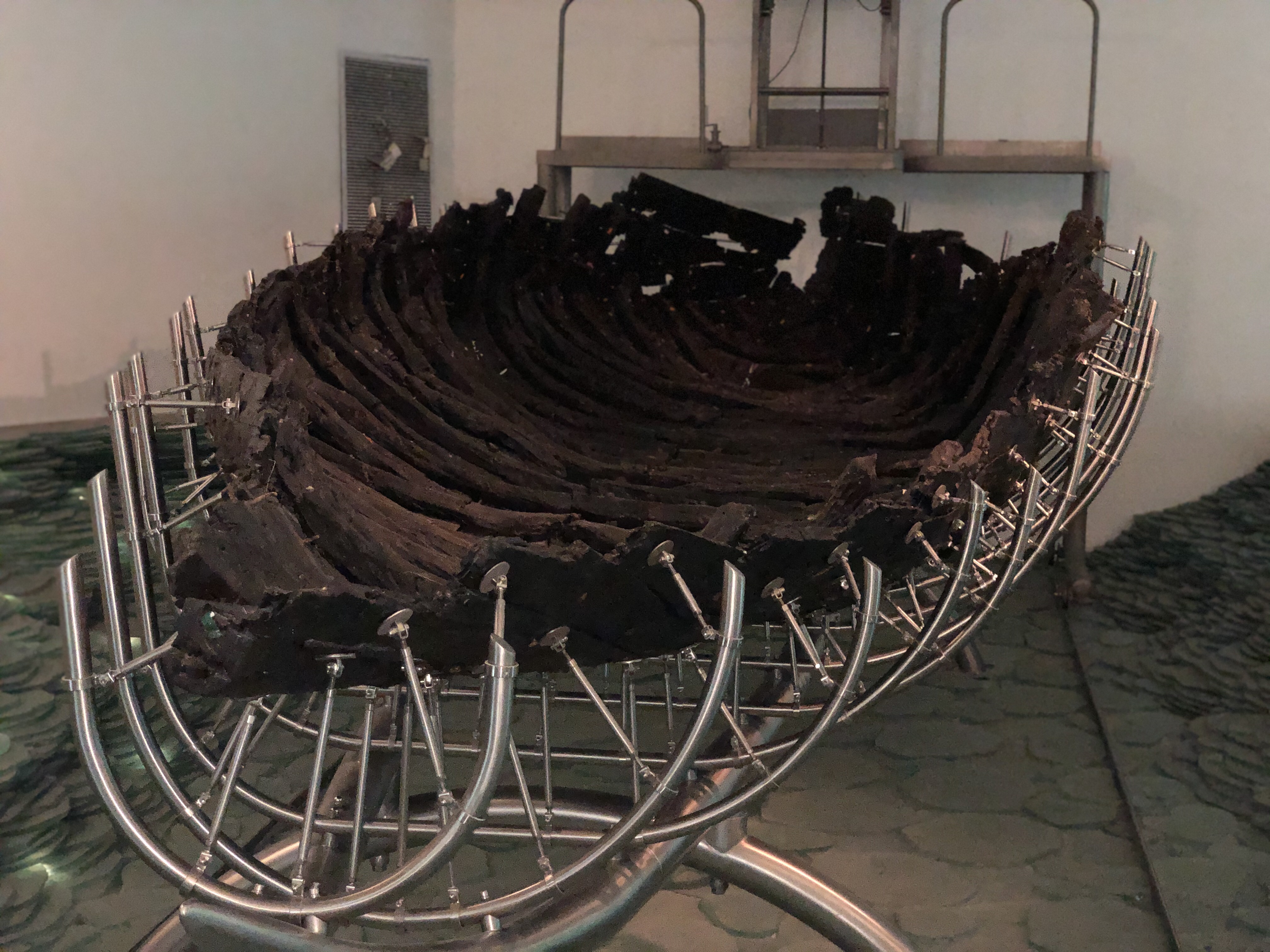
    After enjoying a tasty fish lunch we visited Yardenit, a place with access to the Jordan river. The Jordan river is both underwhelming and overwhelming. It’s no mighty river on its own account. Even so, it testifies to the faithfulness of God as he brought the Israelites across it (much farther south) and due to Jesus being baptized in it (much much farther south).
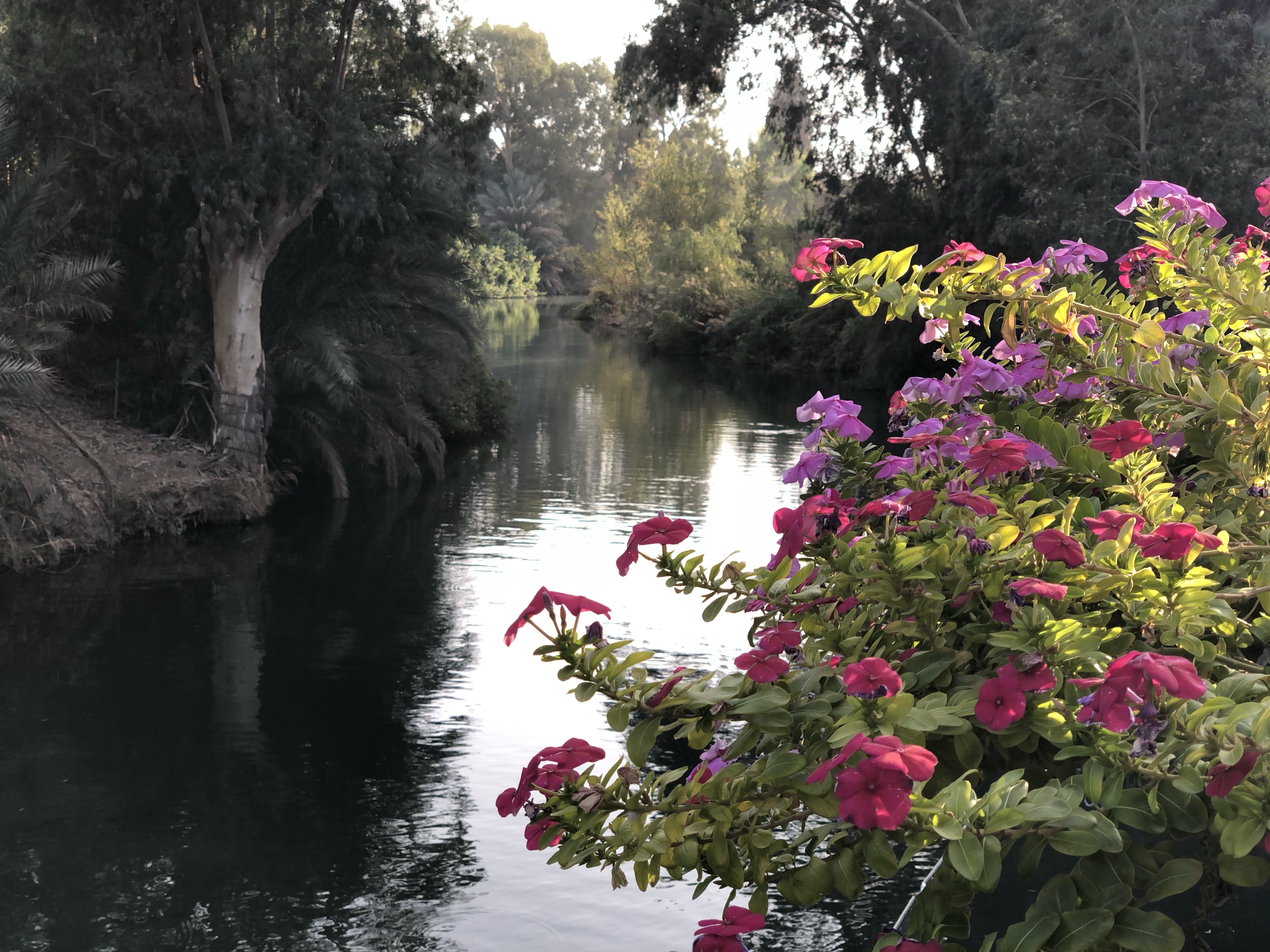
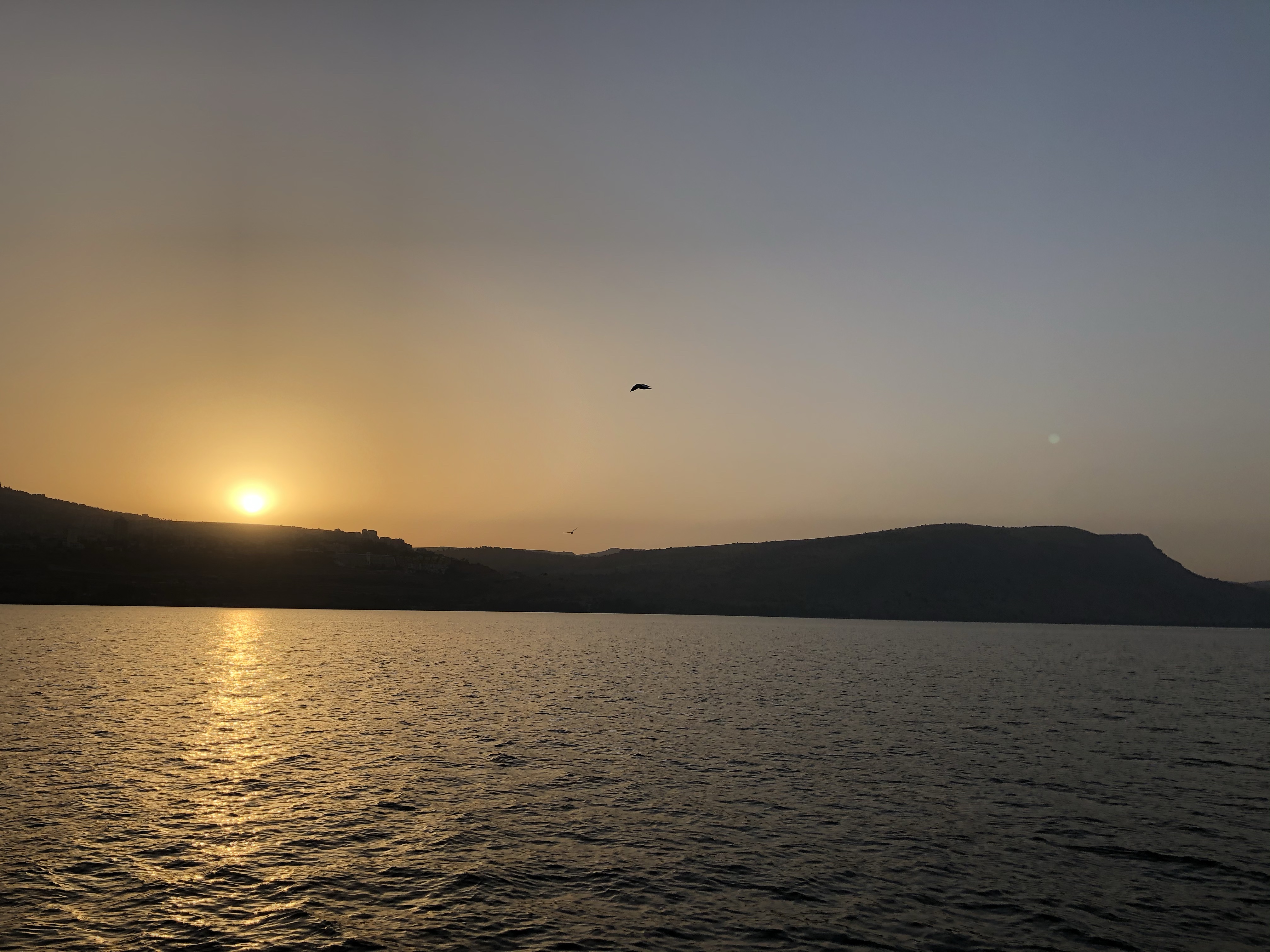
    Our last stop of the day was a boat ride on the Sea of Galilee, no doubt a highlight of our trip. We paused on the lake to read from Mark 4:35-41. We talked about the temptation to always ask if Jesus cares about us when we really need to remember who it is who’s in the boat with us. Even the wind and the waves obey him!
  • Israel 2019 Day 7

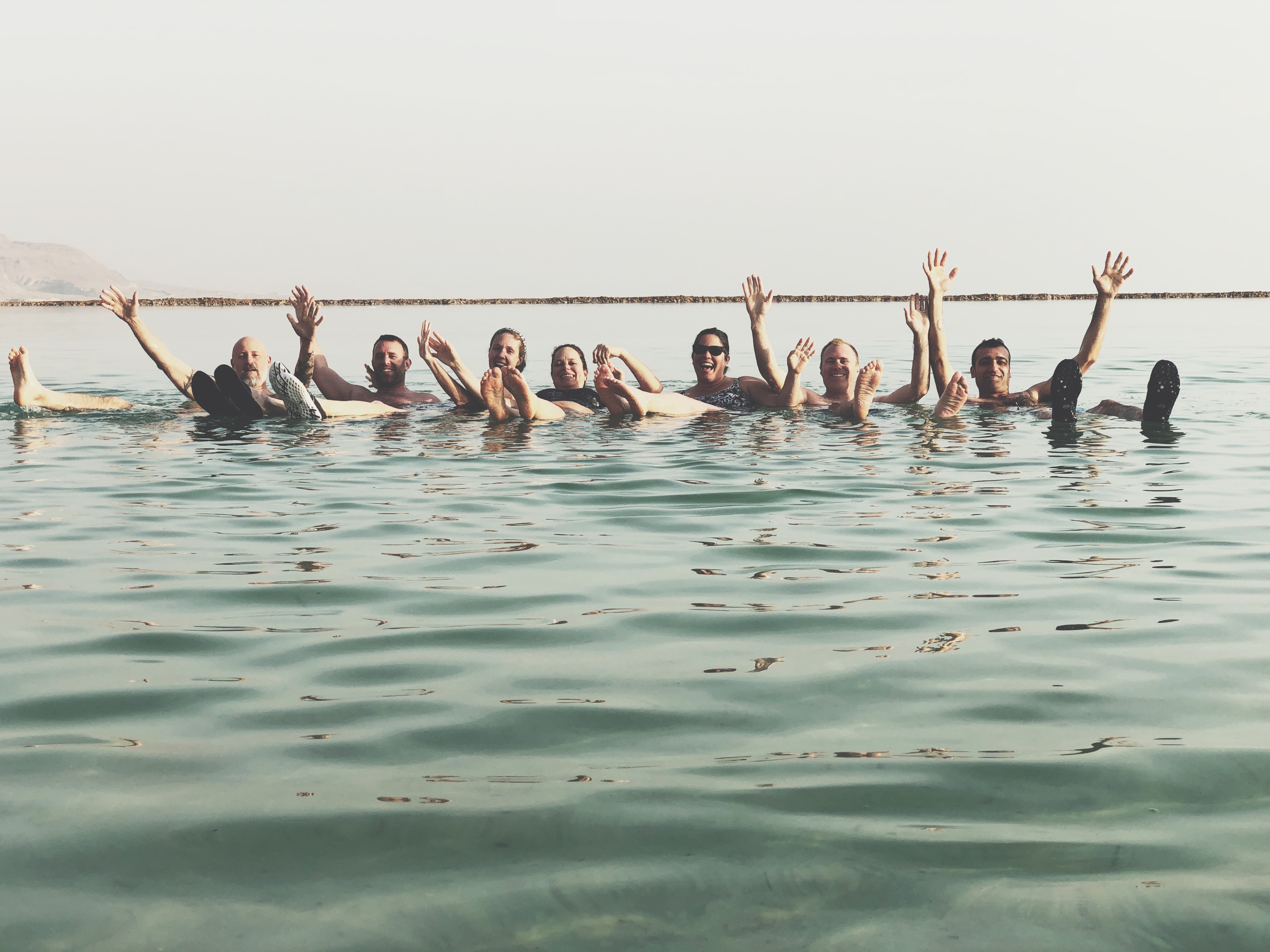
    Our day started in the Dead Sea—a body of water that sits at the lowest elevation on earth. The Jordan river empties into it, and there’s no outlet. A combination of environmental factors gives the Dead Sea a salinity of 30%. The bottom line here is that everyone floats in the Dead Sea. In Ezekiel’s vision of the new earth he sees a river running from the throne of the Lord in Jerusalem down to the Dead Sea, bringing it to life (Ezekiel 47). It’s a dramatic picture of God’s restoring work, bringing dead things to life. It reminds me of Ephesians 2:5– “God made us alive with Christ even though we were dead in trespasses.”

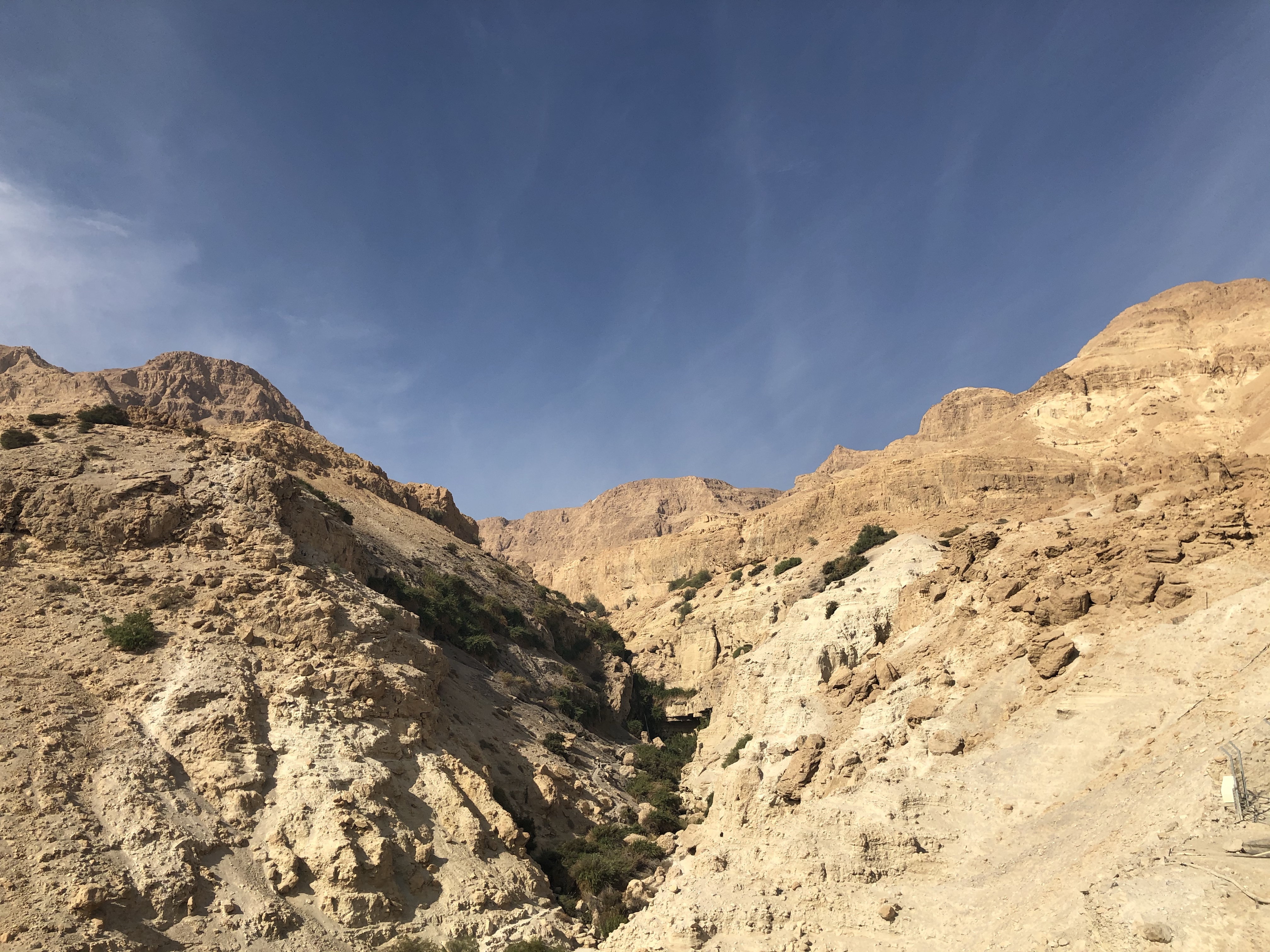
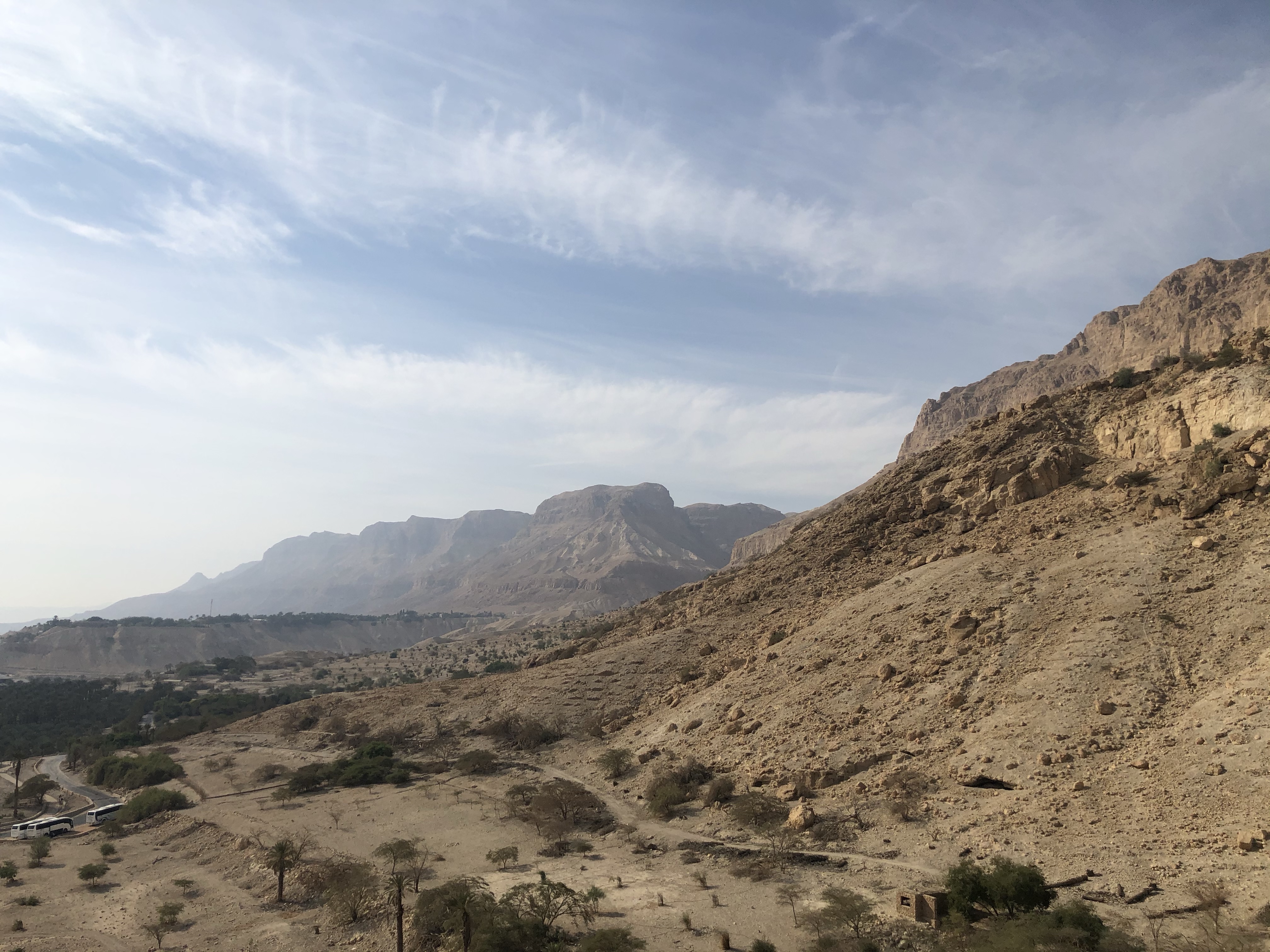
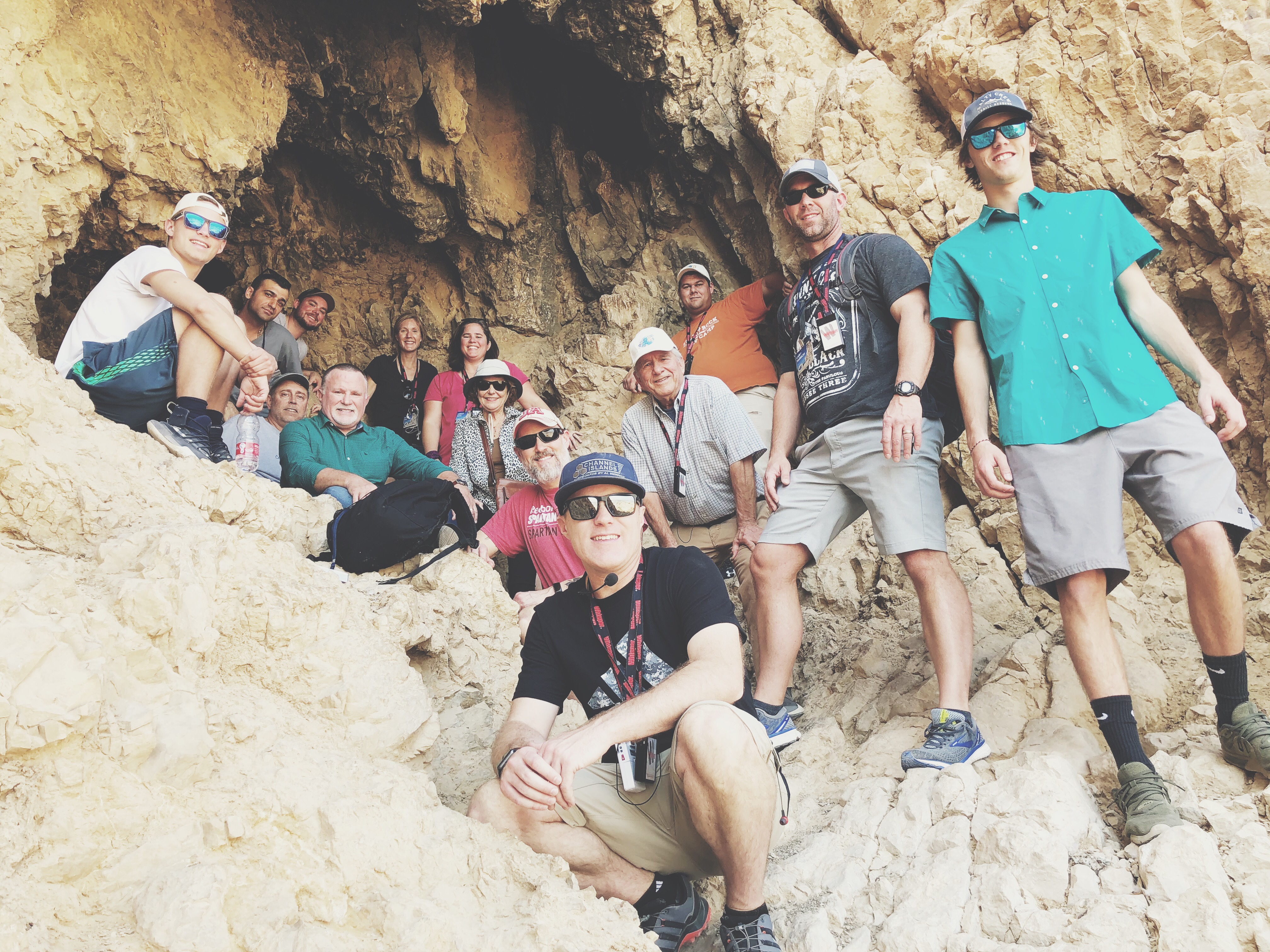
    We continued north along the west coast of the Dead Sea to Ein Gedi, the desert oasis where David hid from Saul for a while. A spring here provides much needed water. This was the place where Saul ventured into the very cave where David and his men were hiding. David chose to depend on God, and refused to kill Saul.

    Ein Gedi

    Another famous biblical event happened at Ein Gedi when the Transjordan coalition attacked Judah from Moab. They used Ein Gedi as their launching point into Israel. In 2 Chronicles 20 we read how Jehoshaphat led Israel in prayer, asking God for salvation. God said all they needed to do was stand and watch his deliverance. The coalition collapsed, and Israel went home with the spoils. Again, dependence on God was the clear theme (gospel in the OT, anyone?).

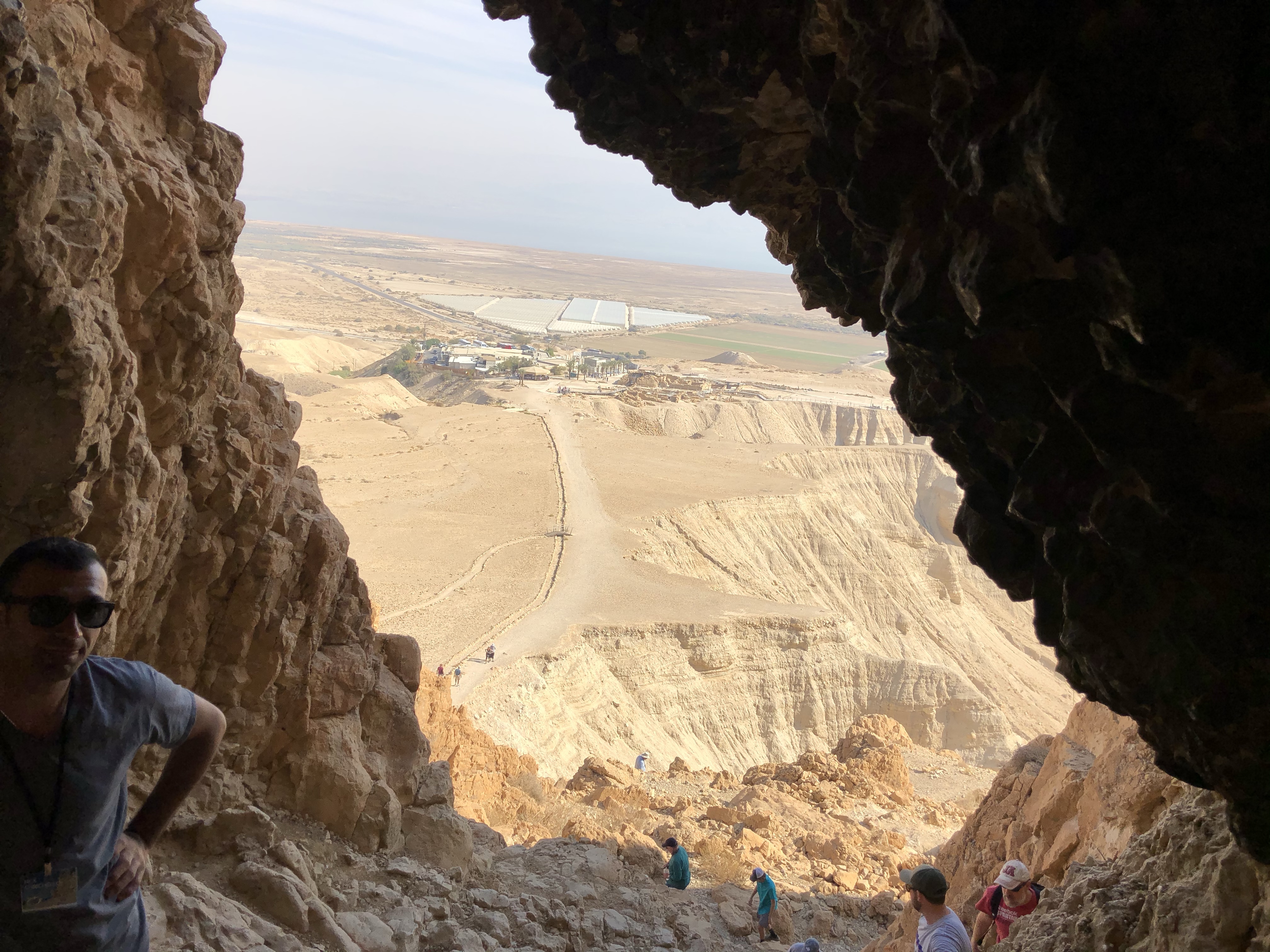
    From there we headed to Qumran. It was spiritual motivation that drove the Essenes, a strict Jewish religious sect, to live in monastic style at Qumran. The most important archaeological discovery of the 20th century was made at Qumran: the discovery of the Dead Sea Scrolls.

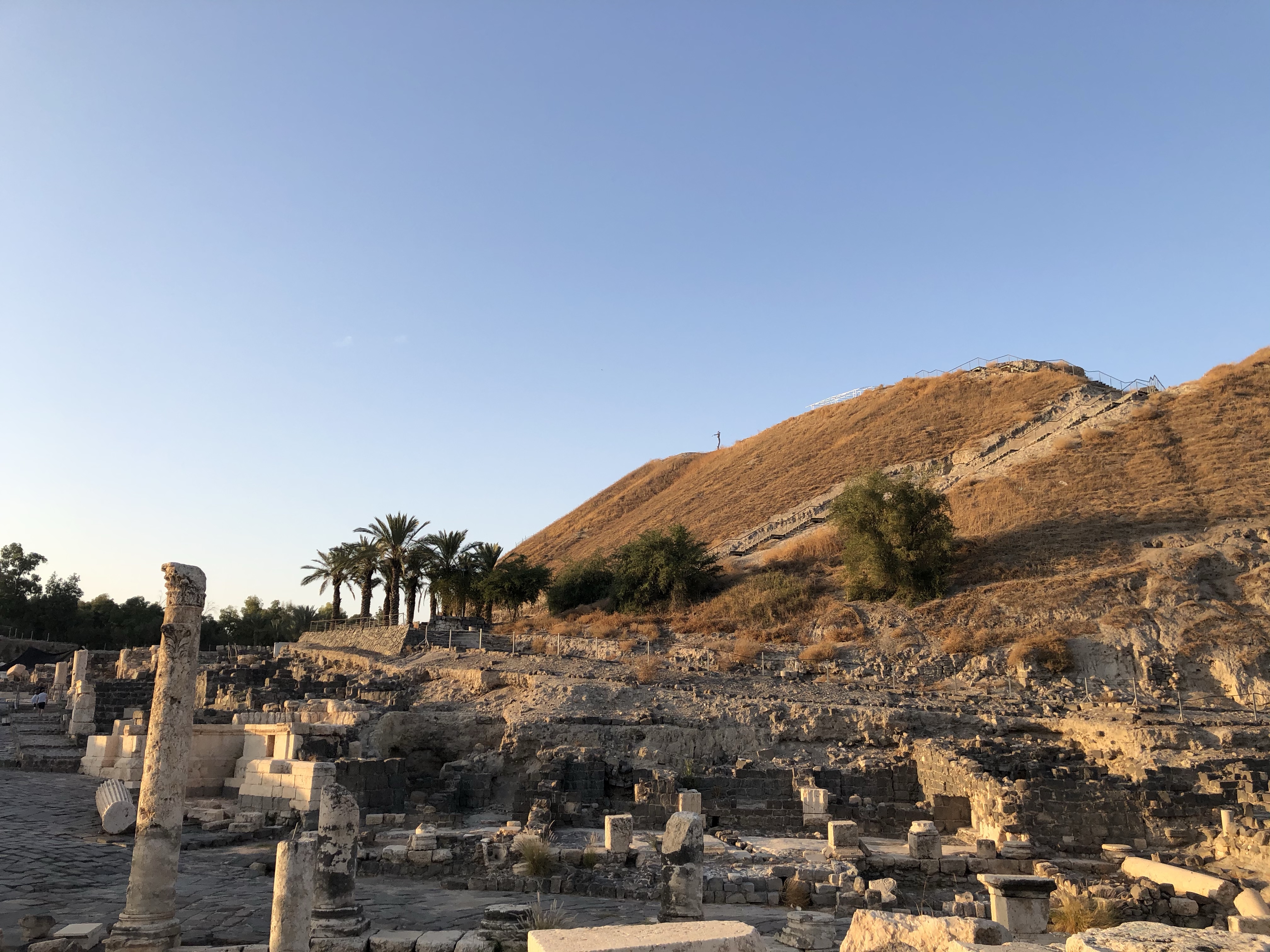
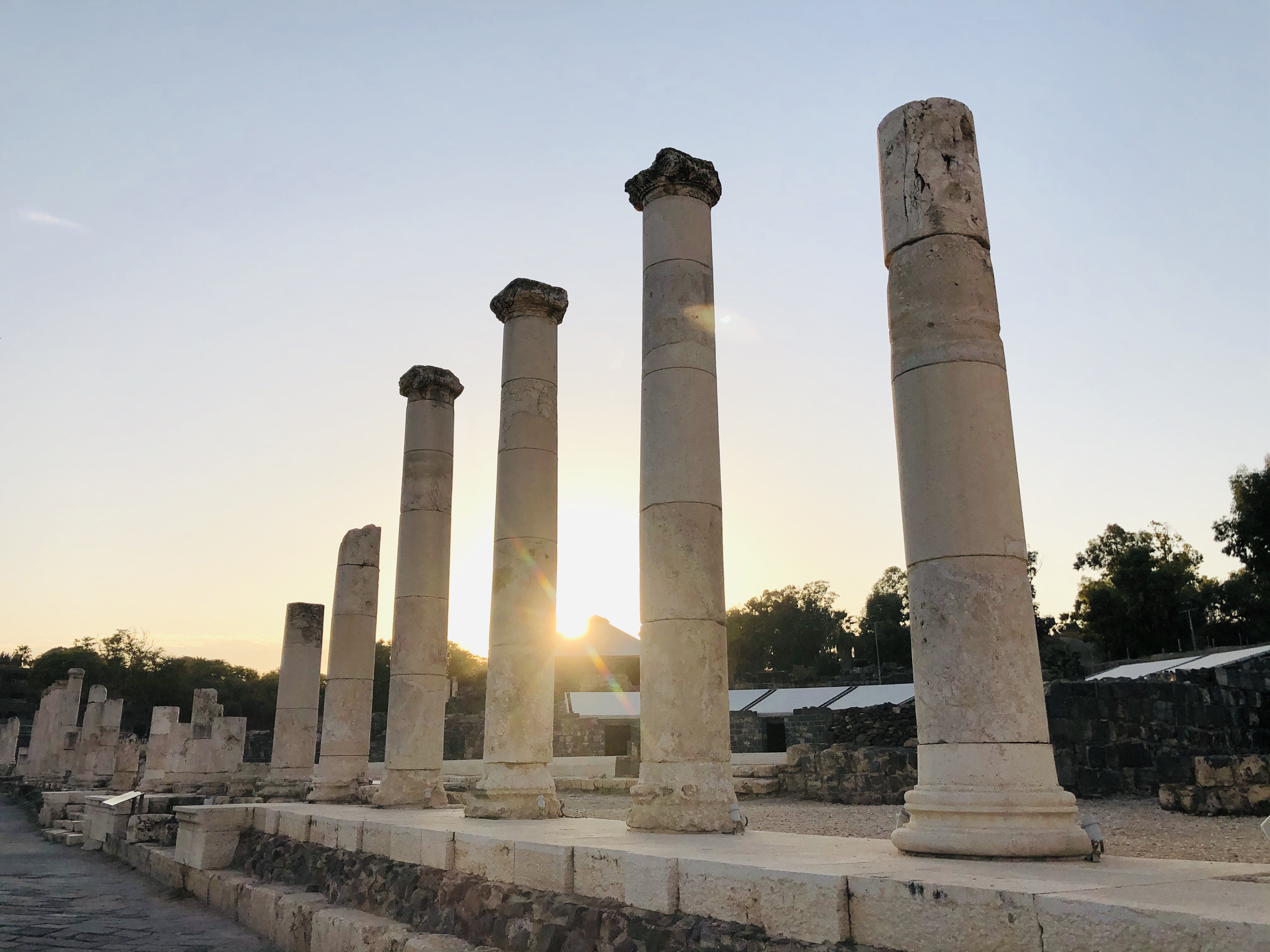
    After our time at Qumran we drove north through the Jordan Rift Valley to Beth Shean, where the Philistines hung the bodies of Saul and his sons. We considered 1 Samuel 31 and the tragic end of king Saul. As the men of Jabesh Gilead rescued the bodies of Saul and his sons from the walls of Beth ShEan, they remind us of Saul’s one good moment. All the way back in 1 Samuel 11 Saul led Israel in rescuing the people of Jabesh Gilead. The hill in the background is the ancient city whose walls would have been visible for miles around.

    Having arrived in Galilee, our final stop of a busy day was Magdala. This site has only been open since 2014. What’s so exciting here is that a coin literally minted during Jesus’ earthly ministry was found there. That means the site was preserved in its condition at the time of Christ. The synagogue was well preserved, and it is almost certain that Jesus taught in it. Perhaps it was here that he first encountered Mary Magdalene, whom he raised from death to life.

  • Into the Valley

    Israel 2019 Day 6

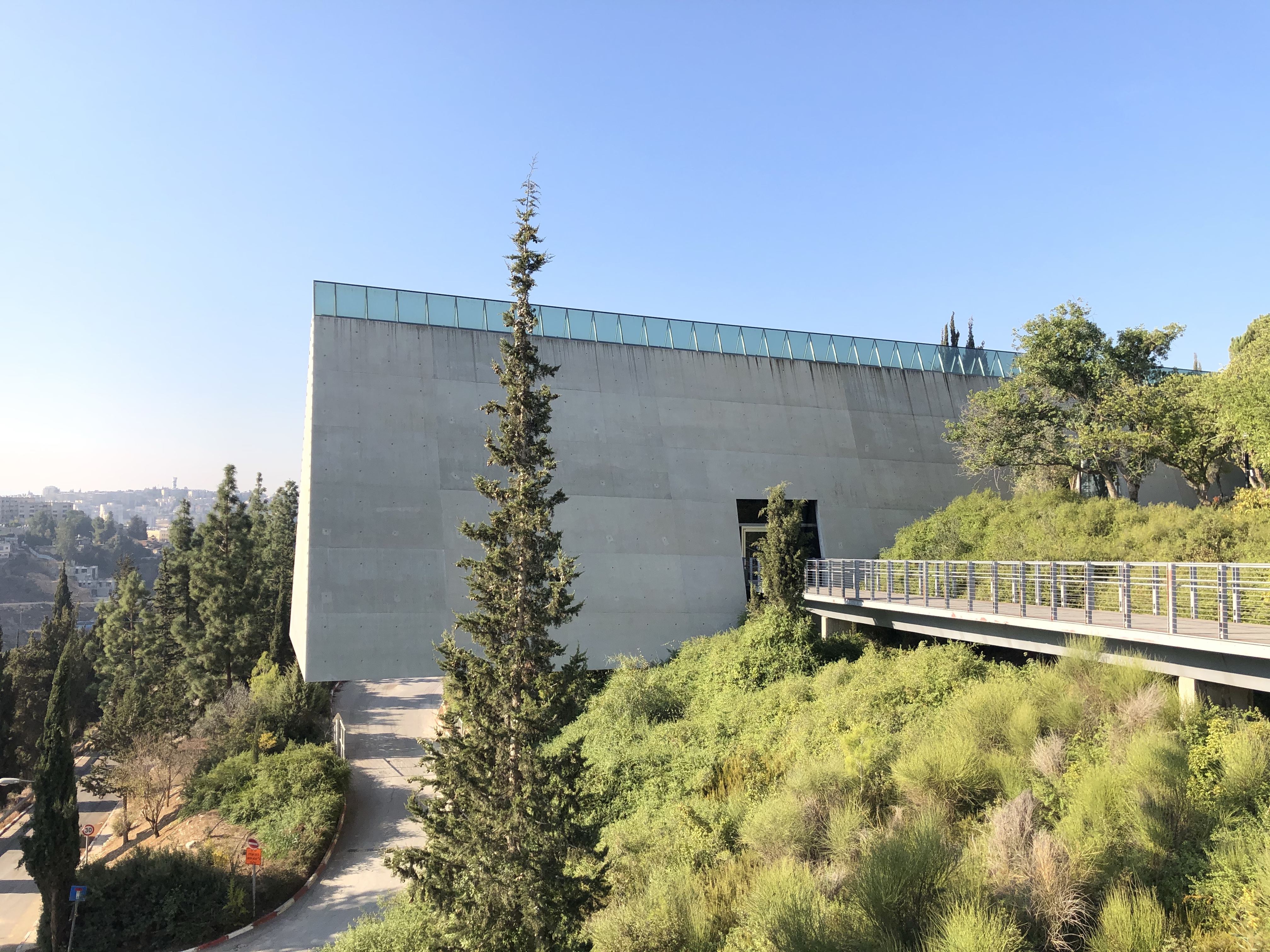
    We started our day with a sobering visit to Yad Vashem, the holocaust memorial in Jerusalem. We were horrified by the reminder of the effects of sin on humanity, and amazed at how God protected Israel when they were at such great risk.

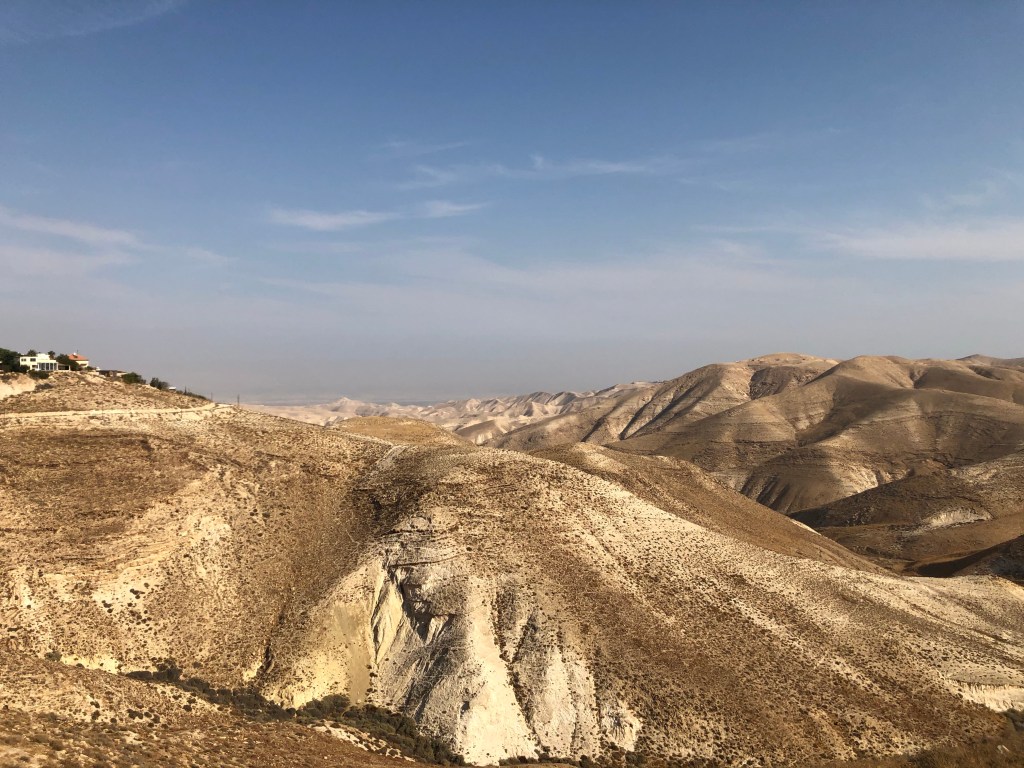
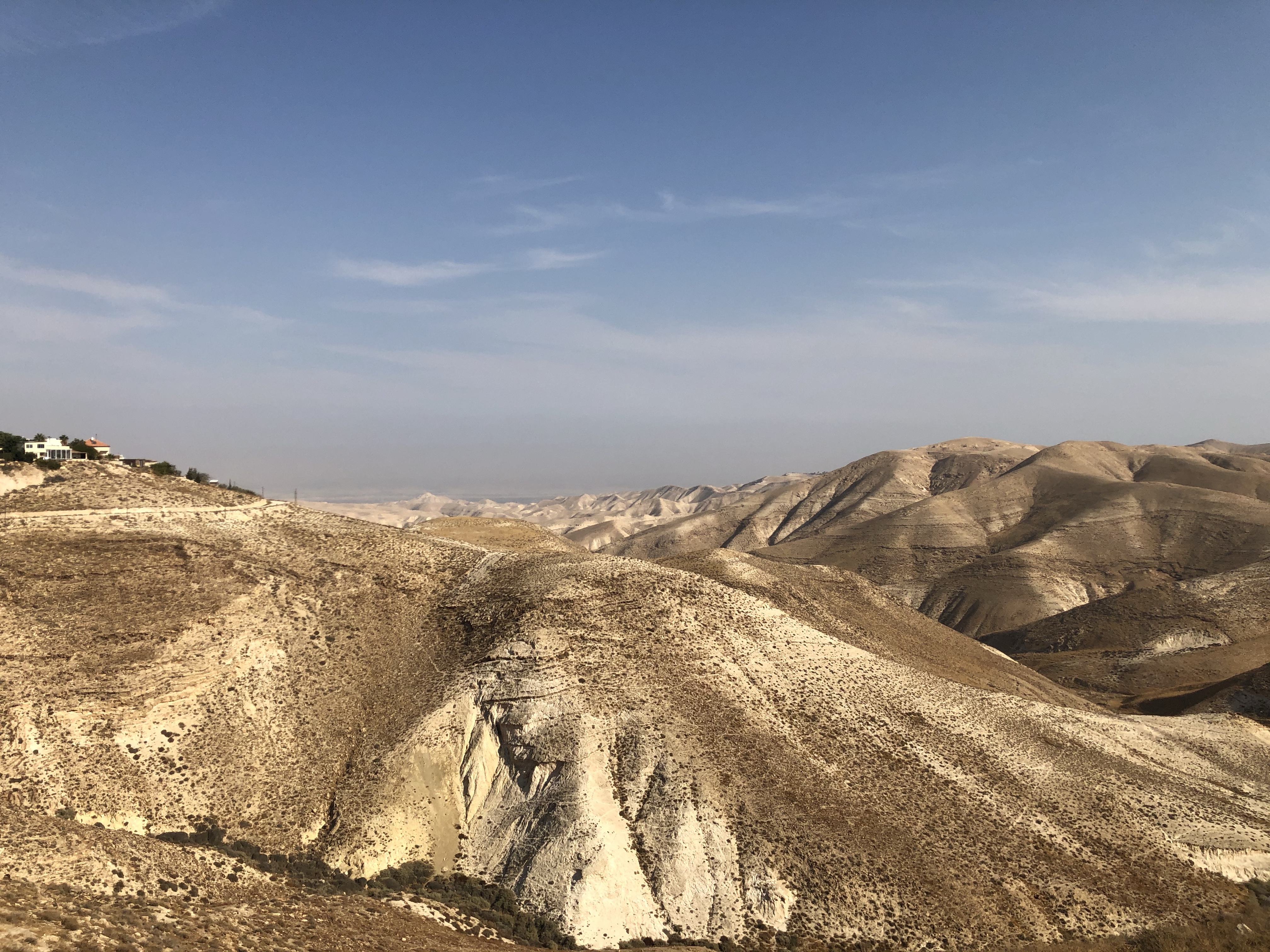
    As we drove through Jerusalem and out of the Judean hill country into the wilderness we were immediately reminded of our dependence on God. The lack of water, intense heat, and extreme isolation serve as constant reminders that without God’s provision, we have no hope. This theme is at the heart of the gospel: we cannot help ourselves, and are entirely dependent on God to provide for us in Christ!

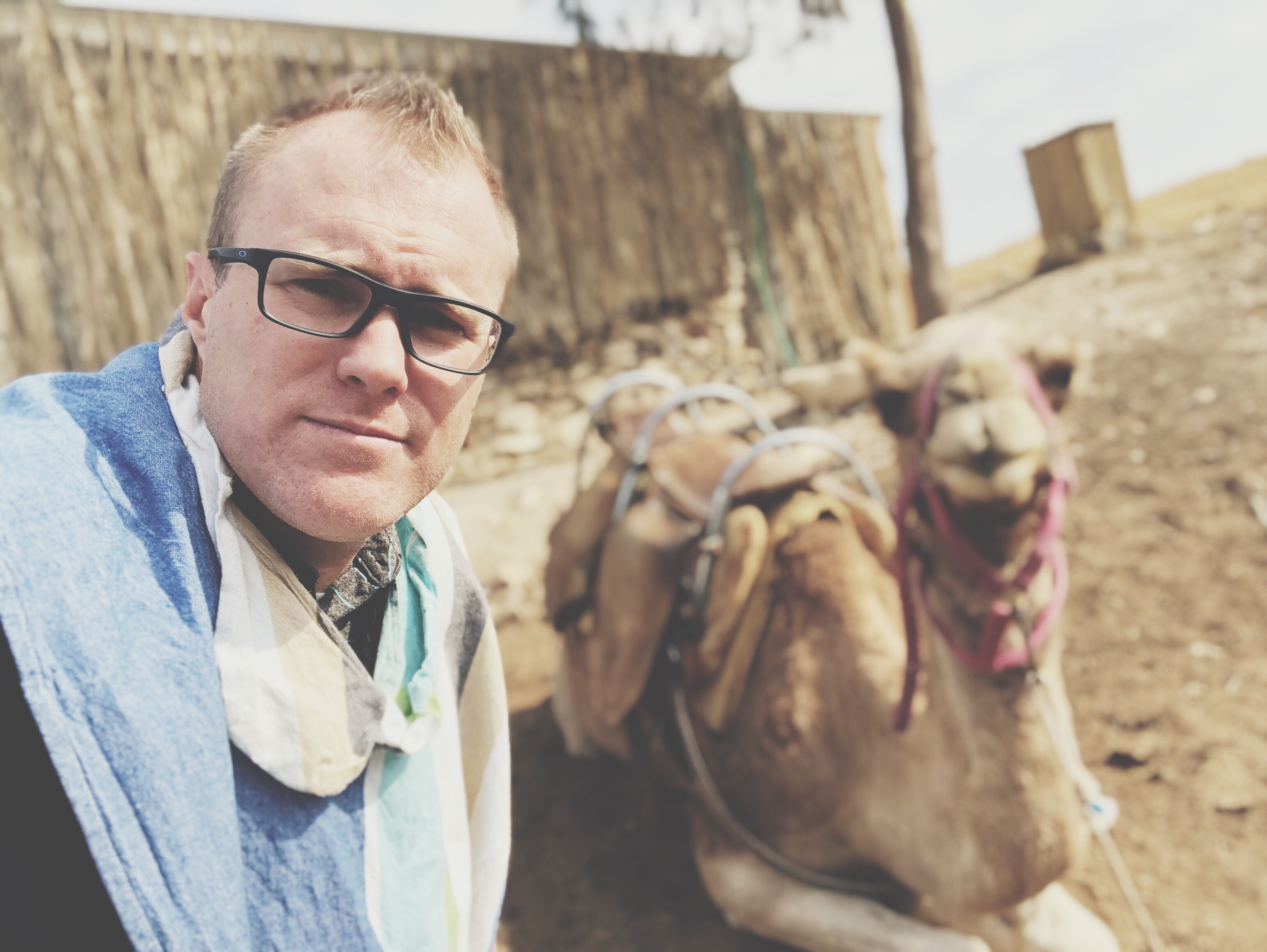
    We stopped for lunch with Abraham and Sarah, and experienced some patriarchal hospitality—complete with camel rides! This virtual tour of the life of the biblical patriarchs was fun and educational. Abraham is a model of faith in Romans 4 for good reason: in the wilderness reliance on God is essential to survival.

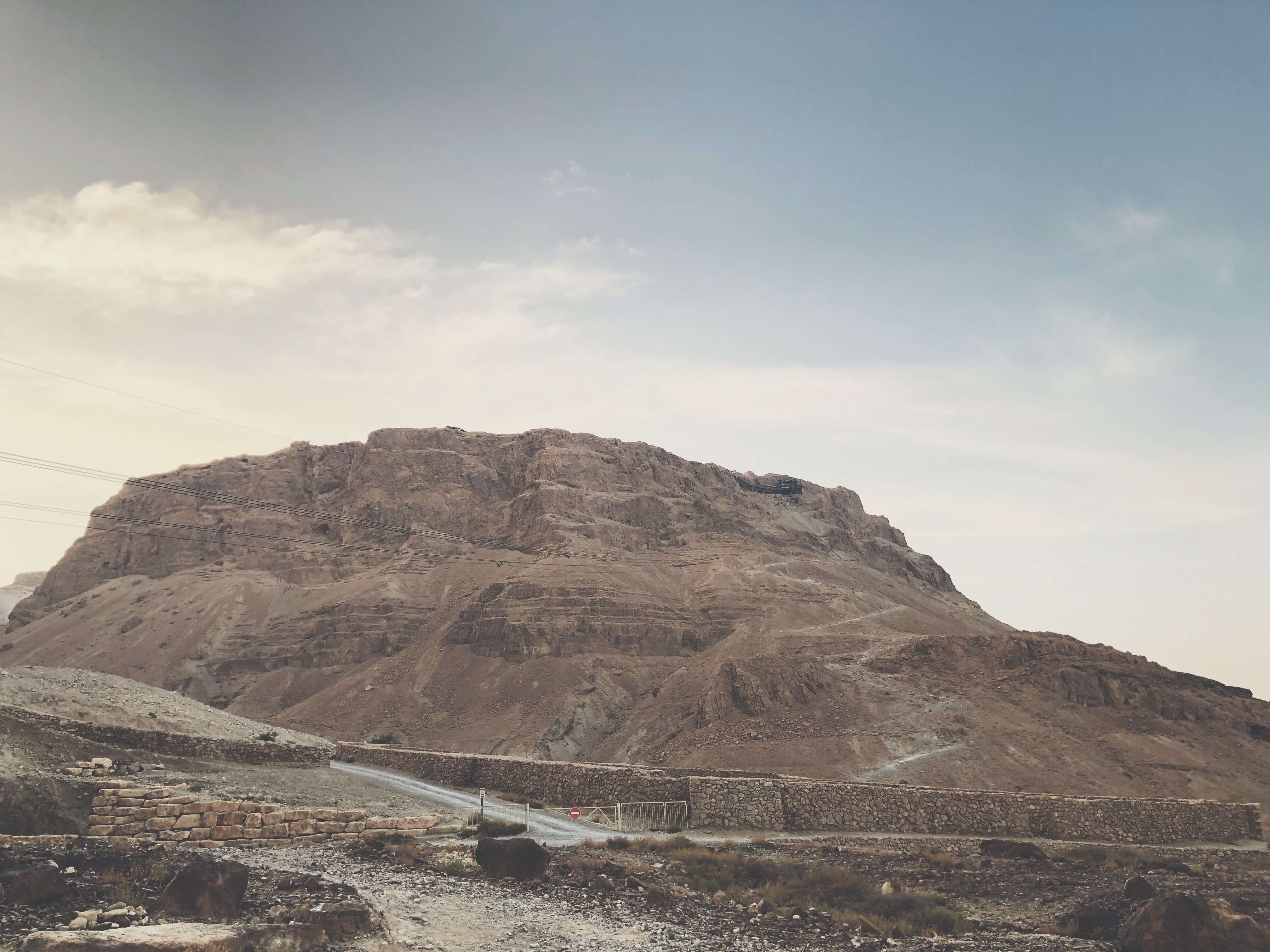
    We drove south along the Dead Sea in the Jordan Rift Valley to the Herodian desert fortress Masada. This incredible site is where Jewish refugees were besieged by the Romans in the early 70s AD. The event ended in tragedy, and has become an Alamo of sorts for Israel.

    Tomorrow we look forward to floating in the Dead Sea and then heading north.

  • A Day of Peace

    Israel 2019 Day 5

    We started our day traveling to Gordon’s Calvary, one traditional location for the death and resurrection of Jesus. Our host reminded us of Peter’s words:

    “For you know that you were redeemed from your empty way of life inherited from your fathers, not with perishable things like silver or gold, but with the precious blood of Christ, like that of an unblemished and spotless lamb.”

    1 Pet. 1:18-19

    We took time there to reflect on Jesus’ death and resurrection as we observed the Lord’s Supper. It was a great time to reflect on the most important events in history that gives us peace with God. We also saw a nice example of an Old Testament era tomb.

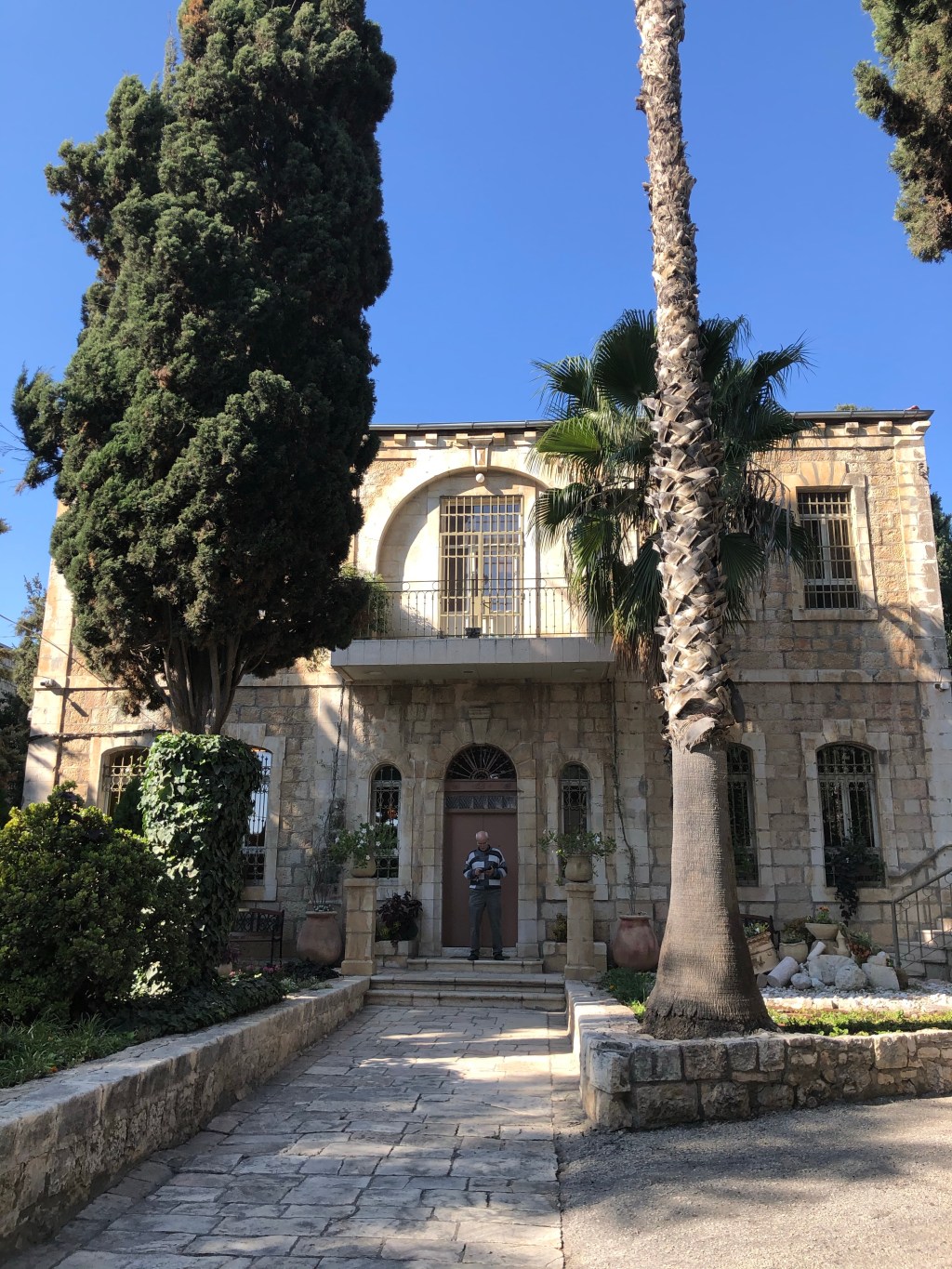
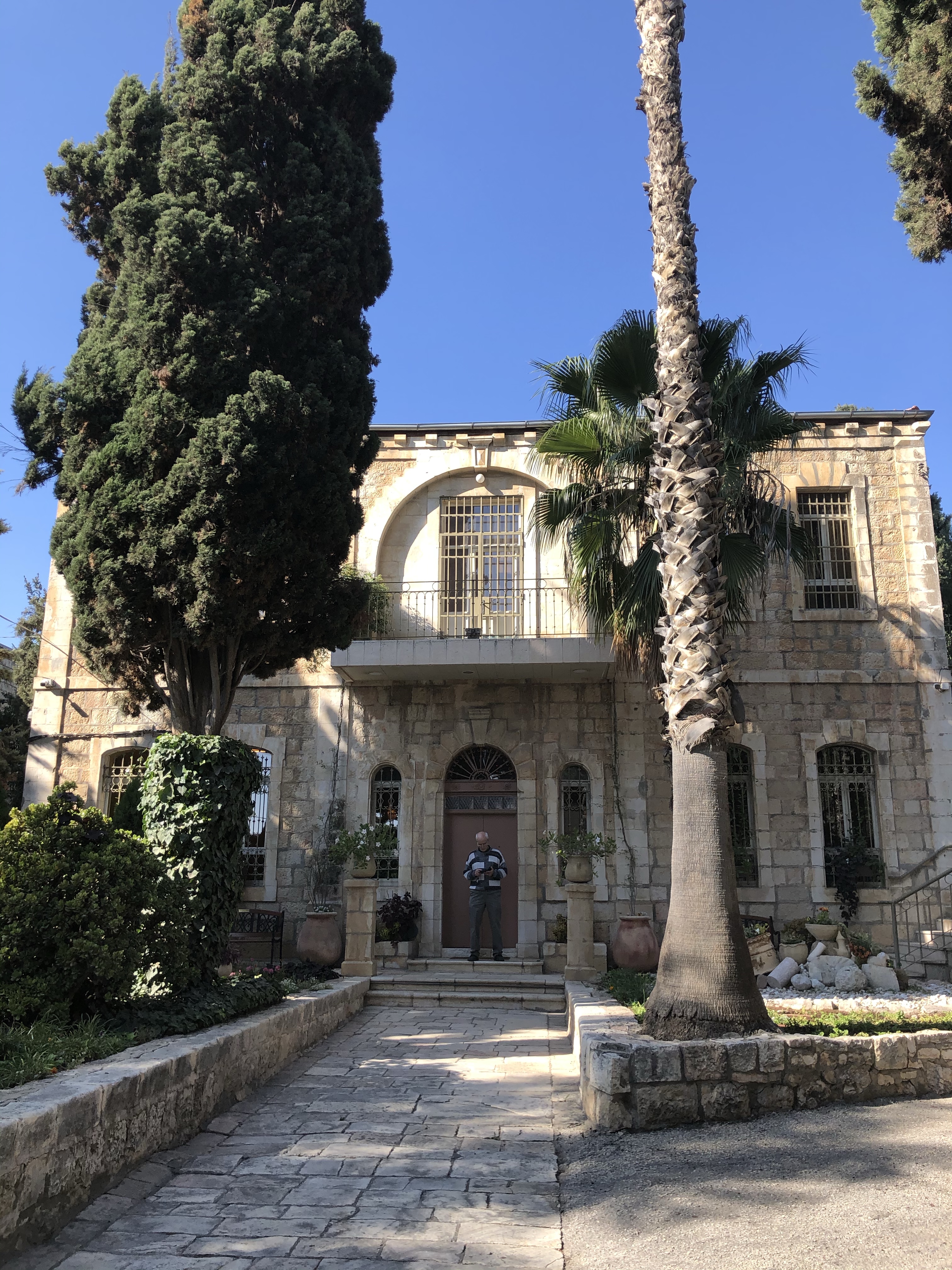
    From there we took a short walk to the Jerusalem Prayer Center, also known as the Spofford House (Horatio Spofford wrote the worship song “It Is Well,” focused on the peace we have in Christ). This home has been set aside to provide a quiet place for people to pray in the midst of the hustle and bustle of city life and touring. It was a welcome reprieve, and a blessing to all of us. We were truly able to focus on the Lord in peace.

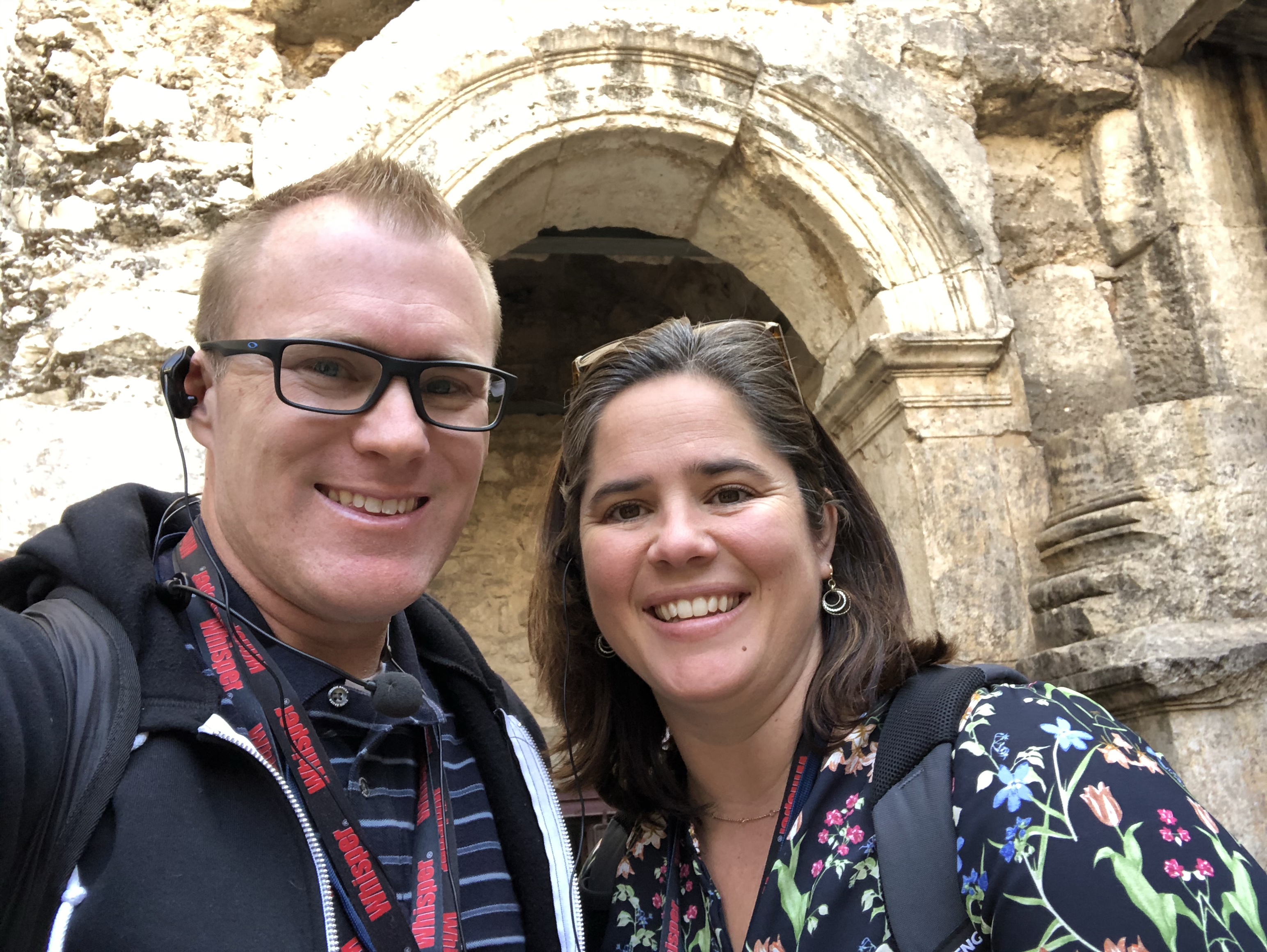
    We then headed into the Old City one last time. We entered via the Damascus gate, taking a minute to check out the 1st century Roman gate excavated there.

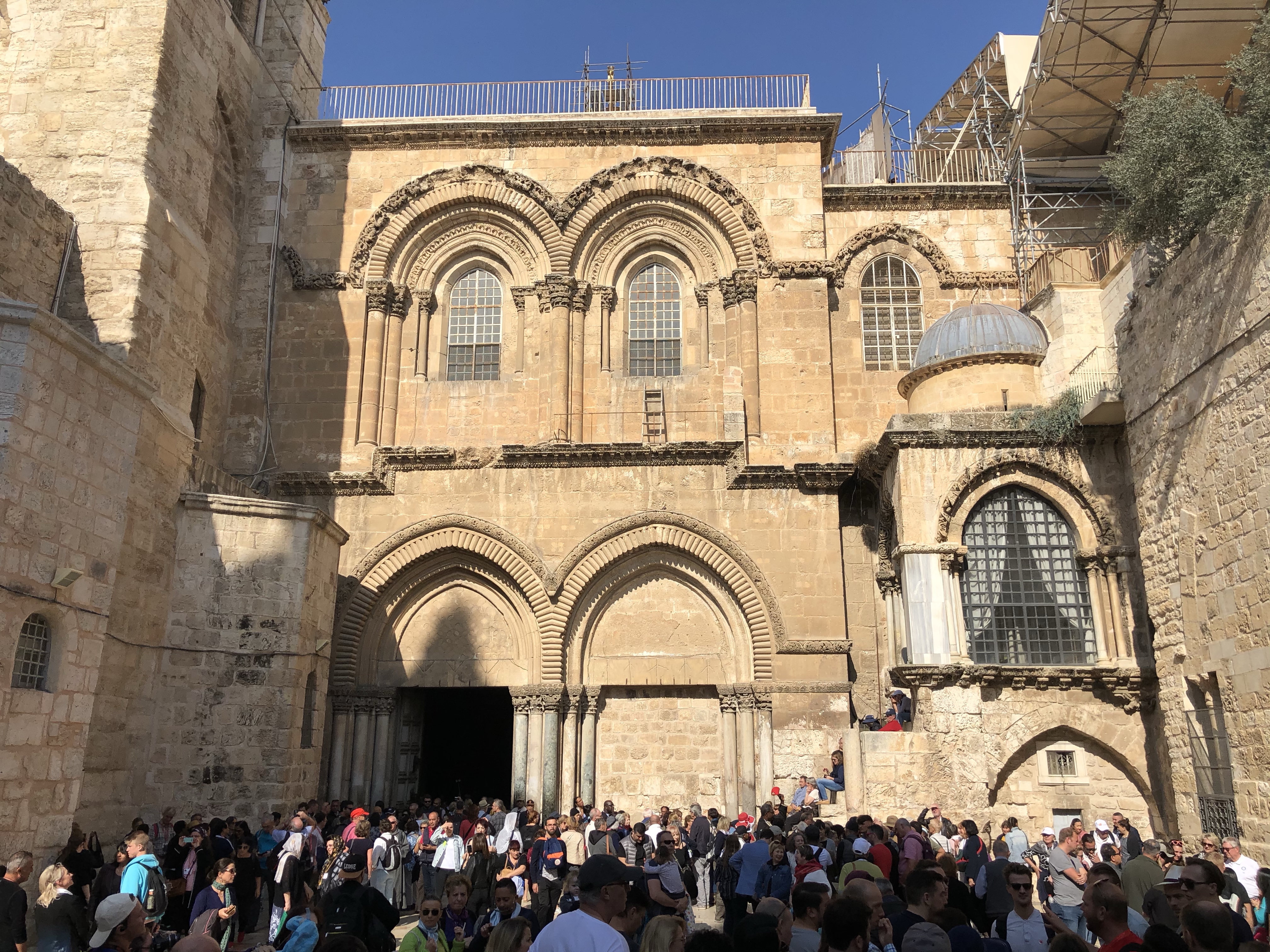
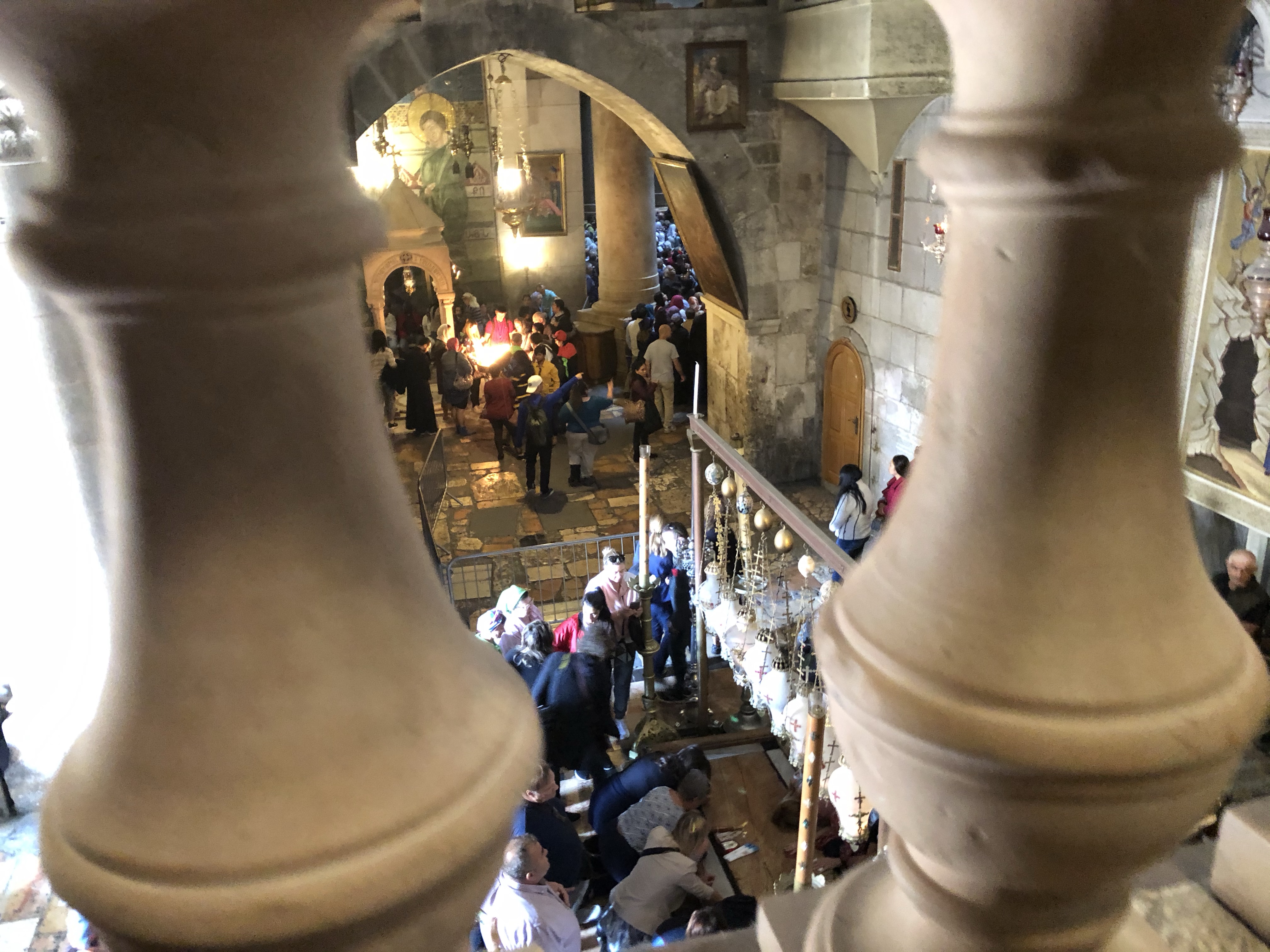
    Then we walked on to see the church of the Holy Sepulcher. This is the likely location of Jesus’ death and resurrection, although the original tomb was destroyed by Muslims. We saw tombs from the time of the New Testament, evidence that this church is in the right area. Buried under many layers of churches and the din of six different expressions of Christiantiy is the place where Jesus became sin for us so that we might become the righteousness of God. For people focusing on pilgrimages and holy relics, there is little peace.

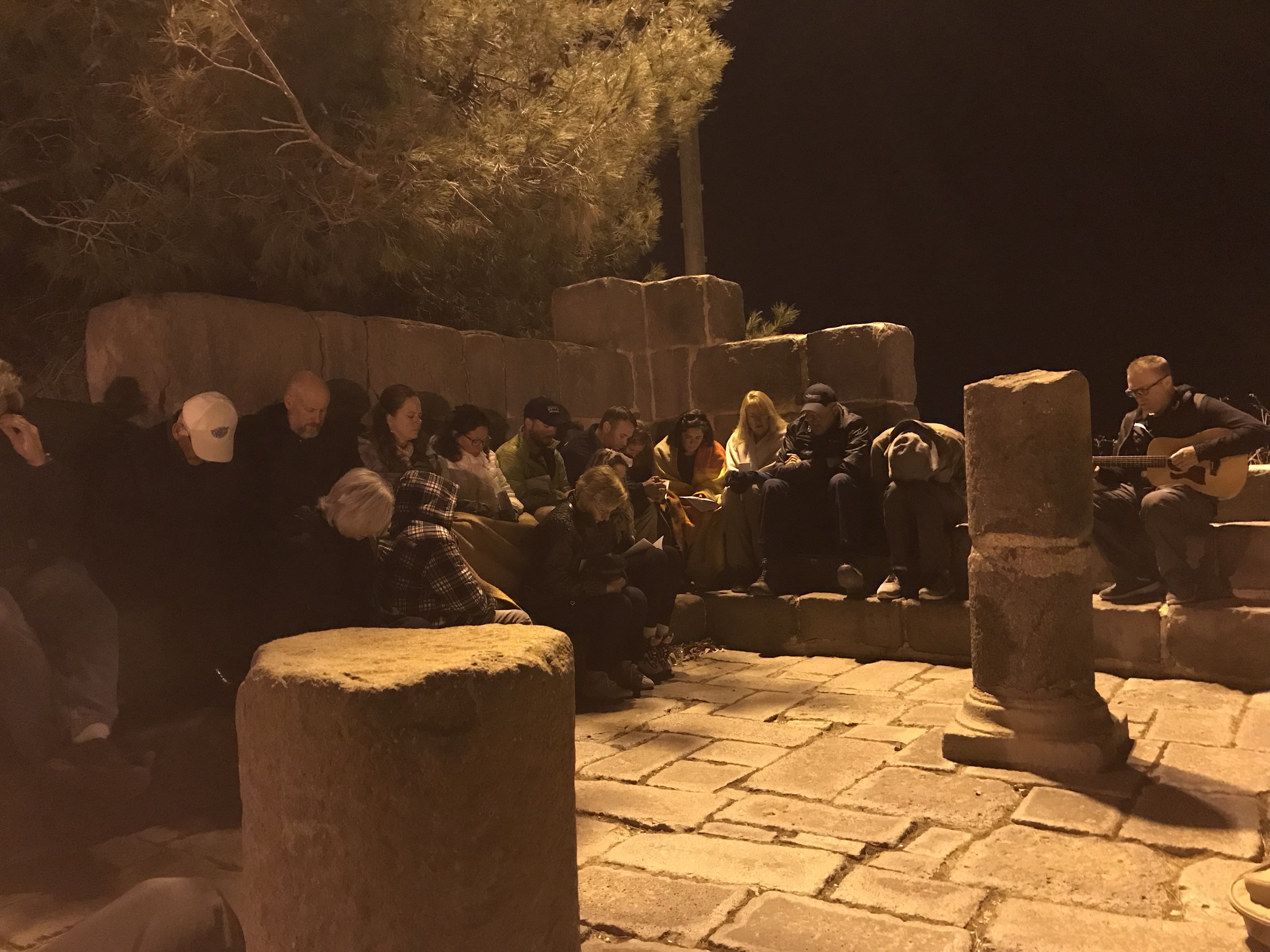
    We enjoyed lunch in the Old City and some shopping before heading back to Yad Hashmona, our home in the Judean hills. We spent time singing together and sharing our insights and reflections on our experience. Tonight was especially powerful as we reflected on the power of the gospel versus seeing God’s favor through our efforts. We don’t need pilgrimages to holy places to have peace with God, we simply need faith in what Jesus did for us in those places!

    Tomorrow we head out of Jerusalem, over the mount of Olives, and down the ascent of Adumim to the Dead Sea. We leave Jerusalem with many memories, full hearts, and souvenirs!

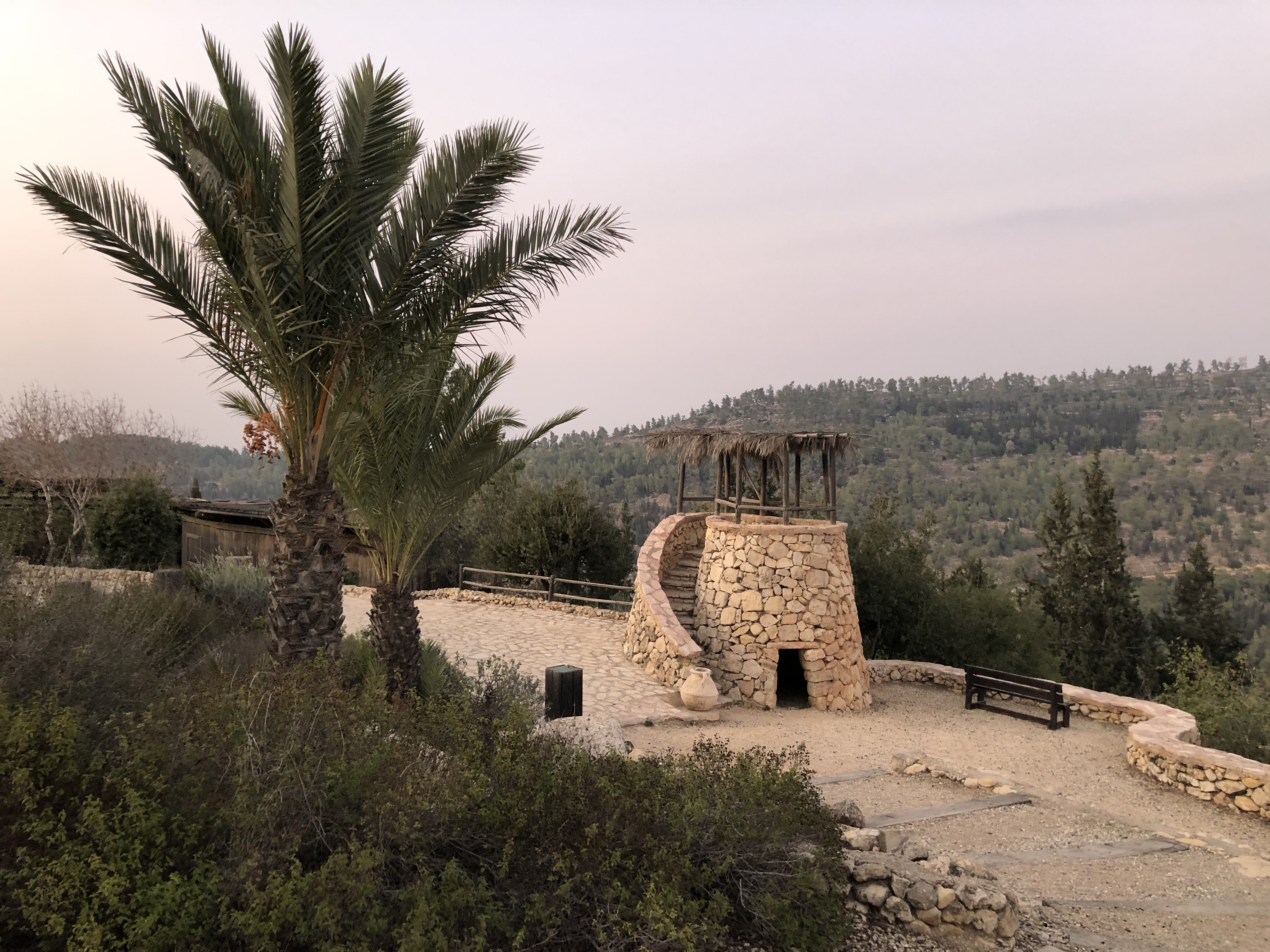
    An Old Testament style watchtower at Yad Hashmona
  • Israel 2019 Day 4

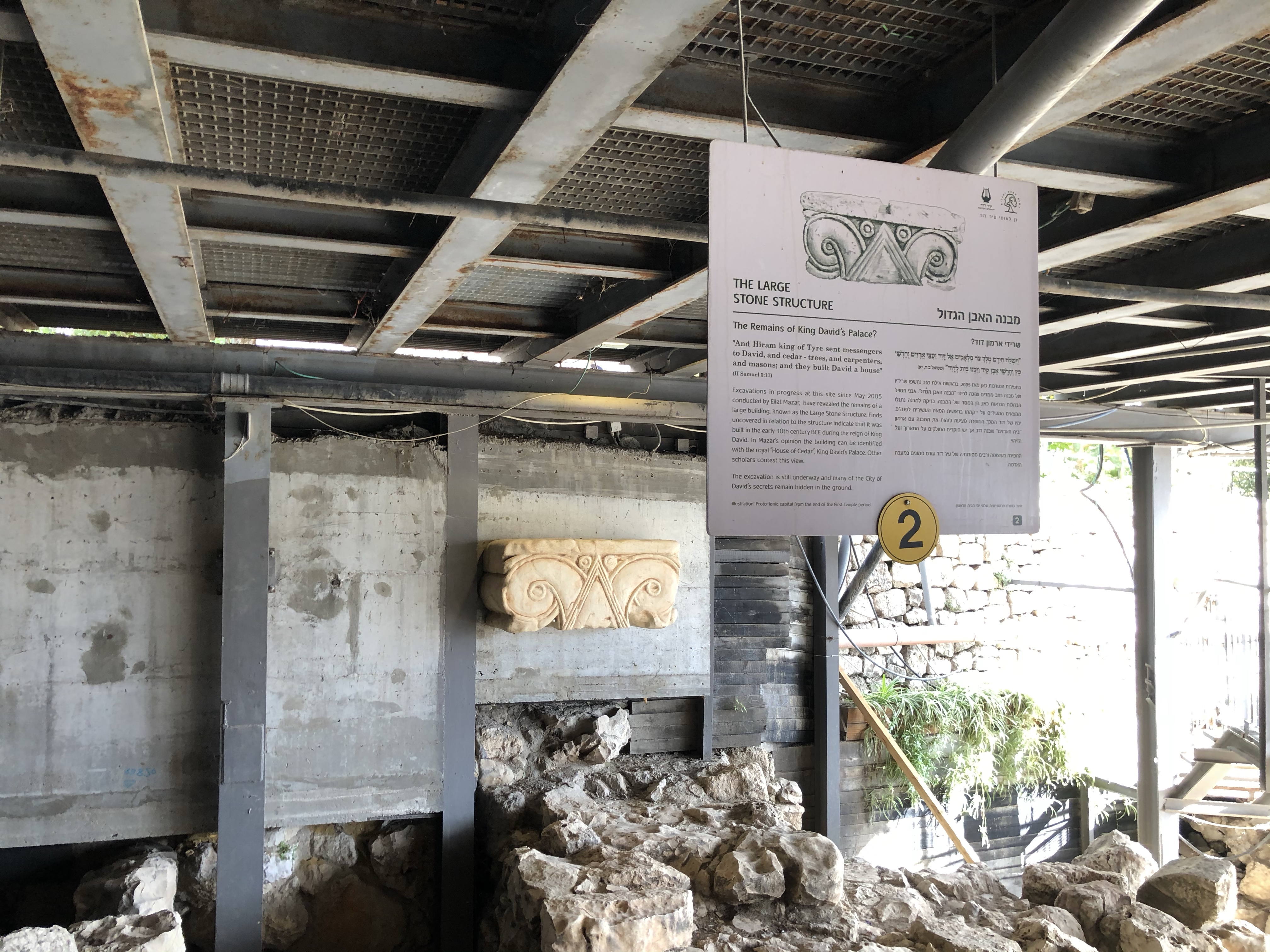
    Our day started with the most ancient history of Jerusalem: the city of David. Pastor Mike Ruel read 2 Samuel, encouraging us to consider God’s faithfulness in Jesus, the Son of David. We saw the ancient Jebusite walls guarding the Gihon spring and the water system that David’s men used to attack the city around 1000 BC (2 Samuel 5:6-10).

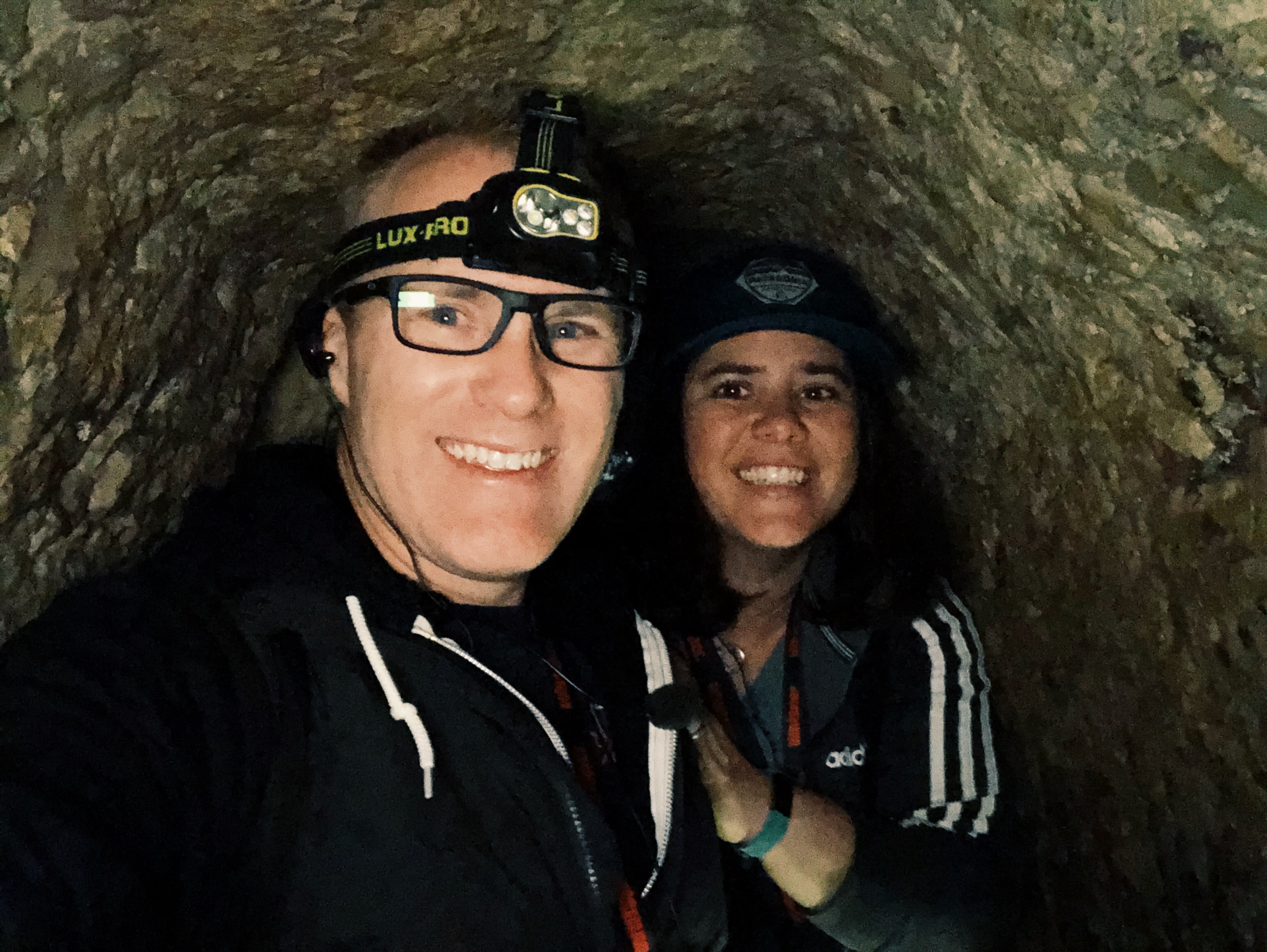
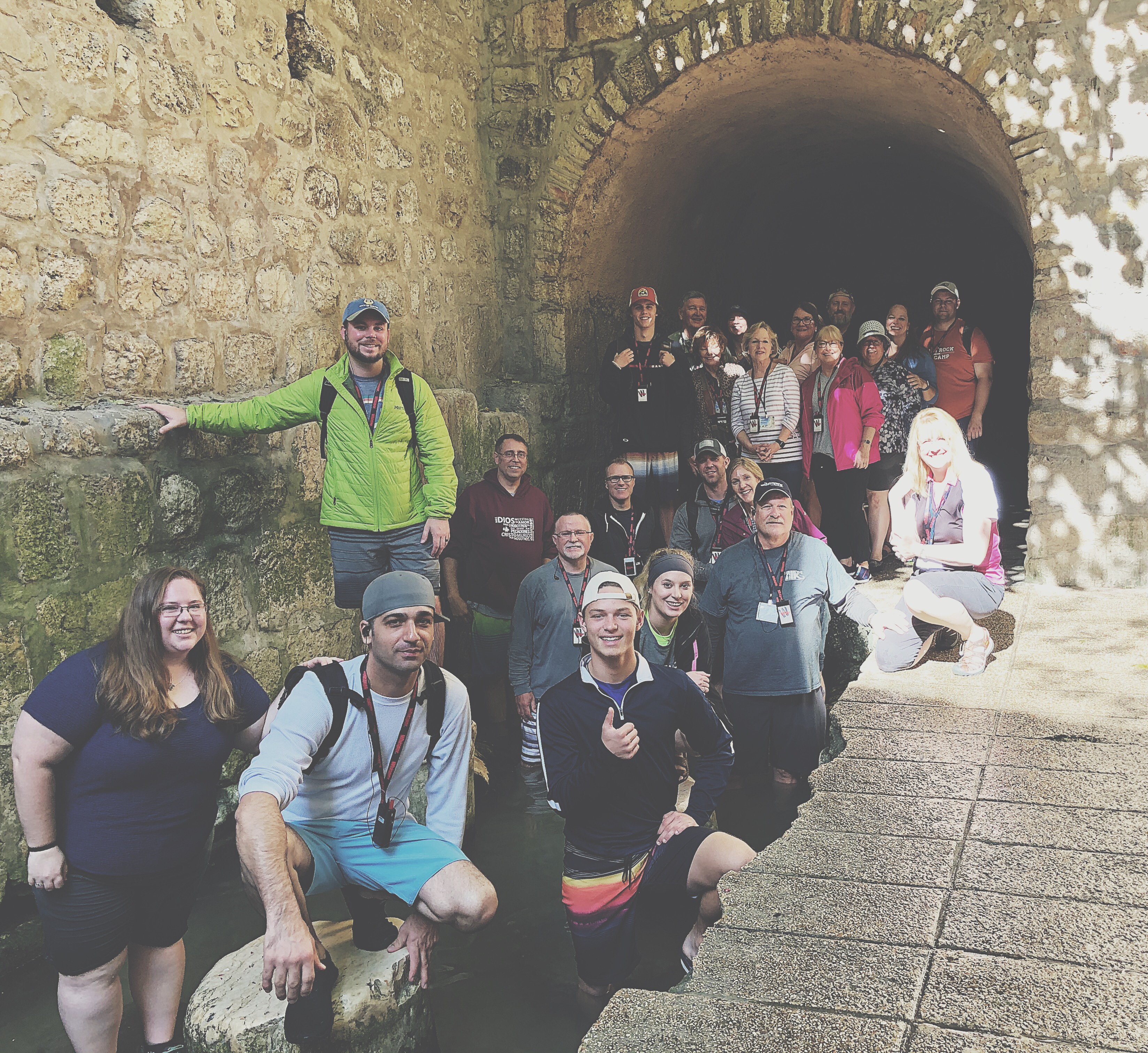
    We then walked through the tunnel king Hezekiah had dug in 702 BC in light of the impending Assyrian siege (2 Chronicles 36:1-8). Today, over 2,700 years later, water still flows from the Gihon spring into the pool of Siloam!

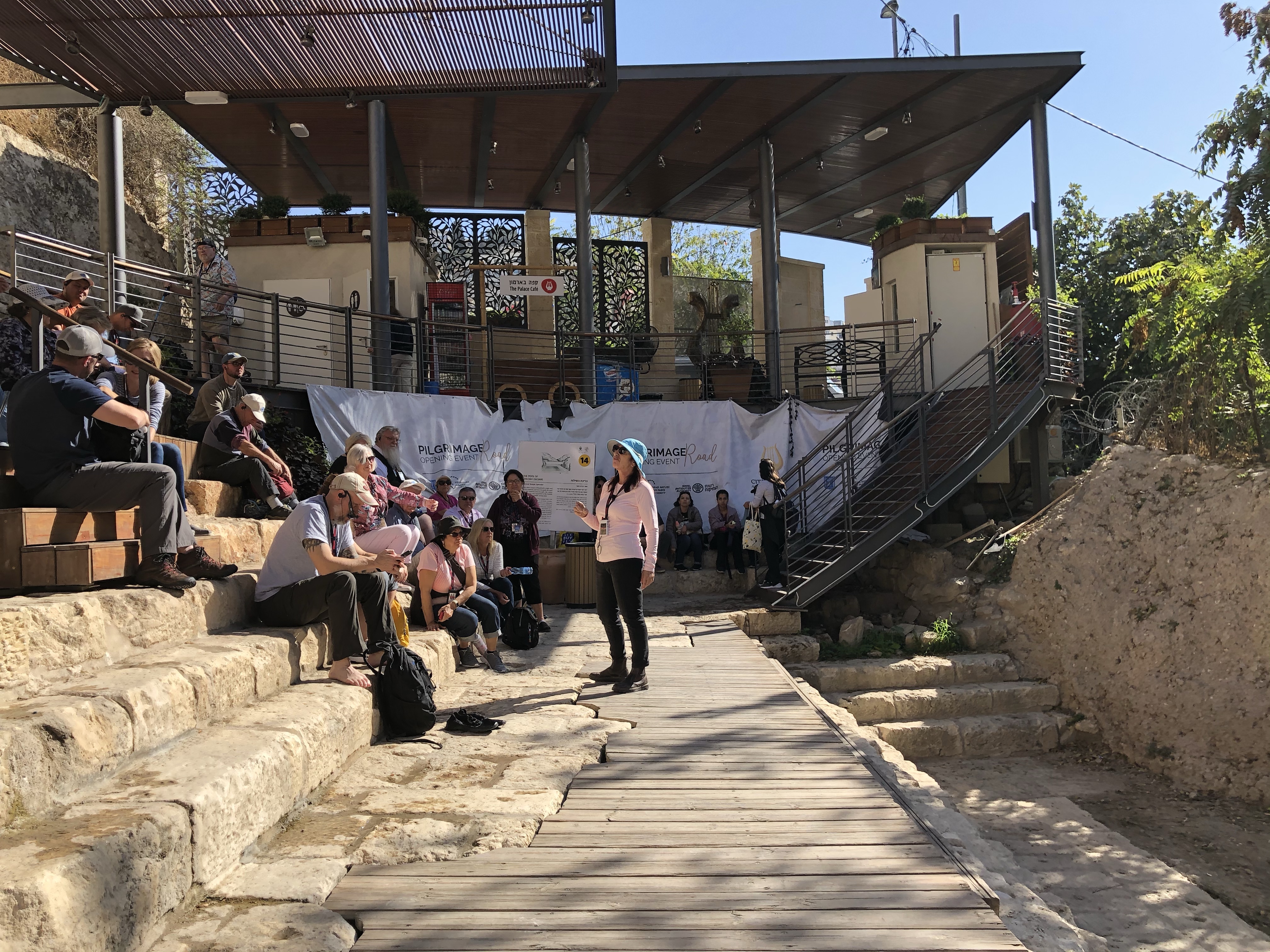
    It was at the pool of Siloam that over 700 years later Jesus healed the man born blind in John 9. All that man knew was that he was blind and now he could see, and that Jesus had done it. His sight is contrasted with the blindness of the religious leadership of Jesus’ day, who were blind.

    We walked up to the temple on (and under) the 1st century road from Siloam. Once there, we explored excavations at the southwest corner of the Temple Mount. Many of those stones are right where they were during Jesus’ ministry.

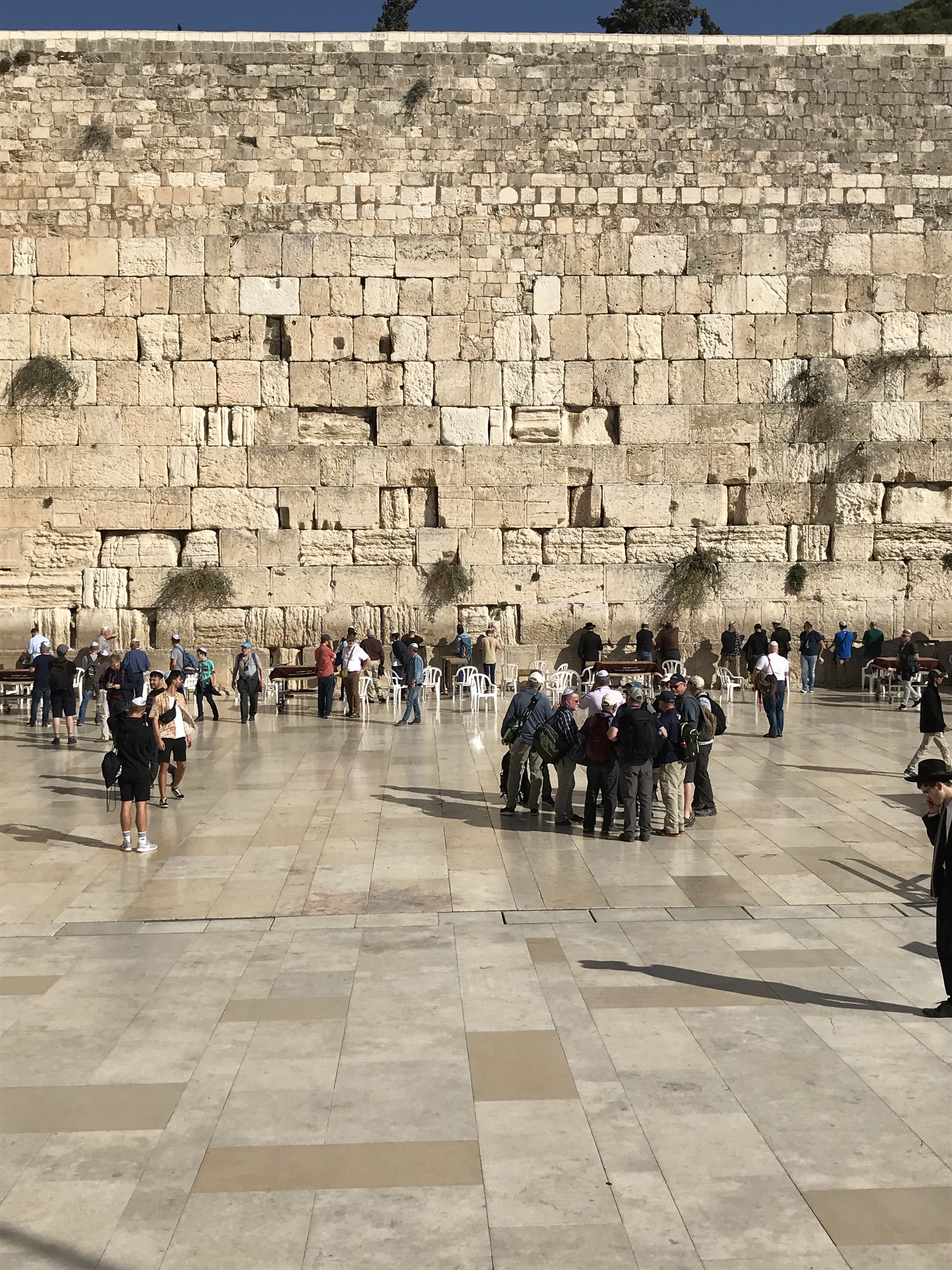
    Just a few feet away was the Western Wall of the Temple Mount, where today Jews still come to pray. For them it is the closest they can be to the location of the temple. Pictured below are prayers stuck into the wall in hopes that because they are close to the temple, God will answer them.

    Some of our guys discussing how Jesus fulfills the temple’s function.

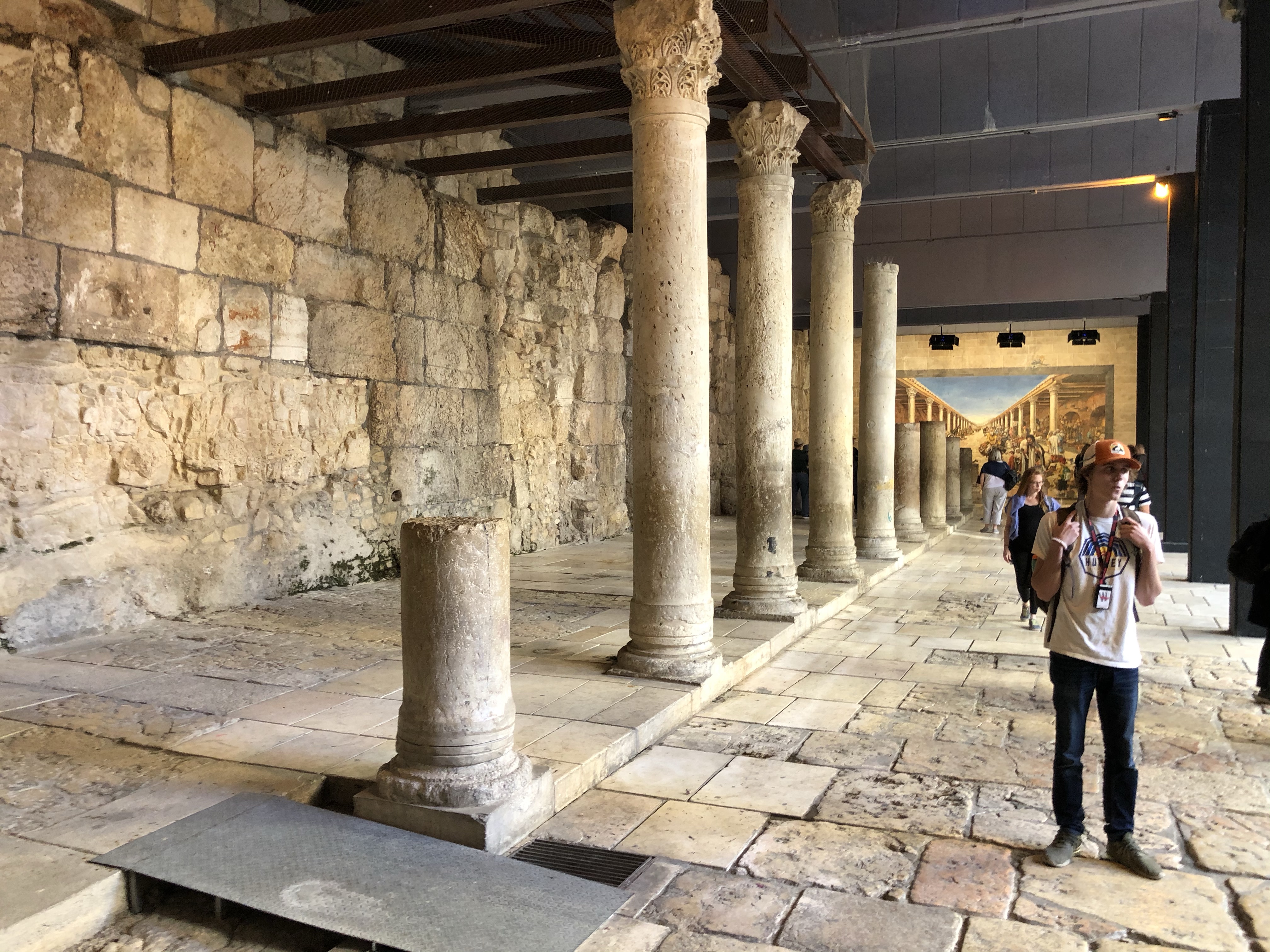
    We ended the day in the Jewish quarter, seeing the broad wall of Hezekiah’s time (also built in light of the Assyrians) and the Byzantine Cardo, the main street of Jerusalem in the 4th-6th centuries AD. We walked over 5 miles today, but in each step we saw evidence that Jesus is the fulfillment of God’s promises to David, he is the Lamb of God, and he is the better temple.