Making and Maturing

Disciples of Jesus

  • Highlands Bible Coming Soon

    Exciting news!  By God’s grace, in 2016 Green Pond Bible Chapel will be launching our Highlands Campus, “Highlands Bible Church,” in Vernon, NJ.  Our goal is simple: we want to glorify God by making and maturing disciples of Jesus.  We believe that God has placed us in a unique position to advance his gospel in Vernon, and we want to be faithful to do just that.

    Our Highlands Campus will be a ministry of Green Pond Bible Chapel, and will have live preaching and live shepherding.  Pastor Mike Ruel will be serving as the campus pastor.  He and his family have roots in Vernon and know the community well.  His passion is to see lives changed by the gospel, and he is well equipped to lead our efforts in Vernon to that end.

    There is much to be done.  We will be scheduling informational meetings for those interested in being a part.  We don’t know many of the details yet.  As we do, we will make them available.  In the meantime, please pray that God would go before us, prepare hearts for the gospel, and bring sinners to repentance and faith in Jesus Christ.  

    Acts 13:47, “For so the Lord has commanded us, saying,‘I have made you a light for the Gentiles, that you may bring salvation to the ends of the earth.’”

  • Charlie Hebdo & Jesus

    “For if while we were enemies we were reconciled to God by the death of his Son, much more, now that we are reconciled, shall we be saved by his life.”

    -Romans 5:10

    This week we all have been processing the murder of workers at the French satrical magazine Charlie Hebdo.  Islamic fundamentalists executed 12 people responsible for cartoons that mocked Mohammed.  This is a heinous crime, a cowardly terrorist attack, and those responsible will answer to God for their sin.

    Charlie Hebdo has published its first issue since the attack, and the cover once again mocks Mohammed, depicting him holding a sign reading “Je suis Charlie” (I am Charlie)- the slogan millions have adopted in solidarity with the magazine.  Muslims are outraged, and have once again threatened the magazine.  Surely there is much to consider here regarding freedom of speech, Islam, and terrorism.

    As I considered the Muslim response, I wondered: what if it had been Jesus?  It has been.  The magazine Charlie Hebdo has published shockingly offensive cartoons mocking Jesus and the Trinity.  Mohammed is not God.  It’s one thing to mock the founder of Islam.  It’s another thing to mock the Creator of the universe.  The fact is the editors of this magazine have regularly participated in open mockery of God.

    So how should Christians respond?  Whatever we do, we should not bomb the magazine, or kill the people who work there.  Instead, in Romans 12, God calls us to a faith-filled response: “Bless those who persecute you; bless and do not curse them” (Romans 12:14), “Repay no one evil for evil, but give thought to do what is honorable in the sight of all” (Romans 12:17).  To me, the Muslim response to Charlie Hebdo clearly illustrates a key difference between Christianity and Islam: Jesus loves his enemies, Mohammed hates his.

    How can we bless those who blaspheme the name of God?  How can we love those who hate our Savior?  By realizing this is the heart of gospel.  In the cross of Christ, Jesus loved his enemies.  “For if while we were enemies we were reconciled to God by the death of his Son, much more, now that we are reconciled, shall we be saved by his life” (Romans 5:10).  Every Christian was once an enemy of God, and Jesus redeemed us through his death instead of destroying us.

    To love our enemies and those who hate God requires us to trust God by faith for justice.  He is the just judge.  He will deal with those who mock him, and his vengeance will be perfect.

    In France, Charlie Hebdo enjoys freedom of speech.  They have a right to print sinful and offensive cartoons that mock God.  This does not make it right.  Those who murdered the civilians at Charlie Hebdo committed a repugnant act of sin.  They were offended by the magazine, but that does not make murder right.

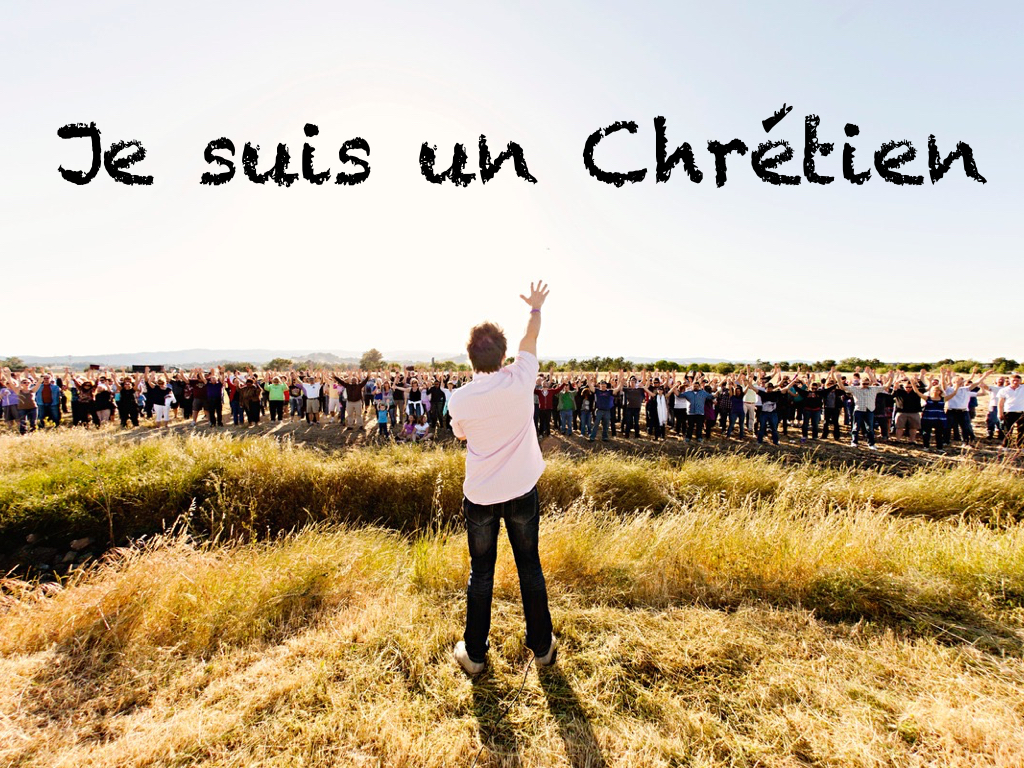
    Because of Charlie Hebdo’s vile mockery God, I cannot say “Je suis Charlie.”  I am most definitely not Charlie.  I mourn the tragedy of this terrorist attack.  I affirm their right to free speech.  I believe Isalmic fundamentalism is a threat to our peace and freedom.  I pray that the difference between Jesus and any other god or religion would become clearer as a result of these terrible events.  As a former enemy of God, I pray that he continues to redeem his enemies.  That is the Jesus I worship.  Je suis un Chrétien (I am a Christian).

  • Christmas is a great time of year for ministering the gospel of Jesus Christ.  People in general have “Christ” in their frame of reference.  Many are more willing to attend a church service, and therefore be exposed to the gospel.  The Charlie Brown Christmas special alone has broadcast the gospel message to millions over the years.  

    Alas, Christmas also brings certain challenges, one of which is the worship of Mary.  Adherents of Roman Catholicism and Eastern Orthodox Christianity insist they do not worship Mary or other saints.  In my opinion, to pray to a being is to attribute to that individual a privilege that God alone deserves.  However saint worship is justified, the sad truth is practically millions of people seek help from Mary and other “saints” before and more often than they seek help from God.

    The worship of saints, including Mary, is entirely absent from the Bible.  Mary herself knew that she was priveleged to give birth to the Messiah only by God’s grace.  She responded to that blessing with worship of God, not exaltation of herself (note Luke 1:46-55).  Then where does the worship of Mary come from?  As with many heresies, prayer to and worship of Mary developed over time.  Here’s a brief rundown:

    Perpetual Virginity

    In the second century AD, sometime around AD 150, the non-inspired Gospel of James was written.  This is the first place where the idea of Mary’s “perpetual virginity” is found in a written source.  This concept grew out of a negative view of sex and an exaltation of celibacy.  In the Bible Jesus has brothers and sisters (cf. Mark 6:3), which clearly refutes the idea that Mary was perpetually a virgin.

    Mother of God

    The exaltation of Mary continued as an unintended consequence of debates over Christology in the fifth century AD.  Nestorius, a church leader of that time from Constantinople, held that Jesus had two separate natures.  He taught that Jesus was human given his human mother Mary, and only later in his life became the Messiah, Logos, and divine.  In part of this discussion, Nestorius posited that Mary should not be referred to as the “God-bearer” (θεὸτοκος), but rather as the “Christ-bearer” (Χριστοτοκος).  The Council of Ephesus in AD 431 was the first attempt by Christians to address this teaching.  Very long story short, Nestorius’ view was rightly rejected, and Mary continued to be called the “God-bearer.”  This label for Mary snowballed later into “mother of God,” which is theologically inaccurate and gives Mary undue prominence. 

    Mary Worship in Ephesus 

    Not long after the Council of Ephesus, the tradition regarding the Assumption of Mary emerged in Ephesus.  The Assumption of Mary is the belief that Mary never died a physical death, but was assumed into heaven directly.  This is not found anywhere in the Bible.  Ephesus had been a center of the worship of the goddess Artemis since 550 BC.  Since the town was used to a female deity, it is not surprising that after embracing Christianity, Ephesus latched onto an exalted Mary.  Ephesus even had its own “church of Mary.”

    Hyperdulia

    Later, in AD 787, the Council of Nicea II attributed to Mary hyperdulia.  Dulia means veneration, or homage.  Hyperdulia means the highest form of veneration given to created beings.  Thus, according to this church council, Mary is worth more veneration than any other human being.  Significantly, regular saints were accorded only dulia (where does that leave the rest of us?).  To be fair, those at the Council of Nicea II were trying to make a distinction between worship of God (latria), and veneration of saints via images (dulia).  They thought they made a clear distinction, but in practice there’s not much difference today between worship of God and veneration of saints.  

    The Immaculate Conception

    One thousand years later, Pope Pius IX declared the immaculate conception as Roman Catholic dogma.  The core concept of the doctrine of “immaculate conception” is that Mary was free from original sin from her conception.  This has no basis in the Bible.  It became a popularly held Roman Catholic teaching, and was made official Roman Catholic teaching in AD 1854.

    The Assumption of Mary

    In AD 1950, Pope Pius XII declared the Assumption of Mary as official Roman Catholic doctrine.  While it had been popularly believed since the fifth century AD (see above), it was never formalized as a dogma of the Roman Catholic Church until 1950.  Some  Roman Catholics hold to the Eastern Orthodox version of this teaching, which holds that Mary died, was raised from the dead and then assumed into heaven.  Others simply hold that she never died and was assumed into heaven.  Neither version is found in the Bible.

    Queen of Heaven, Co-Redemptrix, and Mediatrix

    Several other Roman Catholic traditions about Mary developed over time.  Some believed Mary to be the “Queen of Heaven” who reigns in part over the world.  Others, again building on traditional beliefs dating to the middle ages, believe that Mary gave consent for Jesus to live and die as the Redeemer of mankind.  As such, she is referred to by some as the “co-redemptrix.”  Another popular belief is that Mary argues on behalf of sinners to God.  In this role she is referred to as the “Mediatrix.”  None of these teachings are found in the Bible.  Many were discussed at the Roman Catholic church council called the Vatican II, but they have not yet been dogmatized, though several popes refer to Mary as Jesus’ associate in redemption.

    The key observation in this brief historical survey is this: none of the traditions that exalt Mary are based in God’s Word.  Mary is blessed, because she was chosen to give birth to the Messiah.  She considered herself to be God’s humble servant, and recognized that she needed God’s mercy.  She worshipped God, and did not exalt herself.  She is never stated as having any role in the salvation of sinners.  She is presented as a model of faith, not as a super-human to be prayed to and worshipped.  

    Don’t pray to or worship Mary; she wouldn’t want you to.  In fact, she said, “My soul magnifies the Lord, and my spirit rejoices in God my Savior, for he has looked on the humble estate of his servant” (Luke 1:46-48).  We would do well to follow her example.


    Broad Subject:  Elizabeth hearing Mary’s greeting and proclaiming Mary blessed… Elizabeth giving birth to John and Zechariah being able to speak again…

    Narrowed Subject (why? how? so that? results in?): …results

    Complement:  …results in Mary praising God.  …results in Zechariah praising God that he is sending the Messiah to Israel.

    Text BI:  Elizabeth hearing Mary’s greeting and proclaiming Mary blessed results in Mary praising God for blessing the humble.  Elizabeth giving birth to John and Zechariah being able to speak again results in Zechariah praising God that he is sending the Messiah to Israel.

    Contextual BI:  Elizabeth hearing Mary’s greeting and proclaiming Mary blessed results in Mary praising God for blessing the humble in Jesus.  Elizabeth giving birth to John and Zechariah being able to speak again results in Zechariah praising God that he is sending the Messiah to Israel, who is Jesus.

    Canonical BI:  Elizabeth hearing Mary’s greeting and proclaiming Mary blessed for her faith results in Mary praising God for blessing the humble in Jesus with mercy.  Elizabeth giving birth to John and Zechariah being able to speak again results in Zechariah praising God that he is sending his mercy to Israel in the Messiah, who is Jesus.

    Homiletic BI:  God’s mercy comes through Jesus.

    Title: Worth Singing About


    Introduction:  Mercy… what is mercy?  (kindness or concern for someone in need)  do we need mercy?  What is our need?  God sees our condition (better than we do), and did something about it.


    God’s mercy comes to us through Jesus.    


    • Mary’s Visit (1:39-45) 
      • Nazareth to the southern hill country would have taken 3-4 days (80-100 miles). 
      • She is making known the mind of God regarding what she is speaking about.
      • The phrase “most blessed among women” is also used of Jael in Judges 5:24 and Judith in Jdt. 13:18.  
      • In these cases the woman either delivers Israel (Jael) or bears the deliverer of Israel (Judith).  
      • Elizabeth uses “Lord” here to refer the coming Messiah
      • Mary stands in contrast to Elizabeth’s mute/deaf husband who was skeptical of Gabriel’s message.

    ApplicationGod’s mercy comes through Jesus.  

    Mary’s visit confirms God’s message to her.  John is clearly filled with the Spirit.  He will continue to have a special relationship to Jesus.  She is blessed because of Jesus!


    Elizabeth’s prophecy emphasizes Mary’s faith- God is explicitly setting Mary up as an example.  Faith means taking God at His Word.  

    How do you respond to God’s messages to you?  He has spoken- do you listen?  do you believe

    Transition:  God’s mercy comes through Jesus, and Mary was especially aware of this…

    • Mary’s Praise (1:46-56)
      • Starts from personal to corporate
      • Shifts in 1:51 to prophetic aorists (?)
      • God exalts humble and destroys proud
      • This is in line with promise to Abraham- they will be blessed and source of blessing.
      • God’s character is not separated from His mercy.

    Application God’s mercy comes through Jesus: to the humble.

    While Israel expected a conquering hero, Mary here indicates that God’s work is to be done in those who are humble.  What God is doing with her also what He will do with His Holy Spirit in Israel.  We know that this is how He also works with all mankind.  Mary is an example of faith.

    Transition:


    Mary- Why do so many worship her?

      • Gospel of James, 150 AD, perpetual virginity
      • Council of Ephesus, 431- “church of Mary” – strong cult of Diana (Artemis- 550 BC).  
      • Nestorius- 2 natures in X- human from Mary and Logos from God later
      • Thus Mary is only Cristoto/koß, not qeoto/koß
      • “Instead of God-Man, we have here the idea of a mere God-bearing man”
      • Council of Nicea- 787- Mary gets hyperdulia, saints just dulia
      • Immaculate Conception (Mary was sinless) – dogmatized 1854 pope Pius IX
      • Assumption (Mary never died)- dogmatized 1950 pope Pius XII
      • Vatican 2- Mary role as mediator in salvation, movement for co-redemptrix

  • Don’t come alone.  Seriously.  We may be overlooking a simple, effective way to expose people to God’s love for them in Jesus.  We can help people come to an understanding of the gospel by giving them an opportunity to experience the corporate worship of the church.  

    This concept is alluded to by the Apostle Paul.  In 1 Corinthians 14, Paul instructs us to conduct orderly, understandable worship services.  One of his reasons for this instruction is the potential impact to a visitor who is not a follower of Jesus… yet.  Paul says that when this person experiences the corporate worship of the church, “he is convicted by all, he is called to account by all, the secrets of his heart are disclosed, and so, falling on his face, he will worship God and declare that God is really among you” (1Cor. 14:25).  

    To be sure, inviting people to a church gathering is not a replacement for speaking the gospel to them, but it is one way to introduce them to the gospel and support your loving witness to them.  God often uses our relationship with another person to bring them to repentance and faith.  

    The best way to convince someone a restaurant is good is to take them to eat there (and help them order!).  In the gospels we see Jesus relationally investing in his disciples.  Apart from prayer, Jesus didn’t do anything alone.  Perhaps God has given you co-workers, neighbors, or family members that just need to be invited to gather with the church.  Give them a ride, invite them for lunch after, and you’ll be surprised how God will use you. 

    So here’s the challenge: don’t come alone… to Sunday worship, to Care Groups, to Bible study, to the Christmas Cantata, to the Christmas Eve service… whatever.  Don’t come alone, and let’s see what God will do in our midst.


  • Dying with Dignity

    On Monday, November 3rd, 29 year old Brittany Maynard ended her own life by physician assisted suicide.  In her final days and weeks she made a passionate plea for the cause of legalizing euthanasia.  Her story is heart breaking.  Seeing a beautiful young woman’s life cut short is truly a tragedy; sin’s horrible spawn, death, is indeed ugly.  Brittany’s death is a microcosm of everyone’s experience of aging and the ultimate shut down of our bodies.  Whatever the ailment may be, our bodies will ultimately fail us.

    Brittany’s story is a harsh reminder of the broken world we occupy.  As she spoke out, one of her statements really hit me: “I want to die on my own terms.”  Her terms, not anyone else’s… not even God’s.

    Brittany poignantly asked, “Who has the right to tell me that I don’t deserve this choice? That I deserve to suffer for weeks or months in tremendous amounts of physical and emotional pain? Why should anyone have the right to make that choice for me?”

    While she asked this question rhetorically, there is an answer, and it is hard.  From one perspective, no human could tell her she doesn’t have the right to end her life.  But from another perspective, God not only has this right, but exercises it.  In Psalm 139:16 David praises God for his numbering of our days.  He says, “Your eyes saw my unformed substance; in your book were written, every one of them, the days that were formed for me, when as yet there was none of them.”  Even days of sickness and suffering.

    Brittany could not reconcile her suffering with the concept of a sovereign Creator.  Euthanasia goes hand in hand with an atheistic, naturalistic world view.  It makes sense: if we put dogs to sleep, why not humans?  For the Christian the answer is clear: God gave us dominion over animals, but not over humanity.  When God is not in the picture, there is no compelling moral basis for choosing life at its outset or conclusion.  We will kill an unwanted life before it is born, and end our own when it suits us.

    As we read in Ecclesiastes 3:2, there is “a time to be born, and a time to die.”  The right to appoint our time of death belongs to our Creator, not to us.

    When someone chooses suicide, in any form, they are saying to God, “You made a mistake.  There is no purpose for my pain and suffering.  I’m taking control.  I will number my days.”  This is no less than idolatry.  It is the exaltation of self to the place of God.  We want to number our days, rather than trust God to number them.

    I think this is exactly why Jesus did so much physical healing in his ministry.  He is the solution to brain cancer, autoimmune deficiancies, etc. because he is the answer for sin.  Remember the scene in Capernaum where a paralytic’s friends lower him into a crowded house where Jesus was teaching?  Jesus says to the crowd,

    “Which is easier, to say to the paralytic, ‘Your sins are forgiven,’ or to say, ‘Rise, take up your bed and walk’?  But that you may know that the Son of Man has authority on earth to forgive sins”—he said to the paralytic— “I say to you, rise, pick up your bed, and go home” (Mark 2:9-11).  Jesus isn’t making little of the paralytic’s condition; the man has a bigger problem than paralysis, and he is about to do something about it.

    I do not know Brittany’s pain.  To my knowledge, I do not yet suffer from the disease that will end my life.  I do know that phsyical suffering is temporary, and a reminder of our ultimate spiritual need.  The key to enduring the unthinkable is to remember that its source is sin, and that God’s purposes go far beyond our suffering.  To truly die with dignity is to die trusting God, not trying to replace him.